In court, Don Henley recounts the making of the Eagles’ megahit ‘Hotel California’
Advertisement
Read this article for free:
or
Already have an account? Log in here »
To continue reading, please subscribe:
Digital Subscription
One year of digital access for only $1.44 a week*
- Enjoy unlimited reading on winnipegfreepress.com
- Read the E-Edition, our digital replica newspaper
- Access News Break, our award-winning app
- Play interactive puzzles
*Billed as $5.77 plus GST every four weeks. After 52 weeks, price increases to the regular rate of $19.95 plus GST every four weeks. Offer available to new and qualified returning subscribers only. Cancel any time.
To continue reading, please subscribe:
Add Free Press access to your Brandon Sun subscription for only an additional
$1 for the first 4 weeks*
- Enjoy unlimited reading on winnipegfreepress.com
- Read the E-Edition, our digital replica newspaper
- Access News Break, our award-winning app
- Play interactive puzzles
*Your next Brandon Sun subscription payment will increase by $1.00 and you will be charged $17.95 plus GST for four weeks. After four weeks, your payment will increase to $24.95 plus GST every four weeks.
Read unlimited articles for free today:
or
Already have an account? Log in here »
Hey there, time traveller!
This article was published 27/02/2024 (963 days ago), so information in it may no longer be current.
NEW YORK (AP) — Seated in a courtroom witness box, Don Henley opened a large brown envelope Tuesday and paged through the aging yellow sheets of a legal pad.
“Well, it’s got two song titles written on the top,” he explained when asked what it contained. “ ‘After the Thrill is Gone’ and ‘One of These Nights.’”
Then came another envelope and pad, and another, and one more. They bore 1970s drafts of lyrics to two other Eagles hits, “The Long Run” and “The Sad Cafe.” The four pads were in what Henley identified as his handwriting and occasionally that of band co-founder Glenn Frey.
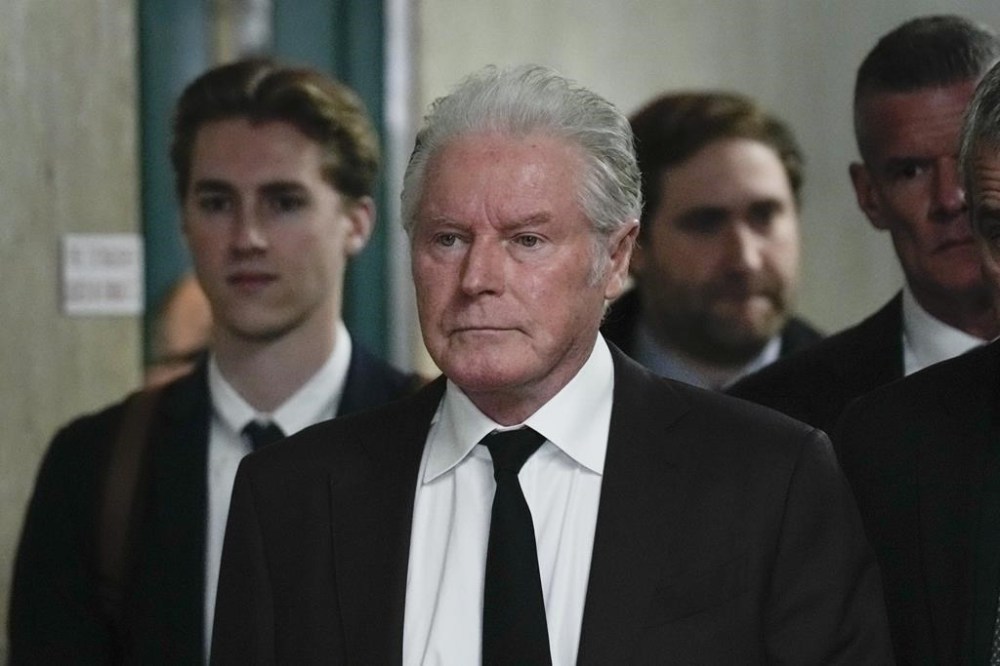
It was the first glimpse in court of some of the physical pages at the heart of a trial involving Henley’s decade-long effort to reclaim handwritten drafts of lyrics to songs, including the megahit “Hotel California.”
After spending Monday telling the New York court about topics ranging from Eagles songwriting to his past personal troubles, the Eagles co-founder underwent further questioning Tuesday from lawyers for three collectibles experts who are on trial.
Henley was asked about the writing of “Hotel California” and how he didn’t notice for decades that the handwritten pages were missing. He was also queried about his past cocaine use — retorting that he was no “drug-filled zombie” — and even about a $96 limousine bill from 1973.
He continued to insist that he never voluntarily parted with handwritten sheets from work, including the Eagles’ 1976 release “Hotel California,” the third-best-selling album ever in the U.S.
“I believed that my property was stolen,” Henley said.
The album produced one of rock’s most enduring hits, the song “Hotel California,” credited to Frey, Henley and guitarist Don Felder. Henley recalled that Felder provided a “very basic” tape with guitar chords and a drum-machine beat. Frey and Henley worked from that to craft the lyrics, and three guitarists — “four, if you count the bass” — contributed to the recording, Henley said.
A prosecutor objected that the questions weren’t relevant, but Judge Curtis Farber let them continue.
“I don’t know the relevance, but it’s interesting,” the judge said to laughter from the courtroom audience. Farber will decide the verdict, as the defendants chose not to have a jury.
The defendants — Edward Kosinski, Craig Inciardi and Glenn Horowitz — are charged with scheming to conceal the lyrics pages’ disputed ownership and sell them despite knowing that Henley claimed they had no right. The defendants have pleaded not guilty to charges including conspiracy to criminally possess stolen property.
They are not accused of actually stealing the roughly 100 legal-pad sheets. Horowitz bought them in 2005 from writer Ed Sanders, who had worked with the Eagles decades earlier on a band biography that never got published. Horowitz later sold the documents to Inciardi and Kosinski, who then started putting pages up for auction in 2012.
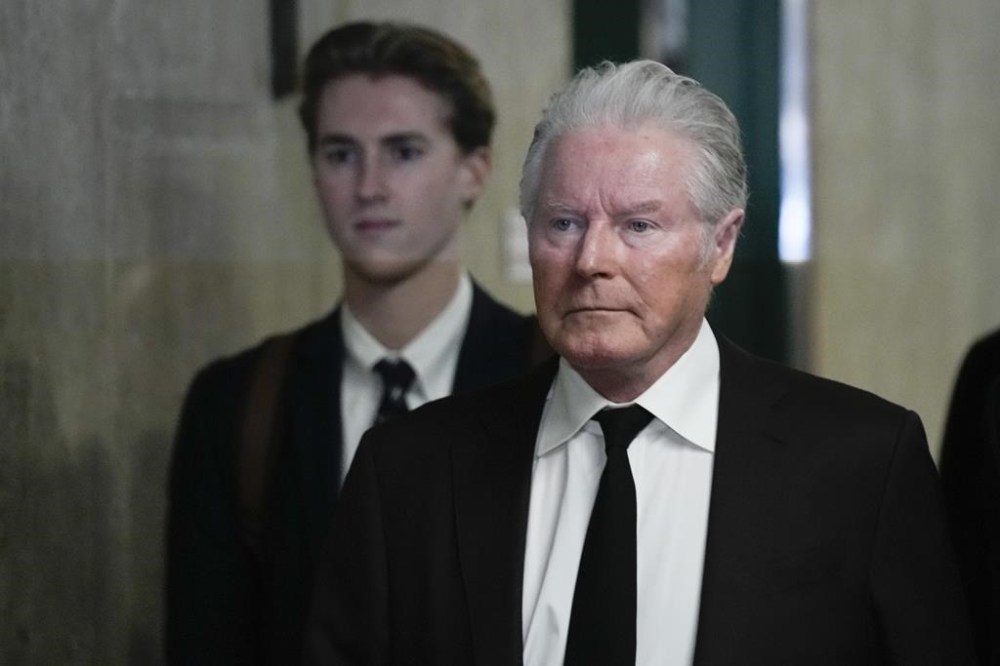
Sanders isn’t charged with any crime. He hasn’t responded to messages about the case.
Henley bought back four pages of “Hotel California” song lyrics from Kosinski and Inciardi in 2012. He also went to authorities then, and again when more pages — some from the hit “Life in the Fast Lane” — turned up for sale in 2014 and 2016.
At the trial, Henley has testified that Sanders was allowed to view the pages, and nothing more.
Henley said Monday that he didn’t give permission for the “very personal, very private” lyrics drafts to be removed from his property in Malibu, California, though he acknowledged that he didn’t recall the entirety of his conversations with the writer in the late 1970s and early 1980s.
In a tape of a 1980 phone call that was played in court, Henley said he’d “try to dig through” his lyrics drafts in order to aid Sanders’ book.
But Henley said Tuesday that “there is no tape or document anywhere where I say, ‘Mr. Sanders, you’re free to keep these items in perpetuity, and you’re free to sell them.’”
Sanders’ 1979 book contract with the Eagles said that material they provided him was their property. Defense lawyers have suggested that Henley is making a criminal accusation out of a clause in a contract that they say Kosinski, Inciardi and Horowitz knew nothing about.
“The idea that the items were stolen from your barn was perhaps an overstatement, fair to say?” defense attorney Stacey Richman asked Henley. He replied that he didn’t know.
The defense also has sought to show that the Eagles provided Sanders with copious insider material. Lawyer Jonathan Bach noted that Henley’s property caretaker shipped Henley a box; its contents weren’t listed.
Attorney Scott Edelman pointed to the 1973 car-service receipt, which authorities said they found when searching Sanders’ home. According to testimony, someone typed “Don Henley’s offending limousine bill” on the slip, and Henley filled the margins with hand-written comments that weren’t read aloud in court.
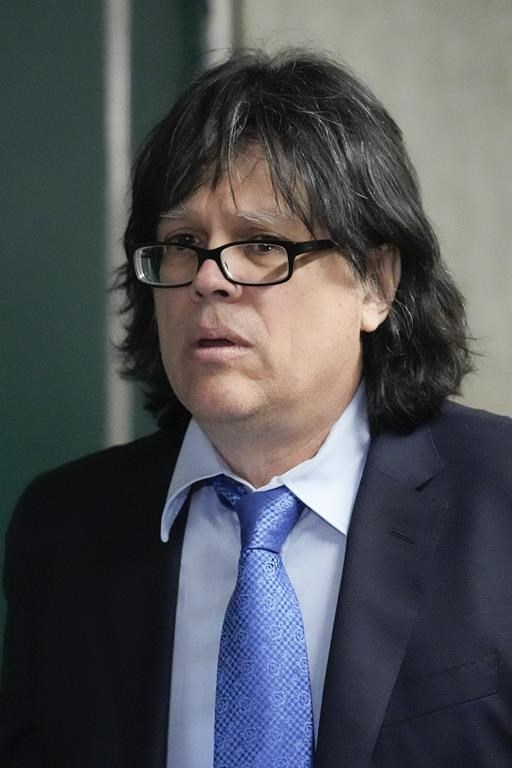
The defense also has questioned how clearly the rock star remembers whatever he told Sanders during the book project, which spanned a tumultuous and fast-living time for Henley.
The Eagles broke up in 1980, and Henley was arrested that year after authorities said they found a 16-year-old girl naked and suffering from a drug overdose in his Los Angeles home. He was sentenced to probation and a $2,500 fine after pleading no contest to a misdemeanor charge of contributing to the delinquency of a minor.

He wrote to a probation officer that “my environment has led me to accept drugs as a part of everyday life” and that cocaine had bolstered his courage “to write songs and put my innermost feelings and emotions on public display,” according to a letter presented in court. In the undated letter, he said he was giving up drugs.
Asked whether he had been using “a significant amount of cocaine” before his arrest, Henley replied: “Significant?”
“You know, ‘sex, drugs and rock ‘n’ roll’ is not revelatory,” he said in a voice that grew increasingly hoarse as testimony went on. At one point, prosecutors gave him a throat lozenge.
He said he used cocaine “intermittently” throughout the 1970s but he was always lucid when performing or doing business.
“If I was some sort of a drug-filled zombie, I couldn’t have accomplished everything I accomplished before 1980 and after 1980,” Henley said.
Related Articles
Eagles' Don Henley quizzed at lyrics trial about time a naked 16-year-old girl overdosed at his home
Advertisement Advertise With Us
Advertisement Advertise With Us