

Saudi Arabian soccer’s international ambitions for clubs including Super Leagues aired at conference
Advertisement
Read this article for free:
or
Already have an account? Log in here »
To continue reading, please subscribe:
Digital Subscription
One year of digital access for only $1.44 a week*
- Enjoy unlimited reading on winnipegfreepress.com
- Read the E-Edition, our digital replica newspaper
- Access News Break, our award-winning app
- Play interactive puzzles
*Billed as $5.77 plus GST every four weeks. After 52 weeks, price increases to the regular rate of $19.95 plus GST every four weeks. Offer available to new and qualified returning subscribers only. Cancel any time.
To continue reading, please subscribe:
Add Free Press access to your Brandon Sun subscription for only an additional
$1 for the first 4 weeks*
- Enjoy unlimited reading on winnipegfreepress.com
- Read the E-Edition, our digital replica newspaper
- Access News Break, our award-winning app
- Play interactive puzzles
*Your next Brandon Sun subscription payment will increase by $1.00 and you will be charged $17.95 plus GST for four weeks. After four weeks, your payment will increase to $24.95 plus GST every four weeks.
Read unlimited articles for free today:
or
Already have an account? Log in here »
Hey there, time traveller!
This article was published 28/02/2024 (968 days ago), so information in it may no longer be current.
Saudi Arabia sees placing its soccer clubs in more international games including Super Leagues as key to achieving the kingdom’s ambitions, a leading industry conference was told Wednesday.
A debate on the emerging power of Saudi money and influence in world soccer opened the annual Financial Times-hosted soccer conference in the year the country is expected to be confirmed by FIFA as host of the men’s 2034 World Cup.
In club soccer, Cristiano Ronaldo’s arrival in January 2023 on a reported $200 million annual salary to play in the Saudi Pro League brought global attention to the domestic game and a subsequent spending spree on more players was mostly funded by oil-fueled sovereign wealth.
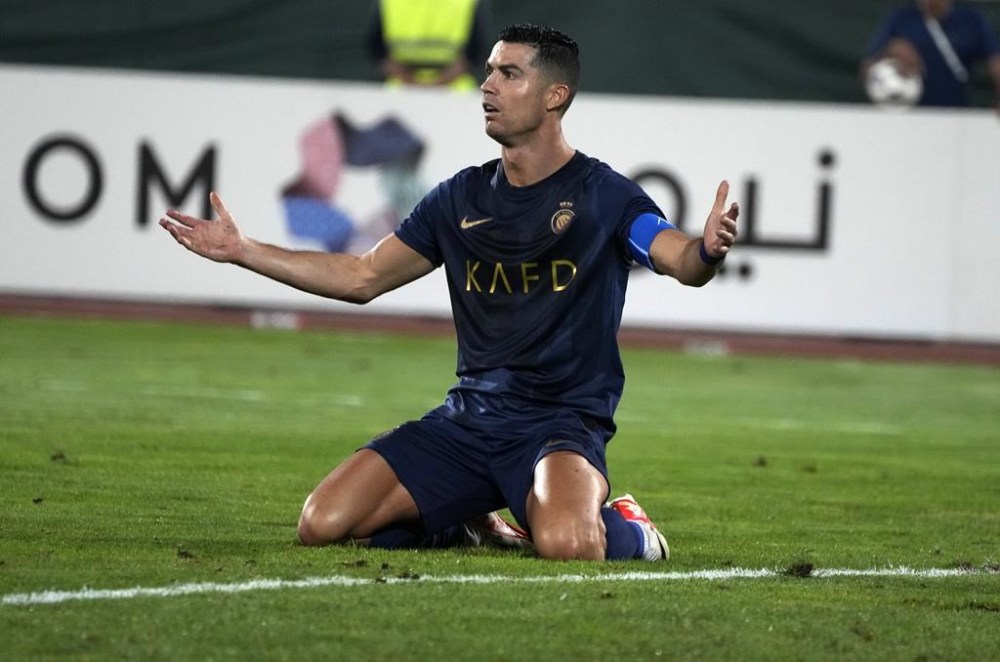
A global strategy was detailed Wednesday in London to help the Saudi league’s ambitious goal to become one of the world’s best — part of crown prince Mohammed bin Salman’s Vision 2030 project to modernize the kingdom that critics say is “sportswashing.”
“If you are going to be bringing big players and then also get the club franchises out there, you are going to give yourselves a chance to achieve these objectives,” said Robert Klein of IMG, the agency working with the league to sign international commercial deals.
“If you can take the clubs abroad, first through friendlies, for sure, then maybe through Super Leagues, you are going to have that impact,” he said.
There is no published plan for a multi-national Super League in Asia and it is a controversial concept in Europe. A fierce backlash by fans and governments, especially in England, helped defeat a breakaway plan by 12 storied clubs in April 2021.
An African version launched last year as a low-key event that attracted little global interest with only eight teams invited to a three-week knockout competition.
The annual Asian Champions League and the 32-team Club World Cup that FIFA will launch next year — though to be played only every four years — are currently the competitive international options for Saudi clubs.
“If they (the clubs) perform well there it has an impact on the fan base,” Klein said. “We are trying to have discussions to look at what else can be done.”
Three Saudi clubs, including Ronaldo’s Al Nassr, are in the Asian Champions League quarterfinals that start play next week. The title winner will enter the Club World Cup that already includes 2021 Asian champion Al Hilal, the Riyadh club that signed Neymar last year.
Aiming to “enhance that global engagement,” Saudi Pro League vice chairman Saad Al-Lazeez said at the FT conference more editions of the domestic Super Cup could be taken abroad.
A single match between the domestic league and cup winners was played in London each year from 2015 to 2017 at the grounds of Fulham and Queens Park Rangers. The competition now includes the league runner-up and cup beaten finalist in a four-team event.
Al-Lazeez defended the high salaries stars like Ronaldo, Neymar and Karim Benzema are paid by clubs majority-owned by the Public Investment Fund sovereign wealth operation overseen by the crown prince.
“You have to start somewhere, and sometimes you have to overcompensate,” Al-Lazeez said. “The prices will justify themselves by the returns on the investment that we are going to assume in years to come.”
Despite reports Benzema has not settled with Al-Ittihad in Jeddah, the highest-profile quick exit from Saudi Arabia of a star signed last year was England midfielder Jordan Henderson.
Henderson had been widely criticized for leaving Liverpool, where he had supported LGBT campaigns, to join Al Ettifaq and stayed just a few months before returning to Europe with Ajax.
“Jordan Henderson, I think, even though he left was, and would still be, one of the best signings we had,” Al-Lazeez insisted, without specifying reasons.

The FT panel included Asian soccer expert Alex Phillips, a former senior manager at European soccer body UEFA, who said it was “unlikely but possible” the Saudi league would reach its aim of becoming one of the best five in the world.
“You need to develop your own players and that means a very strong culture and infrastructure,” he said, suggesting the key challenge for Saudi soccer that has a 10-year road to hosting the World Cup.
“It cannot fail before then,” Phillips said of the 2034 target. “The project is not going to dip before then.”
___
AP soccer: https://apnews.com/hub/soccer
Related Articles
3 MLS teams are celebrating 50 years of North American pro soccer this season






Advertisement Advertise With Us
Advertisement Advertise With Us