Navalny’s Christianity under-reported
Anti-Putin activist who died in Russian penal colony found peace, purpose from religious conversion

Advertisement
Read this article for free:
or
Already have an account? Log in here »
To continue reading, please subscribe:
Digital Subscription
One year of digital access for only $1.44 a week*
- Enjoy unlimited reading on winnipegfreepress.com
- Read the E-Edition, our digital replica newspaper
- Access News Break, our award-winning app
- Play interactive puzzles
*Billed as $5.77 plus GST every four weeks. After 52 weeks, price increases to the regular rate of $19.95 plus GST every four weeks. Offer available to new and qualified returning subscribers only. Cancel any time.
To continue reading, please subscribe:
Add Free Press access to your Brandon Sun subscription for only an additional
$1 for the first 4 weeks*
- Enjoy unlimited reading on winnipegfreepress.com
- Read the E-Edition, our digital replica newspaper
- Access News Break, our award-winning app
- Play interactive puzzles
*Your next Brandon Sun subscription payment will increase by $1.00 and you will be charged $17.95 plus GST for four weeks. After four weeks, your payment will increase to $24.95 plus GST every four weeks.
Read unlimited articles for free today:
or
Already have an account? Log in here »
Hey there, time traveller!
This article was published 02/03/2024 (962 days ago), so information in it may no longer be current.
Accolades and tributes have been pouring in for Alexei Navalny, who died Feb. 16 in a Russian penal colony at the age of 47.
The many media reports about his death mentioned his years of criticism of the authoritarian rule of Russian leader Vladimir Putin, the widespread corruption and lack of freedom in that country, and how he spoke against Putin’s war against Ukraine.
One thing that did not get much mention was Navalny’s Christian faith, which he apparently adopted following a failed 2020 attempt on his life.
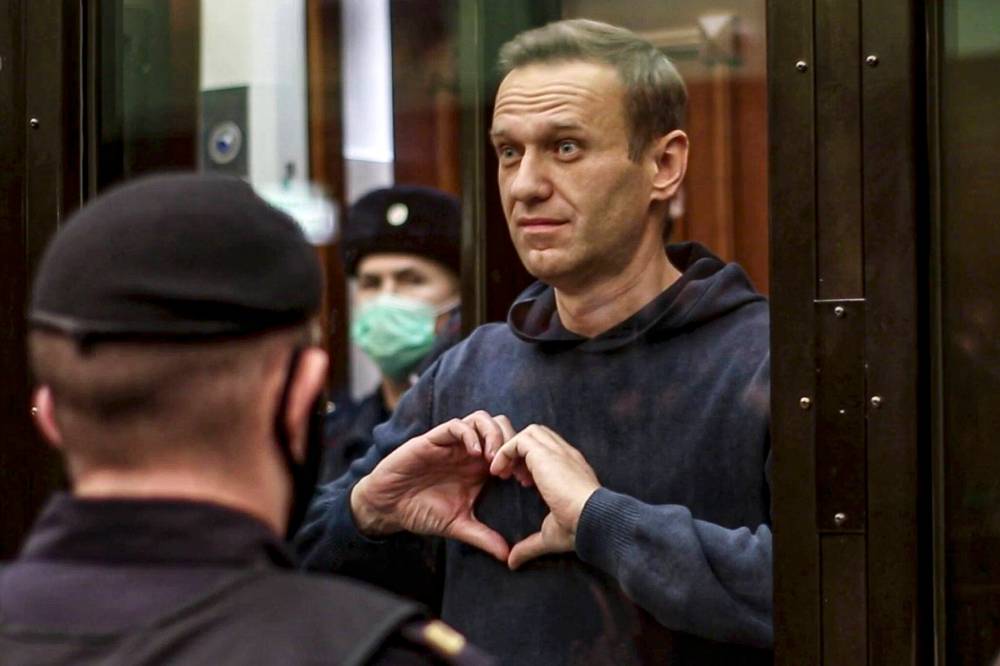
He referred to it during his closing statement at his 2021 trial. As reported by the Moscow Helsinki Group, a now-defunct Russian human rights organization, Navalny said:
“If you want, I’ll talk to you about God and salvation. I’ll turn up the volume of heartbreak to the maximum, so to speak. The fact is that I am a Christian, which usually rather sets me up as an example for constant ridicule in the Anti-Corruption Foundation, because mostly our people are atheists and I was once quite a militant atheist myself.”
“But now I am a believer, and that helps me a lot in my activities, because everything becomes much, much easier. I think about things less. There are fewer dilemmas in my life, because there is a book in which, in general, it is more or less clearly written what action to take in every situation. It’s not always easy to follow this book, of course, but I am actually trying. And so, as I said, it’s easier for me, probably, than for many others, to engage in politics.”
Navalny went on to quote from Christ’s Sermon on the Mount: “Blessed are those who hunger and thirst for righteousness, for they will be satisfied,” adding he had always thought of that statement as “more or less an instruction to activity.”
That instruction, which he called a commandment, caused him to return to Russia where he was imprisoned and died.
“While certainly not really enjoying the place where I am, I have no regrets about coming back, or about what I’m doing,” he said at the time. “I did as required by the instructions, and did not betray the commandment.”
Additionally, Navalny’s letters from prison to the former Soviet prisoner of conscience Natan Sharansky included biblical and religious references. “Where else to spend Holy Week,” he said, “if not in SHIZO (shtrafnoy izolyator, or solitary confinement, in Russian)!” He cited Ecclesiastes at one point, and signed off another letter to the Jewish Sharansky, with “L’Shana Haba’ah B’Yerushalayim.” (“Next year in Jerusalem,” a traditional Passover greeting.)
In an article titled Don’t ignore Alexei Navalny’s Christian faith in America Magazine, a Catholic review of faith and culture, Maggie Phillips noted none of the public eulogies, outside a few religious outlets, included Mr. Navalny’s conversion from atheism to Christianity.
“He had spoken explicitly — although infrequently — about how his religious faith influenced his activism,” she wrote, acknowledging “it might earn him mockery from his opposition compatriots. A similar embarrassment may be behind the omission of his beliefs in the retrospectives on his life’s work.”
By leaving out his “very Christian understanding of suffering,” media coverage summing up his life’s work missed “a key part of what made his opposition to Vladimir Putin so powerful,” Phillips wrote.

His sacrifice has “inspired people all over the world,” she said. “The example of his suffering united his admirers and fortified their shared commitment to freedom and human rights.”
Although a successful social movement does not need an explicitly religious bent, Phillips said it can give it “a moral centre and reason for sticking with an issue even when success seems difficult or impossible — a belief that things will work out in the end, that people like Putin, in Navalny’s case, don’t have the final word.”
Navalny, she said, “understood that justice is not always swift in the eyes of the world … (he) was prepared to lay down his life for something he believed in, even if, by his own admission, all he might gain from it in this world is ‘the consolation of having led an honest life.’”
The Gospel mandate, she concluded, “makes it clear that we are required to work for justice. Even as we serve Jesus who said his kingdom was not of this world, the death of Alexei Navalny can serve as a powerful reminder this Lent. We hunger and thirst for justice, but our consolation may not appear in the way we might imagine, at least on this side of heaven.”
faith@freepress.mb.ca
The Free Press is committed to covering faith in Manitoba through our Religion in the News project. This reporting continues because readers like you step forward to fund it.
Donate now to support our reporting on religion.
Your donation is eligible for a charitable tax receipt.
BECOME A FAITH JOURNALISM SUPPORTER
Our newsroom depends on a growing audience of readers to power our journalism. If you are not a paid reader, please consider becoming a subscriber.
Our newsroom depends on its audience of readers to power our journalism. Thank you for your support.
The Free Press is committed to covering faith in Manitoba through our Religion in the News project. This reporting continues because readers like you step forward to fund it.
Donate now to support our reporting on religion.
Your donation is eligible for a charitable tax receipt.
BECOME A FAITH JOURNALISM SUPPORTER
Our newsroom depends on a growing audience of readers to power our journalism. If you are not a paid reader, please consider becoming a subscriber.
Our newsroom depends on its audience of readers to power our journalism. Thank you for your support.
Advertisement Advertise With Us
Advertisement Advertise With Us
The Free Press acknowledges the financial support it receives from members of the city’s faith community, which makes our coverage of religion possible.