Demystifying the mind
Mechanisms of the brain, links to memory chronicled in accessible, engaging account
Advertisement
Read this article for free:
or
Already have an account? Log in here »
To continue reading, please subscribe:

Digital Subscription
One year of digital access for only $205*
- Enjoy unlimited reading on winnipegfreepress.com
- Read the E-Edition, our digital replica newspaper
- Access News Break, our award-winning app
- Play interactive puzzles
*First annual payment billed as $205.00 + GST for one year. This annual subscription will automatically renew at $233.00 + GST every 52 weeks (10% off the regular annual price of $259.35). Offer available to new and qualified returning subscribers only. Cancel any time.
To continue reading, please subscribe:
Add Free Press access to your Brandon Sun subscription for only an additional
$1 for the first 4 weeks*
- Enjoy unlimited reading on winnipegfreepress.com
- Read the E-Edition, our digital replica newspaper
- Access News Break, our award-winning app
- Play interactive puzzles
*Your next Brandon Sun subscription payment will increase by $1.00 and you will be charged $17.95 plus GST for four weeks. After four weeks, your payment will increase to $24.95 plus GST every four weeks.
Read unlimited articles for free today:
or
Already have an account? Log in here »
Hey there, time traveller!
This article was published 02/03/2024 (930 days ago), so information in it may no longer be current.
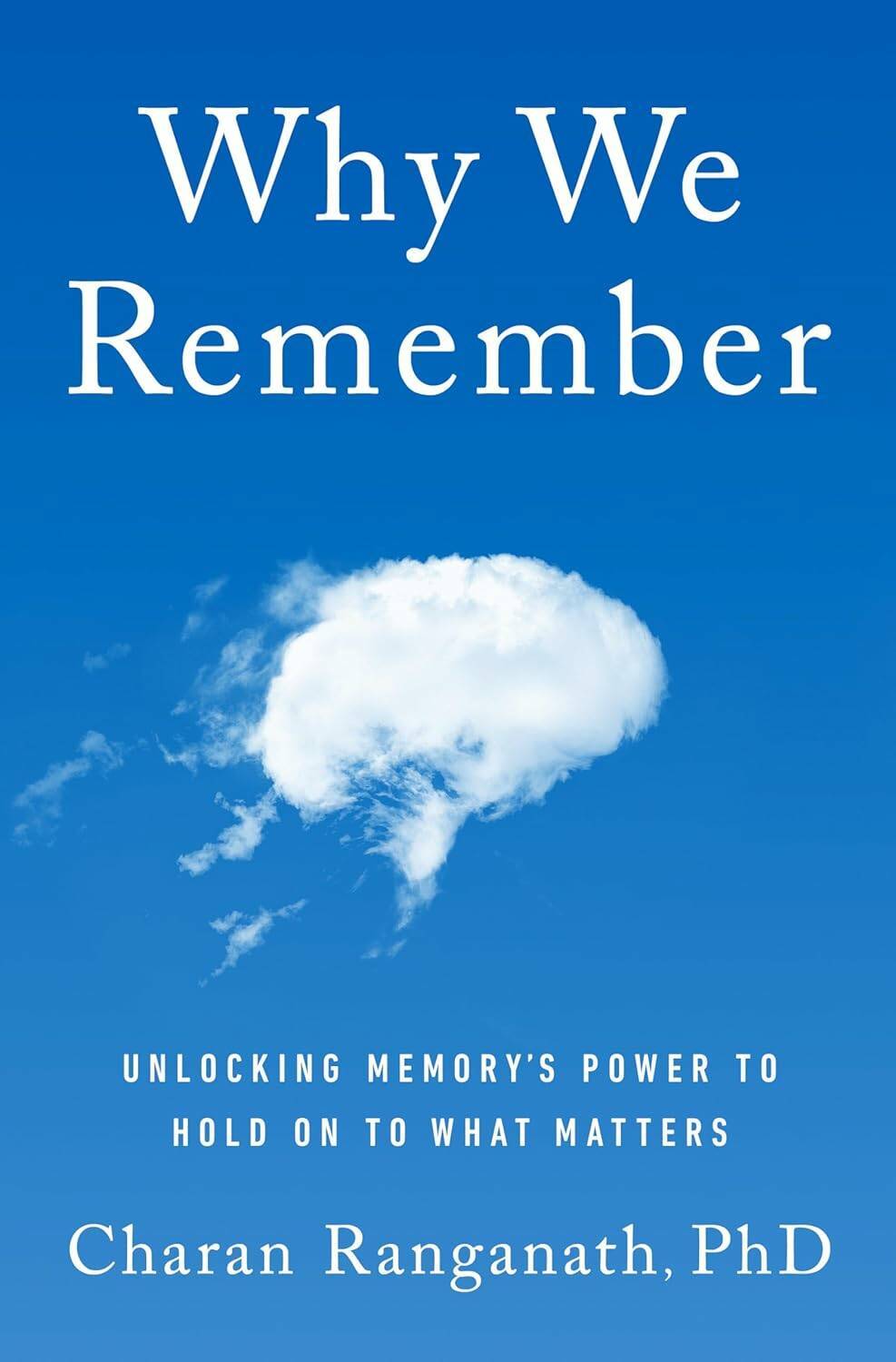
Not every professor or scholar can explain their work clearly and ably to interested, ordinary readers. Fortunately, Charan Ranganath can. You don’t need a PhD in neuroscience or a degree in anatomy to understand his new book Why We Remember: Unlocking Memory’s Power to Hold on to What Matters.
Not that the book is an oversimplified guide for students trying to remember things for exams or a manual for seniors to keep them from forgetting where they left their keys. It’s not.
Why We Remember covers the important discoveries scientists have made in the past century about how the brain works, and especially how the prefrontal cortex and the hippocampus collect, organize, store and retrieve memories.
Chris Young / The Canadian Press files
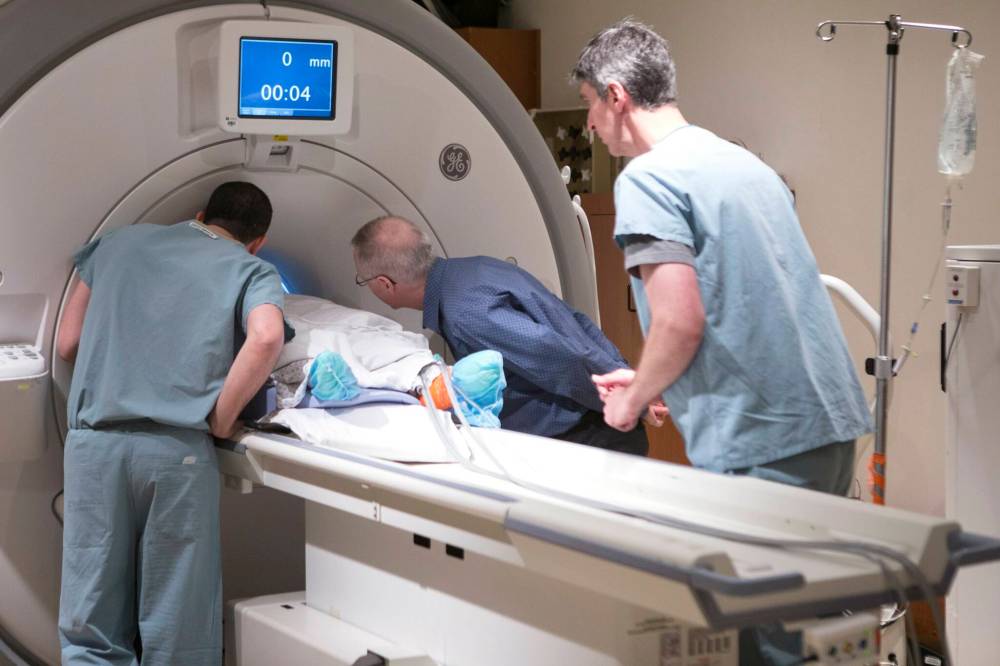
Neuroscientists have used MRIs to map the different areas of memory activity in the brain.
Utilizing his vast knowledge of the history of brain studies, his seemingly personal connections to many other neuroscientists around the world and his own experiences and stories, Ranganath makes Why We Remember into a truly fascinating account.
For 25 years Ranganath has studied the mechanisms of the brain as professor of psychology and head of the Dynamic Memory Lab at the University of California at Davis. But he’s a gifted storyteller as well as a highly respected scientist.
In the first of three sections of the book, The Fundamentals of Memory, Ranganath establishes some basic truths: “literal recall is extraordinarily unimportant” and “we are designed to forget.” He then goes on to explain that the prefrontal cortex is not, as previously thought, “uniquely specialized for any specific kind of memory.” New developments in brain scanning have determined that it instead functions as the CEO, coordinating the activities of the more specialized networks of the brain. What the prefrontal cortex coordinates are two kinds of memory: episodic memory (events and experiences) and semantic memory (data and facts).
How do we know?
MRIs.
Ranganath’s descriptions of how neuroscientists have used MRIs to progress step-by-step in mapping out the different areas of memory activity is one of the many strengths of this book. Personalities, methodologies and results are conveyed with an easy logic and rigour that make “the scientific method” as it relates to neuroscience readily accessible.
Section two of Why We Remember dispels some of the many myths about memory, most revealingly: “Remembering is not the re-excitation of innumerable fixed, lifeless and fragmentary traces. It is an imaginative reconstruction.” Here he recounts the remarkable story of Solomon Shereshevsky, who could quickly memorize “made-up words, complex mathematical formulas, even poems and texts in languages he didn’t speak.” The key to his astounding mnemonic skills was his “vibrant imagination.”
Why We Remember
The final section of the book, The Implications, is divided into three chapters containing some surprising observations as well as warnings. Remembering can change our memories, for instance; as Ranganath notes, “Assessing a memory is more like hitting ‘play’ and ‘record’ at the same time.” In worst case scenarios, because memories are fallible and can be corrupted, sinister police or courtroom interrogation methods can convict the innocent or free the guilty.
Some helpful recommendations round out the book. Research shows that we can learn more if we make mistakes rather than by cramming. And social interactions can help shape our memories.
Knowing the basic anatomy of the brain might be helpful before tackling Why We Remember, as well as having a tolerance for occasional jargon (such as DMN — default memory network). But this is a timely, readable and useful book in an era when Google has replaced memory and dementia looms over some of us.
Gene Walz has been keenly interested in the brain ever since he watched Bob Lower’s brilliant NFB film Something Hidden: A Portrait of Wilder Penfield.