Pritzker Prize goes to Japanese architect who values community in spaces both public and private

Advertisement

Advertise with us

The Pritzker Architecture Prize has been awarded to Japan’s Riken Yamamoto, who earns the field’s highest honor for what organizers called a long career focused on “multiplying opportunities for people to meet spontaneously, through precise, rational design strategies.”

Read this article for free:


or

Already have an account? Log in here »

To continue reading, please subscribe:

Subscribe and receive a limited-edition Free Press branded hat or tote.

Digital Subscription

One year of digital access for only $205*

  • Enjoy unlimited reading on winnipegfreepress.com
  • Read the E-Edition, our digital replica newspaper
  • Access News Break, our award-winning app
  • Play interactive puzzles

*First annual payment billed as $205.00 + GST for one year. This annual subscription will automatically renew at $233.00 + GST every 52 weeks (10% off the regular annual price of $259.35). Offer available to new and qualified returning subscribers only. Cancel any time.

To continue reading, please subscribe:

Add Free Press access to your Brandon Sun subscription for only an additional

$1 for the first 4 weeks*

  • Enjoy unlimited reading on winnipegfreepress.com
  • Read the E-Edition, our digital replica newspaper
  • Access News Break, our award-winning app
  • Play interactive puzzles
Start now

*Your next Brandon Sun subscription payment will increase by $1.00 and you will be charged $17.95 plus GST for four weeks. After four weeks, your payment will increase to $24.95 plus GST every four weeks.

Hey there, time traveller!
This article was published 05/03/2024 (937 days ago), so information in it may no longer be current.

The Pritzker Architecture Prize has been awarded to Japan’s Riken Yamamoto, who earns the field’s highest honor for what organizers called a long career focused on “multiplying opportunities for people to meet spontaneously, through precise, rational design strategies.”

Yamamoto, 78, has spent a five-decade career designing both private and public buildings — from residences to museums to schools, from a bustling airport center to a glass-walled fire station — and prizing a spirit of community in all spaces.

“By the strong, consistent quality of his buildings, he aims to dignify, enhance and enrich the lives of individuals — from children to elders — and their social connections,” the jury said, in part, in a citation released Tuesday. “For him, a building has a public function even when it is private.”
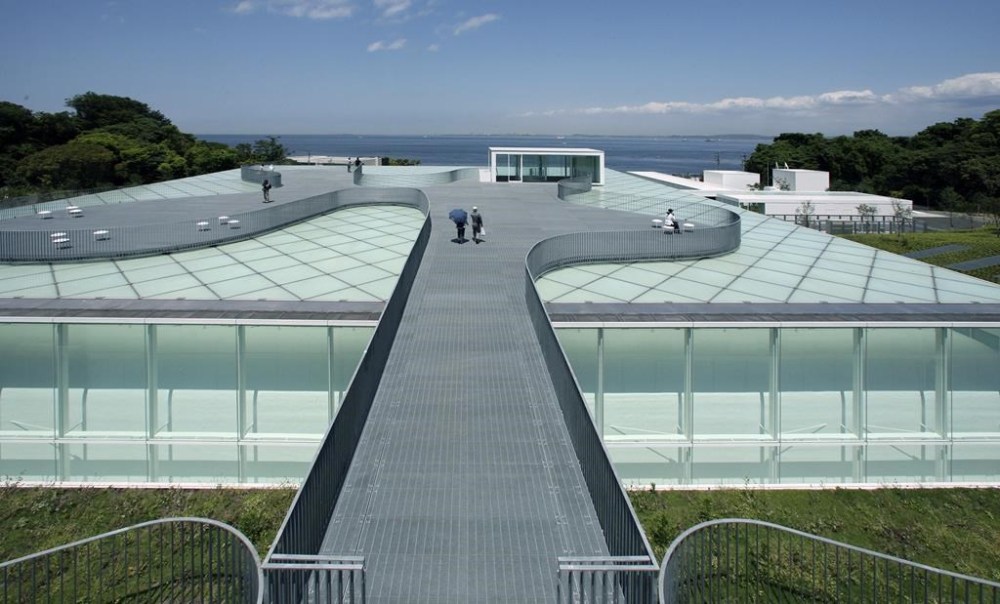
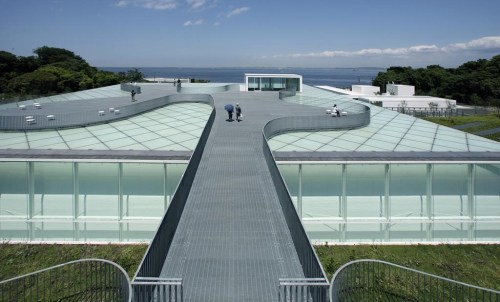
This image released by the Pritzker Prize shows the Yokosuka Museum of Art, designed by Riken Yamamoto, in Yokosuka, Japan. (Courtesy of Tomio Ohashi/Pritzker Prize via AP)

In an interview from Yokohama, where he is based, Yamamoto said he was both proud and “amazed” to win the prize, seen as the Nobel of architecture, at this point in his career.

“Soon I will be 79 years old,” he said. “This prize is a big moment for me. In the near future I think many people will listen to me very carefully. Maybe I can say my opinion more easily than before.”

The architect explained that his craft is not simply to design buildings, but to design in the context of their surroundings, and hopefully to impact the surroundings as well.

A key example: Yamamoto’s virtually transparent Hiroshima Nishi Fire Station, designed in 2000, with a facade, interior walls and floors made of glass. The building invites the public to experience the daily activities of firefighters, something it rarely sees. The result encourages passersby “to view and engage with those who are protecting the community, resulting in a reciprocal commitment between the civil servants and the citizens they serve,” organizers said.

Normally, Yamamoto said, a fire station would be built from concrete. He had a different perspective, which he submitted in a competition with other architects.

“I proposed a very radical idea,” Yamamoto said. “The idea was that the fire house should be the center of the community. Not only their fire work but their daily life should be the center, because they are living at the place, for 24 hours they have activities.” He described firefighters training with ropes and ladders in a central atrium visible from outside.

“Many young children come to see,” he said. “It’s very interesting for them.”

A more recent design with a similar concept is The Circle at Zurich’s airport, designed in 2020, a major commercial center for shops, restaurants, hotels and a convention hall. Yamamoto said he aimed to create an open, 24-hour hour environment, a space to welcome city residents as well travelers.

“I proposed a very open system,” he said, “no gate, no entrance, no door.” He said snow or rain sometimes enters the space via a partially open roof.

Another noted design is the Hotakubo housing project in Kumamoto, Japan, Yamamoto’s first social housing project, made up of 110 homes in 16 “clusters.”

“How do you make a community out of 110 family houses?” he mused in an interview about the 1991 design. “It is very difficult.” Most apartments, he noted, are boxes inside of a bigger box. “It’s very easy to create privacy, but very difficult to make a community because each house is independent,” he said.

The architect’s solution: a tree-lined plaza at the center that can only be entered via a residence. In this way, he explained, he was able to combine the private with the public, giving individual families their privacy while promoting connections between them. Terraces also overlook the common space.

Yamamoto was born in China in 1945 and raised in Japan from early childhood. He said he first grew attracted to architecture while still in high school. He received a master’s degree in architecture from Tokyo University in 1971, and founded his own practice two years later.

Many of his ideas on community were inspired by three extensive trips he took early in his career — not to famous monuments but instead to villages around the world, he said, in Europe, North Africa, Latin America, the Middle East and Asia. In such villages, he examined the relationship of the family unit to the broader community and explored the idea of a “threshold” between public and private space. He also said he was inspired by the writings of philosopher Hannah Arendt.

A book by Yamamoto, “The Space of Power, The Power of Space,” is due to be published next month, an English translation of his 2015 work.

Yamamoto, who lives and works in Yokohama and has held numerous teaching positions, is the 53rd laureate of the Pritzker Architecture Prize, established in 1979 by the late entrepreneur Jay A. Pritzker and his wife, Cindy. Winners receive a $100,000 grant and a bronze medallion.


Report Error Submit a Tip

More Stories

Charges laid after St. Boniface hospital assault

1 minute read Yesterday at 12:40 PM CDT

A man has been charged after a serious assault at St. Boniface Hospital on Saturday.

Just after 1 a.m. Sept. 26, two men were having an argument that escalated to a physical fight in which the victim sustained serious upper-body injuries, the Winnipeg Police Service stated in a news release Sunday.

When police arrived, a 36-year-old man was being detained by security personnel. The incident didn't involve hospital staff and no one else was hurt, the release stated.

James Anthony Junior Clark, 36, was arrested and charged with assault causing bodily harm and two counts of violating a probation order.

Winnipeg Police Service recognizes, honours residential school survivors as Orange Shirt Day approaches

Malak Abas 3 minute read Preview

Winnipeg Police Service recognizes, honours residential school survivors as Orange Shirt Day approaches

Malak Abas 3 minute read Yesterday at 7:27 PM CDT

Winnipeg Police Service members lit a sacred fire outside of their North District Station in recognition of residential school survivors ahead of the upcoming Orange Shirt Day.

“We know that the relationship between policing and Indigenous communities has not always been one of trust,” WPS Chief Gene Bowers told visitors at a gathering outside of the station Sunday afternoon.

“We cannot change that history, but we can acknowledge it, we can learn from it, and we can take responsibility for how we move forward.”

The sacred fire, guided by elder Mike Calder, will burn for 24 hours at the Sinclair Street station, and then be allowed to extinguish naturally. It’s the second year the WPS has lit a sacred fire in recognition of residential school survivors — last year, the fire was lit outside of WPS headquarters on Smith Street.

Read
Yesterday at 7:27 PM CDT

Is another goalie on Jets’ wish list?

Ken Wiebe 7 minute read Preview

Is another goalie on Jets’ wish list?

Ken Wiebe 7 minute read Yesterday at 6:59 PM CDT

Kevin Cheveldayoff and company are down to the short strokes.

With the opening-day roster due on Monday afternoon, the Winnipeg Jets took steps on the weekend to get down to the final number.

As it stood on Sunday, the Jets were down to 24 healthy players in training camp after centre Danny Zhilkin and defenceman Henry Thrun were placed on waivers.

With a maximum of 23 spots available, the only things left to determine are whether the Jets are interested in claiming a more experienced goalie to serve as the backup to Stuart Skinner and if centre Brayden Yager will break camp with the big club.

Read
Yesterday at 6:59 PM CDT

Pritzker Prize goes to Japanese architect who values community in spaces both public and private

Jocelyn Noveck, The Associated Press 5 minute read Preview

Pritzker Prize goes to Japanese architect who values community in spaces both public and private

Jocelyn Noveck, The Associated Press 5 minute read Wednesday, Mar. 6, 2024

The Pritzker Architecture Prize has been awarded to Japan’s Riken Yamamoto, who earns the field’s highest honor for what organizers called a long career focused on “multiplying opportunities for people to meet spontaneously, through precise, rational design strategies.”

Yamamoto, 78, has spent a five-decade career designing both private and public buildings — from residences to museums to schools, from a bustling airport center to a glass-walled fire station — and prizing a spirit of community in all spaces.

“By the strong, consistent quality of his buildings, he aims to dignify, enhance and enrich the lives of individuals — from children to elders — and their social connections,” the jury said, in part, in a citation released Tuesday. “For him, a building has a public function even when it is private."

In an interview from Yokohama, where he is based, Yamamoto said he was both proud and “amazed” to win the prize, seen as the Nobel of architecture, at this point in his career.

Read
Wednesday, Mar. 6, 2024

‘In Normandy, we remember’

Aaron Epp 4 minute read Preview

‘In Normandy, we remember’

Aaron Epp 4 minute read Saturday, Sep. 26, 2026

Travelling nearly 7,000 km from his home in France to Winnipeg gave Gabriel Zaranski a new perspective on warfare.

“It’s very different to speak about war in school (than) to speak with real people who (have fought) in a war,” he said. “We can feel the emotion when they speak … The testimony has more impact when it’s real soldiers.”

Zaranski is one of 14 Grade 12 students from Bayeux, a town in France’s Normandy region, in Winnipeg this week for a learning tour.

The students, who attend Lycée Arcisse de Caumont high school, met on Saturday with veterans from the Queen’s Own Cameron Highlanders of Canada, a local military regiment, to discuss their studies and the regiment’s role in the Second World War.

Read
Saturday, Sep. 26, 2026

Restaurants ‘under pressure’

Gabrielle Piché 5 minute read Preview

Restaurants ‘under pressure’

Gabrielle Piché 5 minute read Friday, Sep. 25, 2026

Happy hour outings are on Jackie Piggott’s calendar — but even those are fewer.

She and her husband might visit a restaurant once a month. It’s a change over the past year: earlier, they may go twice, thrice or weekly.

“It’s something that we’ve talked about, my husband and myself, just because the pricing is so expensive,” Piggott said, stopping during a grocery run in St. Vital. “It’s also better for our health.”

She’s in the majority: a new Restaurants Canada report found 80 per cent of Canadians are eating out less frequently because of higher living costs, up from 75 per cent in 2025.

Read
Friday, Sep. 25, 2026