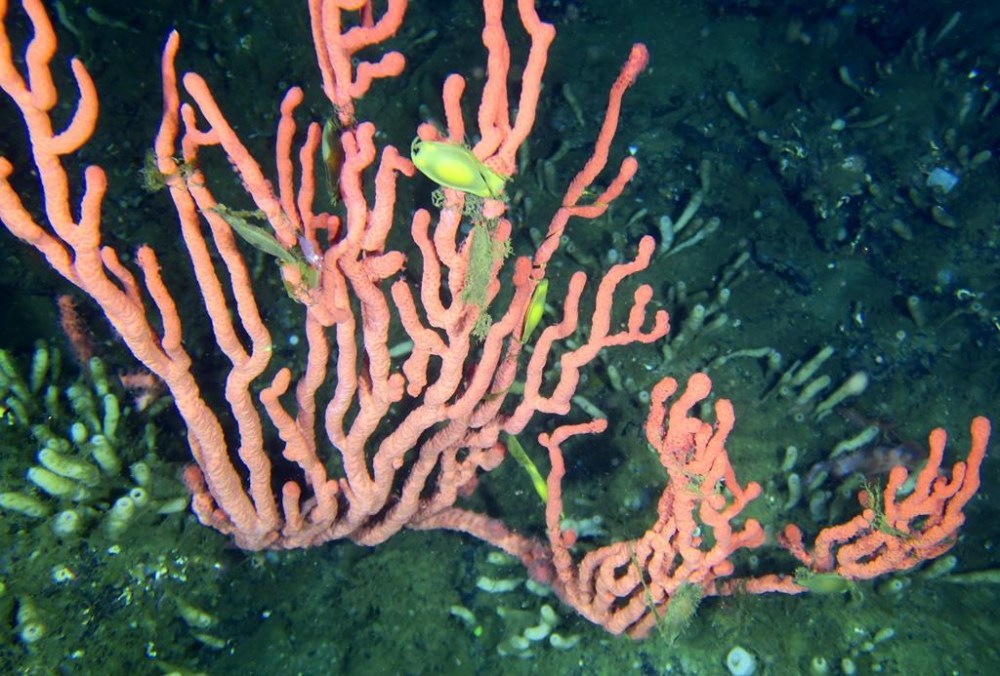
Government closes bottom-contact fishing near rare B.C. coral reef
Advertisement
Read this article for free:
or
Already have an account? Log in here »
To continue reading, please subscribe:
Monthly Digital Subscription
$0 for the first 4 weeks*
- Enjoy unlimited reading on winnipegfreepress.com
- Read the E-Edition, our digital replica newspaper
- Access News Break, our award-winning app
- Play interactive puzzles
*No charge for 4 weeks then price increases to the regular rate of $19.00 plus GST every four weeks. Offer available to new and qualified returning subscribers only. Cancel any time.
Monthly Digital Subscription
$4.75/week*
- Enjoy unlimited reading on winnipegfreepress.com
- Read the E-Edition, our digital replica newspaper
- Access News Break, our award-winning app
- Play interactive puzzles
*Billed as $19 plus GST every four weeks. Cancel any time.
To continue reading, please subscribe:
Add Free Press access to your Brandon Sun subscription for only an additional
$1 for the first 4 weeks*
*Your next subscription payment will increase by $1.00 and you will be charged $16.99 plus GST for four weeks. After four weeks, your payment will increase to $23.99 plus GST every four weeks.
Read unlimited articles for free today:
or
Already have an account? Log in here »
Hey there, time traveller!
This article was published 07/03/2024 (641 days ago), so information in it may no longer be current.
VANCOUVER – Federal authorities have closed Canada’s only known live coral reef in the Pacific Ocean to all commercial and recreational bottom-contact fishing.
Fisheries and Oceans Canada says the indefinite closure came into effect on Feb. 14 for the Lophelia Reef, located in the Finlayson Channel of the British Columbia coast about 500 kilometres northwest of Vancouver.
The department says the reef was first discovered in 2021 and is the most northern known coral reef in the Pacific Ocean.
Officials say that while the area is remote and not widely fished, there is evidence of damage to the coral, likely due to bottom-contact fishing.
The Fisheries Department says the closure is needed to protect the “globally unique” site that is both environmentally sensitive and culturally significant to local First Nations.

The coral reef is currently being assessed for a Parks Canada National Marine Conservation Area Reserve.
This report by The Canadian Press was first published March 7, 2024.