

Report: New Jersey and US were not prepared for COVID-19 and state remains so for the next crisis
Advertisement
Read this article for free:
or
Already have an account? Log in here »
To continue reading, please subscribe:
Monthly Digital Subscription
$0 for the first 4 weeks*
- Enjoy unlimited reading on winnipegfreepress.com
- Read the E-Edition, our digital replica newspaper
- Access News Break, our award-winning app
- Play interactive puzzles
*No charge for 4 weeks then price increases to the regular rate of $19.00 plus GST every four weeks. Offer available to new and qualified returning subscribers only. Cancel any time.
Monthly Digital Subscription
$4.75/week*
- Enjoy unlimited reading on winnipegfreepress.com
- Read the E-Edition, our digital replica newspaper
- Access News Break, our award-winning app
- Play interactive puzzles
*Billed as $19 plus GST every four weeks. Cancel any time.
To continue reading, please subscribe:
Add Free Press access to your Brandon Sun subscription for only an additional
$1 for the first 4 weeks*
*Your next subscription payment will increase by $1.00 and you will be charged $16.99 plus GST for four weeks. After four weeks, your payment will increase to $23.99 plus GST every four weeks.
Read unlimited articles for free today:
or
Already have an account? Log in here »
Hey there, time traveller!
This article was published 11/03/2024 (634 days ago), so information in it may no longer be current.
TRENTON, N.J. (AP) — New Jersey and the nation were not prepared when the COVID-19 pandemic hit, and the state “remains underprepared for the next emergency,” according to an independent report examining New Jersey’s response to the pandemic that sickened nearly 3 million people statewide and killed over 33,000.
The report released Monday faults planning, communication and decision-making before and during the pandemic, which broke out in early 2020.
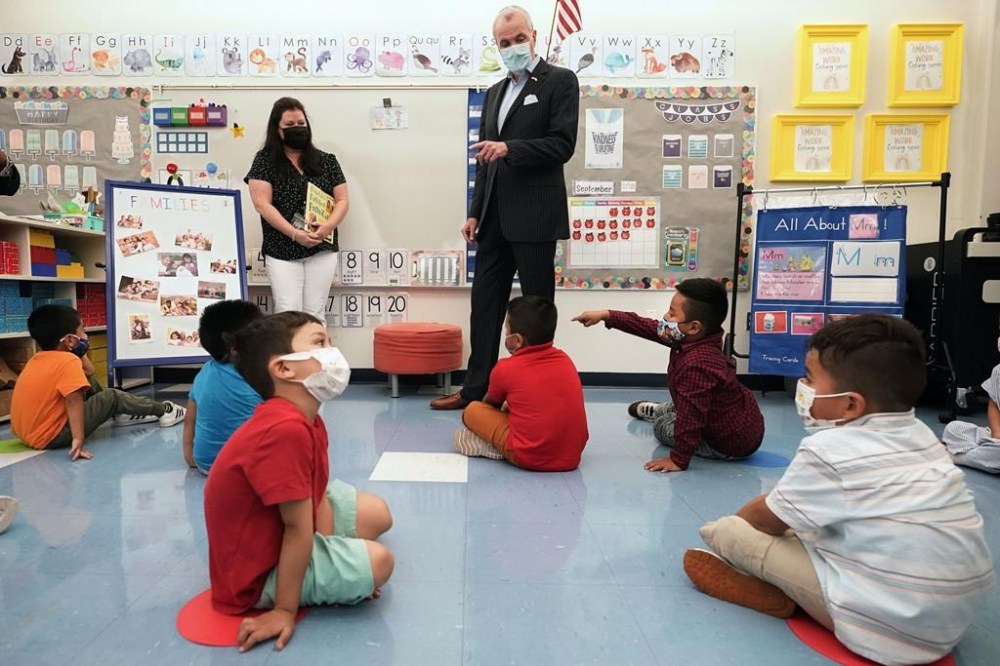
Democratic Gov. Phil Murphy called the pandemic “the greatest crisis our state has ever faced.”
He promised an outside review of his administration’s response to the outbreak in its early days. The $9 million publicly funded report was done by the law firm of Montgomery McCracken Walker & Rhoads LLP and Boston Consulting Group. It was led by Paul Zoubek, a former assistant state attorney general.
“I know New Jersey will be better off because of this review, and my administration looks forward to working with the Legislature on its recommendations,” Murphy said.
State Republicans have been sharply critical of Murphy’s performance during the pandemic, including mask mandates and shutdowns, but had not publicly reacted to the release of the report as of early Monday afternoon.
The report was blunt in listing failures leading up to the pandemic, as well as during it.
“We collectively failed as a nation and as a state to be adequately prepared,” Zoubek wrote. “At the state level, heroic actions were taken to respond in good faith to the crisis. Despite the lessons of the last four years, New Jersey remains underprepared for the next emergency.”
The report also noted things New Jersey did well during the pandemic, including making “significant systemic improvements.”
“The state, to its credit, took bold and early steps designed to substantially reduce the number of people infected: shut-downs, quarantines, mask requirements, and social distancing were all implemented and resulted in dramatic improvements in health outcomes over the course of the pandemic. By the Delta and Omicron wave, New Jersey became one of the states with the lowest death rates,” the report read.
It also said the state’s campaign to vaccinate residents and convince those hesitant to receive the shots helped New Jersey combat the spread of the virus.
“But no level of effort could overcome an inadequate healthcare infrastructure and scarcity of basic medical supplies,” the report read. “Neither the state nor the federal government had clear, executable plans in place to respond to and manage such limited resources in an uncertain and rapidly evolving environment.”
In a typical example, the report noted that in 2015 — five years before the pandemic — the state health department created a “pandemic influenza plan” that the report said “was extremely accurate in predicting what would eventually happen during the COVID-19 pandemic.”
But the existence of that plan was not widely known within senior state leadership when COVID-19 hit, the report said, adding that several people in state government it interviewed said “some other agency” ought to have an emergency preparedness manager for such instances.
“In fact, that position exists (and is staffed) in the other agency, but the people we spoke with were unaware of that fact,” the report said.

The report also found that communal care facilities, including those caring for veterans were particularly vulnerable to the spread of the virus due in part to “wholly inadequate infection controls.”
The report accepted previously issued criticism by the U.S. Department of Justice and the State Commission of Investigation finding “broad failures in leadership and management,” including a “systemic inability to implement clinical care policy, poor communication between management and staff, and a failure to ensure basic staff competency (that) let the virus spread virtually unchecked throughout the facilities.”
The report recommended updating and “stress-testing” existing emergency response plans, conducting training and practice exercises across the state for a wider range of emergencies, not just pandemics.
___
Follow Wayne Parry on X, formerly Twitter, at www.twitter.com/WayneParryAC