

Province’s pork industry faces threat
New set of regulations regarding U.S. country-of-origin labelling could cause significant disruption, official says
Advertisement
Read this article for free:
or
Already have an account? Log in here »
To continue reading, please subscribe:

Digital Subscription
One year of digital access for only $205*
- Enjoy unlimited reading on winnipegfreepress.com
- Read the E-Edition, our digital replica newspaper
- Access News Break, our award-winning app
- Play interactive puzzles
*First annual payment billed as $205.00 + GST for one year. This annual subscription will automatically renew at $233.00 + GST every 52 weeks (10% off the regular annual price of $259.35). Offer available to new and qualified returning subscribers only. Cancel any time.
To continue reading, please subscribe:
Add Free Press access to your Brandon Sun subscription for only an additional
$1 for the first 4 weeks*
- Enjoy unlimited reading on winnipegfreepress.com
- Read the E-Edition, our digital replica newspaper
- Access News Break, our award-winning app
- Play interactive puzzles
*Your next Brandon Sun subscription payment will increase by $1.00 and you will be charged $17.95 plus GST for four weeks. After four weeks, your payment will increase to $24.95 plus GST every four weeks.
Read unlimited articles for free today:
or
Already have an account? Log in here »
Hey there, time traveller!
This article was published 13/03/2024 (889 days ago), so information in it may no longer be current.
Manitoba hog producers are in for another round of trade disruptions with the U.S. after that country’s agriculture secretary announced a whole new set of regulations regarding country-of-origin labelling.
Starting Jan 1., 2026, “Product of USA” or “Made in the USA” labelling can only be used on meat, poultry and egg products if they are derived from animals born, raised, slaughtered and processed in the United States.
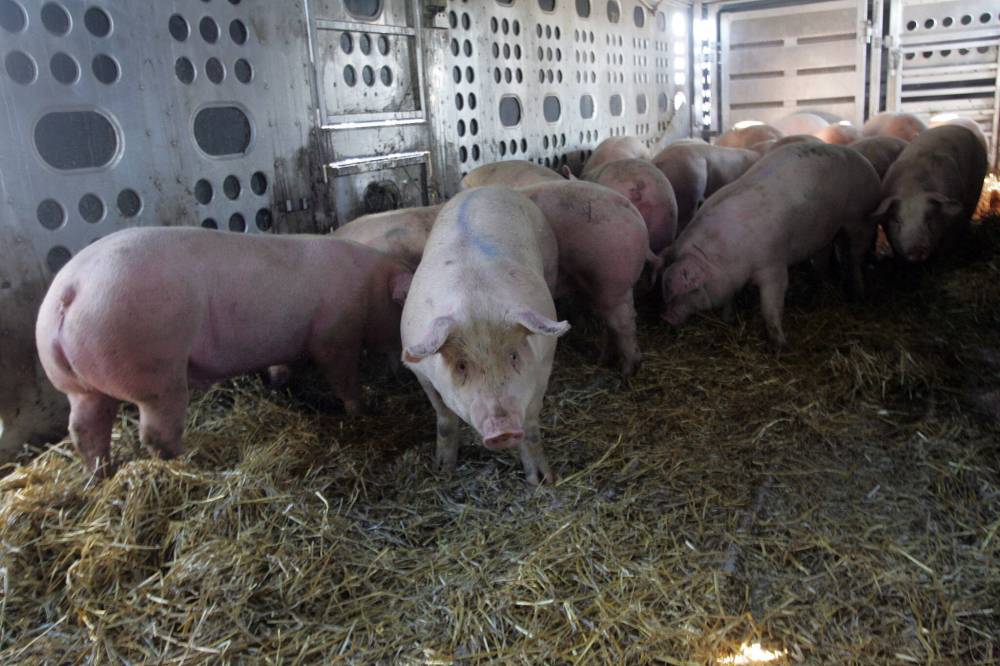
Manitoba currently ships about three million weanlings to the U.S. annually, which are then finished and processed in the U.S.
KEN GIGLIOTTI / FREE PRESS files
Manitoba produces about eight million hogs per year, with three million of them exported live to the U.S., representing about 50 per cent of the country’s export of live pigs.
Under the new labelling regulations, pork produced from those weanlings would not comply.
Cam Dahl, general manager of Manitoba Pork, said the new regulations will potentially cause a significant disruption in the Manitoba pork supply chain.
“All of our production will now be discriminated against because of this rule change,” said Dahl. “We’re very disappointed that the final rule did not consider the concerns expressed by Canada.”
While the use of “Product of the USA” or “Made in the USA” labelling is voluntary, most of the major grocers in the U.S. exclusively feature that type of labelling.
“The major retailers like Costco or Kroger and others are not going to change their labeling,” said Dahl. “They are just going to tell their suppliers to comply.”
So while there might still be a retail market for pork that does not have “Product of USA” labelling, that supply chain will not have the same value for Manitoba producers as the current situation.
Asked how he believes such a ruling will impact the current marketplace, Dahl said, “My initial thoughts and assessment is that we are going to see a discount on the weanling market.”
This U.S. government ruling has come after a previous country-of-origin labelling program in the U.S. was repealed in 2015 after Canada and Mexico filed objections to the World Trade Organization because it discriminated against producers in Canada and Mexico.
“Despite being labelled as “voluntary,” Manitoba Pork is concerned that the same discrimination will occur when these new regulations are implemented,” said Manitoba Pork chairman Rick Préjet. “We call on Canada to consider all potential options to correct the protectionist nature of these proposed regulations, and we ask the Government of Manitoba to support a strong response to protect our market access.”
Both the Canada’s agriculture and trade ministers spoke out about the ruling this week.
In a joint statement, Agriculture and Agri-Food Canada Minister Lawrence MacAulay, and Minister of Export Promotion, International Trade and Economic Development Mary Ng, said, “Canada remains concerned about any measures that may cause disruptions to the highly integrated North American meat and livestock supply chains. We are reviewing the final rule carefully and will closely monitor its impacts and implementation, including in light of the U.S.’ international trade obligations, to ensure our meat sector can continue to enjoy predictable and unhindered access to the United States market.”
Dahl believes that U.S. producers and processors are not going to be happy with the ruling.
“We are an integrated market with producers and processors on both sides of the border benefiting from the free flow of trade and so do consumers,” said Dahl. “This will not be helpful in an age where food inflation is a major topic around the kitchen table.”
Dahl said the ruling means there will likely be a ramp up in political pressure and industry lobbying.
MacAulay and Ng said Canada intends to raise the issue during the agriculture ministers trilateral meeting with the U.S. and Mexico scheduled in Colorado later this month.
While the beef, poultry and egg producers in Canada will also be affected, Manitoba’s pork industry is more dependent on trade with the U.S. than the rest of the country’s pork sector.
Manitoba produces about eight million hogs per year, with three million of them exported live to the U.S., representing about 50 per cent of the country’s export of live pigs.
While Manitoba does have large pork processors like Maple Leaf Foods, Hylife, the province’s 595 hog farms produce more hogs than those facilities can handle.
About 90 per cent of the province’s production — both in the form of live animals and packaged meat — are exported out of the country, including about $400 million in packaged pork.

A statement from the Canadian Cattle Association, which represents beef farms and feedlots, called the rule “the most onerous standard in the world.”
“It is crucial to address any issues that threaten or diminish cattle and beef trade between Canada and the U.S.,” CCA president Nathan Phinney said in the statement.
“We are very concerned that the rule will lead to discrimination against live cattle imports and undermine the beneficial integration of the North American supply chain.”
— with files from The Canadian Press
martin.cash@freepress.mb.ca