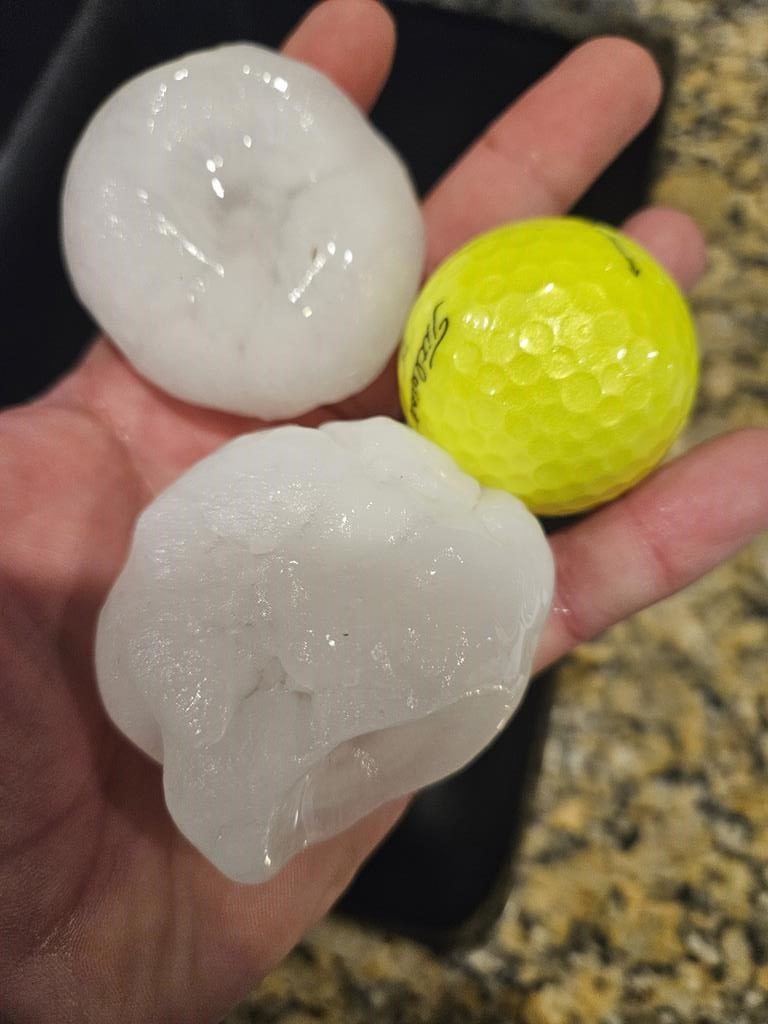
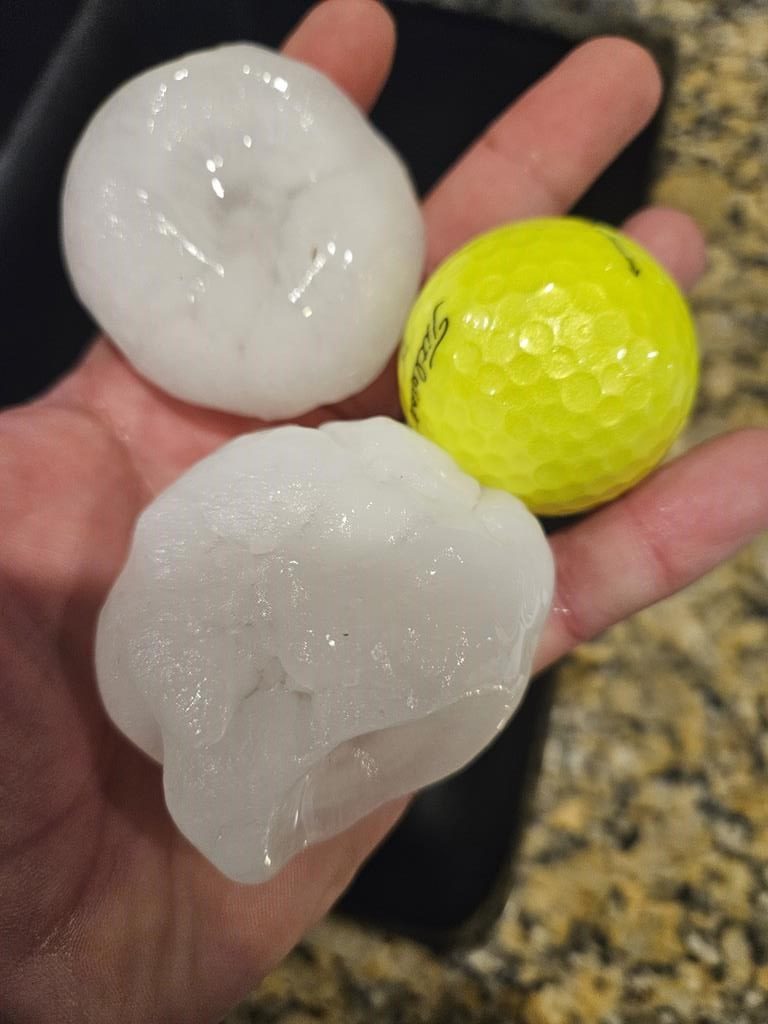
Storm carrying massive ‘gorilla hail’ hits parts of Kansas and Missouri
Advertisement
Read this article for free:
or
Already have an account? Log in here »
To continue reading, please subscribe:
Monthly Digital Subscription
$0 for the first 4 weeks*
- Enjoy unlimited reading on winnipegfreepress.com
- Read the E-Edition, our digital replica newspaper
- Access News Break, our award-winning app
- Play interactive puzzles
*No charge for 4 weeks then price increases to the regular rate of $19.00 plus GST every four weeks. Offer available to new and qualified returning subscribers only. Cancel any time.
Monthly Digital Subscription
$4.75/week*
- Enjoy unlimited reading on winnipegfreepress.com
- Read the E-Edition, our digital replica newspaper
- Access News Break, our award-winning app
- Play interactive puzzles
*Billed as $19 plus GST every four weeks. Cancel any time.
To continue reading, please subscribe:
Add Free Press access to your Brandon Sun subscription for only an additional
$1 for the first 4 weeks*
*Your next subscription payment will increase by $1.00 and you will be charged $16.99 plus GST for four weeks. After four weeks, your payment will increase to $23.99 plus GST every four weeks.
Read unlimited articles for free today:
or
Already have an account? Log in here »
Hey there, time traveller!
This article was published 13/03/2024 (633 days ago), so information in it may no longer be current.
ST. LOUIS (AP) — Massive chunks of hail pelted parts of Kansas and Missouri on Wednesday night, bringing traffic to a standstill along Interstate 70, as storms unleashed possible tornadoes and meteorologists urged residents to stay indoors.
There were three unconfirmed reports of tornadoes in Wabaunsee and Shawnee counties with reports of damaged structures, but no reports of injuries or homes damaged, according to meteorologist Matt Wolters with the National Weather Service’s Topeka office. Survey teams plan to head out Thursday to evaluate the damage, he said.
There were reports of 4-inch (10-centimeter) hail, nearly softball-size, in the town of Wabaunsee and 3-inch (7.6-centimeter) hail in Geary County near Junction City and Fort Riley, Wolters said.

Descriptions of the hail ranged from the size of golf balls and apples, to softballs and baseballs.
Alex Sosnowski, senior meteorologist at AccuWeather, previously said the predicted hail was deemed “gorilla hail” because it had the potential to be so big.
“Gorilla hail” is a term coined by Reed Timmer, a storm chaser who calls himself an extreme meteorologist, Sosnowski said. In this case, the term might fit: Some hail from north-central Kansas into north-central Missouri could be as big as a baseball.
“When you get up to tennis ball, baseball-sized or God forbid softball-sized, that can do a tremendous amount of damage, and if you get hit in the head, that could be fatal,” Sosnowski said.
Traffic came to a standstill for a time on part of Interstate 70 because of the falling hail, the National Weather Service said on X. Images of large hail chunks and at least one cracked windshield were shown on KSHB-TV.

Late Wednesday, forecasters issued tornado warnings in the areas around Topeka and to the north, while severe thunderstorm warnings were issued northeast of Kansas City in Missouri.
“If you are in this warning, get away from windows and shelter inside now!!!” the National Weather Service posted on X, formerly known as Twitter. The weather service said the storm had previously produced “softball-sized hail,” or 3.5-inch (8.9-centimeter) chunks.
The weather service also issued a severe thunderstorm watch for parts of Illinois, Iowa, Missouri and Kansas through Thursday morning, after which forecasters said the storm will move to the east.
While the hail threat lessens Thursday, meteorologists said heavy rain and high winds were still possible from northeastern Texas through central Missouri.
The biggest threat on Friday is for torrential rain — perhaps up to 4 inches (10 centimeters) in some spots — in a line from central Louisiana up through central Arkansas, Sosnowski said.

Other parts of the country also were seeing severe weather. A major snowstorm hit Colorado starting Wednesday night, closing numerous schools and government offices and shutting down sections of highways leading to the Denver area. That storm wasn’t expected to wind down until Friday.
___
Associated Press reporter Lisa Baumann contributed from Bellingham, Washington.