Invasive species lead to access restrictions in B.C., Alberta national parks

Advertisement

Advertise with us

Parks Canada is closing all bodies of water in British Columbia's Kootenay and Yoho national parks, and restricting watercraft in Alberta's Waterton Lakes National Park in an effort to slow the spread of invasive species.

Read this article for free:


or

Already have an account? Log in here »

To continue reading, please subscribe:

Subscribe and receive a limited-edition Free Press branded hat or tote.

Digital Subscription

One year of digital access for only $205*

  • Enjoy unlimited reading on winnipegfreepress.com
  • Read the E-Edition, our digital replica newspaper
  • Access News Break, our award-winning app
  • Play interactive puzzles

*First annual payment billed as $205.00 + GST for one year. This annual subscription will automatically renew at $233.00 + GST every 52 weeks (10% off the regular annual price of $259.35). Offer available to new and qualified returning subscribers only. Cancel any time.

To continue reading, please subscribe:

Add Free Press access to your Brandon Sun subscription for only an additional

$1 for the first 4 weeks*

  • Enjoy unlimited reading on winnipegfreepress.com
  • Read the E-Edition, our digital replica newspaper
  • Access News Break, our award-winning app
  • Play interactive puzzles
Start now

*Your next Brandon Sun subscription payment will increase by $1.00 and you will be charged $17.95 plus GST for four weeks. After four weeks, your payment will increase to $24.95 plus GST every four weeks.

Hey there, time traveller!
This article was published 19/03/2024 (934 days ago), so information in it may no longer be current.

Parks Canada is closing all bodies of water in British Columbia’s Kootenay and Yoho national parks, and restricting watercraft in Alberta’s Waterton Lakes National Park in an effort to slow the spread of invasive species.

The lakes, creeks and tributaries in eastern British Columbia will be closed until at least March next year in response to the deadly whirling disease parasite found in fish.

At the same time, non-motorized watercraft from outside park boundaries will not be allowed into Waterton Lakes National Park in southern Alberta starting April 1, to protect against both whirling disease and invasive zebra and quagga mussels.
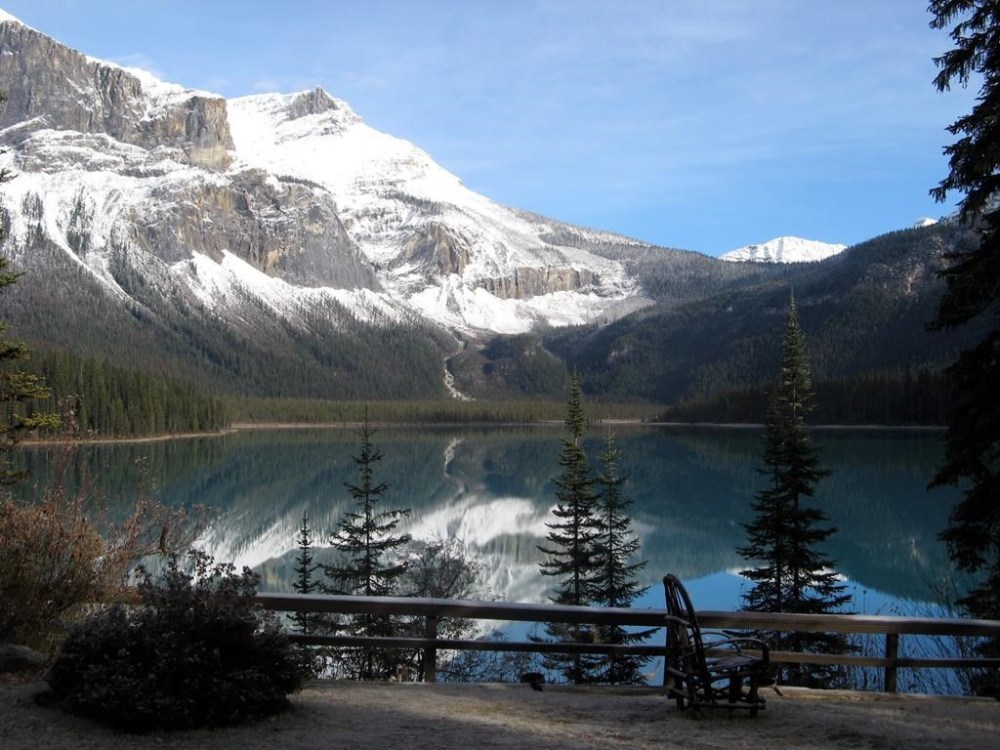
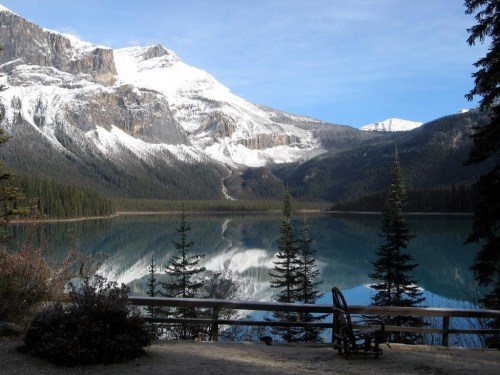
Emerald Lake in Yoho National Park is seen on a calm day in this Oct. 22, 2009 photo. Parks Canada is closing all bodies of water in British Columbia's Kootenay and Yoho national parks and restricting watercraft in Alberta's Waterton Lakes National Park in an effort to slow the spread of invasive species. THE CANADIAN PRESS/Bill Graveland

Jeanette Goulet, with the aquatic invasive species program for mountain national parks, said Tuesday that boats are the main way species are transferred between bodies of water.

“They can pick up things like mud, sand and sediments, plant fragments,” she said.

“And if their equipment is not cleaned of all of that, drained of any standing water, and dried for a certain amount of time, then that poses a big risk of transferring aquatic organisms … between water bodies.”

British Columbia’s first case of whirling disease was detected in Emerald Lake last year and was later found in Kicking Horse River, Wapta Lake, Finn Creek, Monarch Creek and the confluence of Emerald River and the Kicking Horse River.

Access was first restricted for five months last October, and François Masse, Parks Canada’s superintendent for Lake Louise, Yoho and Kootenay, said extending the restrictions another year will help protect fish species including several types of trout and Kokanee.

Goulet said staff will be monitoring the parks and anyone found breaking the rules could face a fine of up to $25,000.

There’s no treatment specifically for whirling disease, Goulet said, and removing the diseased fish from the water system is not feasible.

She said officials are gathering more information before deciding what’s next.

“Other jurisdictions have either decided to let the infection play out and see if a natural resistance does build up in the fish, or, in some places where they’ve seen population decline in the States, they’ve actually restocked with trout that have a resistance that have been bred in hatcheries,” she said.

“I don’t know if we would ever go that route in parks.”

Locke Marshall, the superintendent for Waterton Lakes National Park, said along with the ban on non-motorized watercraft from outside park boundaries, fishing for all species will no longer be permitted in flowing waters in the park, but will be allowed under current regulations in park lakes.

He said invasive zebra and quagga mussels that are present in other Canadian and U.S. jurisdictions pose a threat to Waterton Lakes and downstream infrastructure across southern Alberta.

He said if infestations start, they can cost millions to control.

Marshall said a mandatory inspection station for non-motorized boats has been operating since 2021 but only 56 per cent of watercraft users participated last year.

“The risk of aquatic invasive species spreading is too high to continue with this previous approach,” he said.

This report by The Canadian Press was first published March 19, 2024.

Report Error Submit a Tip

More Stories

Canadian Mennonite University students, staff victims of cyberattack

Free Press staff 3 minute read Preview

Canadian Mennonite University students, staff victims of cyberattack

Free Press staff 3 minute read Updated: Yesterday at 6:29 PM CDT

Canadian Mennonite University fell victim to a cyberattack that compromised the data of current and former students and employees last month.

School officials became aware of the cybersecurity incident, in which an “unknown third party” accessed its information technology systems without authorization, on Sept. 18, university president Cheryl Pauls said in a recent statement.

The university has since confirmed the third party used that access to steal information from its systems.

“We immediately initiated our incident response plan, retained expert assistance, and informed the university community whose workflows were affected as soon as we became aware of the incident,” Pauls said. “We also reported this incident to law enforcement and will be filing a report with the Office of the Privacy Commissioner of Canada.”

Read
Updated: Yesterday at 6:29 PM CDT

Invasive species lead to access restrictions in B.C., Alberta national parks

Ashley Joannou, The Canadian Press 4 minute read Preview

Invasive species lead to access restrictions in B.C., Alberta national parks

Ashley Joannou, The Canadian Press 4 minute read Tuesday, Mar. 19, 2024

Parks Canada is closing all bodies of water in British Columbia's Kootenay and Yoho national parks, and restricting watercraft in Alberta's Waterton Lakes National Park in an effort to slow the spread of invasive species.

The lakes, creeks and tributaries in eastern British Columbia will be closed until at least March next year in response to the deadly whirling disease parasite found in fish.

At the same time, non-motorized watercraft from outside park boundaries will not be allowed into Waterton Lakes National Park in southern Alberta starting April 1, to protect against both whirling disease and invasive zebra and quagga mussels.

Jeanette Goulet, with the aquatic invasive species program for mountain national parks, said Tuesday that boats are the main way species are transferred between bodies of water.

Read
Tuesday, Mar. 19, 2024

Indigenous leaders meet with Governor General during first official visit to Manitoba

Chris Kitching 4 minute read Preview

Indigenous leaders meet with Governor General during first official visit to Manitoba

Chris Kitching 4 minute read Updated: Yesterday at 6:09 PM CDT

Three Indigenous leaders were encouraged after discussing reconciliation and the need to confront residential school denialism with Gov. Gen. Louise Arbour, while she began her first official visit to Manitoba Wednesday.

Read
Updated: Yesterday at 6:09 PM CDT

Manitoba Federation of Labour calls for independent review of Workers Compensation Board

Gabrielle Piché 5 minute read Preview

Manitoba Federation of Labour calls for independent review of Workers Compensation Board

Gabrielle Piché 5 minute read Tuesday, Oct. 6, 2026

A major labour association is calling for an independent Workers Compensation Board review as Manitoba leads the country in workplace injury rates.

Last year, 2.5 employees in every 100 reported a workplace injury serious enough to take time off, WCB tracking shows. The number is higher than any other province — just as it has been for the past three years, according to the Manitoba Federation of Labour.

(In 2025, the next highest time loss injury rate was in British Columbia: 2.04 people for every 100.)

“Our prevention work in Manitoba is failing Manitobans,” said Kevin Rebeck, president of the Manitoba Federation of Labour. “We need an independent review to help shine a light on, ‘What is happening on the prevention front of WCB?’”

Read
Tuesday, Oct. 6, 2026

Get to know your Jet: Mario Ferraro

Mike McIntyre 8 minute read Preview

Get to know your Jet: Mario Ferraro

Mike McIntyre 8 minute read 5:39 PM CDT

A one-on-one conversation with a Winnipeg Jet about the stuff you don't always hear in the media scrum

Read
5:39 PM CDT

Canadian author Anne Carson wins literature Nobel for ‘bold and inventive’ works that blend genres

Jill Lawless, Hillel Italie And Kostya Manenkov, The Associated Press 6 minute read Preview

Canadian author Anne Carson wins literature Nobel for ‘bold and inventive’ works that blend genres

Jill Lawless, Hillel Italie And Kostya Manenkov, The Associated Press 6 minute read Updated: 5:05 PM CDT

STOCKHOLM (AP) — Canadian poet, essayist and translator Anne Carson won the Nobel Prize in literature Thursday for “bold and inventive” works that fuse the classical and the modern and blur the boundaries of poetry and prose.

The Toronto-born Carson, 76, has drawn on themes from classical Greek and Roman literature, modern influences and personal experience for genre-blending titles that have ranged from translations of ancient Greek poets to collaborations with dancers and musicians, including Laurie Anderson and Lou Reed.

The Swedish Academy that awards the prize said she won “for her bold and inventive oeuvre that, in playful dialogue with the classical tradition, has created new forms for contemporary literature.”

The permanent secretary of the academy said the author was in Iceland “listening to the wind” when the panel reached her to notify her of the honor.

Read
Updated: 5:05 PM CDT