In Uganda, bamboo has government’s backing as a crop with real growth potential
Advertisement
Read this article for free:
or
Already have an account? Log in here »
To continue reading, please subscribe:

Digital Subscription
One year of digital access for only $205*
- Enjoy unlimited reading on winnipegfreepress.com
- Read the E-Edition, our digital replica newspaper
- Access News Break, our award-winning app
- Play interactive puzzles
*First annual payment billed as $205.00 + GST for one year. This annual subscription will automatically renew at $233.00 + GST every 52 weeks (10% off the regular annual price of $259.35). Offer available to new and qualified returning subscribers only. Cancel any time.
To continue reading, please subscribe:
Add Free Press access to your Brandon Sun subscription for only an additional
$1 for the first 4 weeks*
- Enjoy unlimited reading on winnipegfreepress.com
- Read the E-Edition, our digital replica newspaper
- Access News Break, our award-winning app
- Play interactive puzzles
*Your next Brandon Sun subscription payment will increase by $1.00 and you will be charged $17.95 plus GST for four weeks. After four weeks, your payment will increase to $24.95 plus GST every four weeks.
Read unlimited articles for free today:
or
Already have an account? Log in here »
Hey there, time traveller!
This article was published 23/03/2024 (897 days ago), so information in it may no longer be current.
ALONG RIVER RWIZI, Uganda (AP) — Along a stretch of bush by a muddy river, laborers dug and slashed in search of bamboo plants buried under dense grass. Here and there a few plants had sprouted tall, but most of the bamboo seedlings planted more than a year ago never grew.
Now, environment protection officers seeking to restore a 3-kilometer (1.8-mile) stretch of the river’s degraded banks were aiming to plant new bamboo seedlings, clear room for last year’s survivors to grow and look after them better than they did the first time.
A successful bamboo forest by the river Rwizi — the most important in a large part of western Uganda that includes the major city of Mbarara — would create a buffer zone against sand miners, subsistence farmers and others whose activities have long threatened the river. The National Environment Management Authority estimates that the Rwizi has lost 60% of its water catchment area over the decades, and in some areas this winding river runs as narrow as a stream.
“Once bamboo is established, it is almost like a net,” said Jeconious Musingwire, an environment officer who was the project’s technical advisor. “The roots trap everything, including the surface runoff, and stabilize the weaknesses of the banks.”
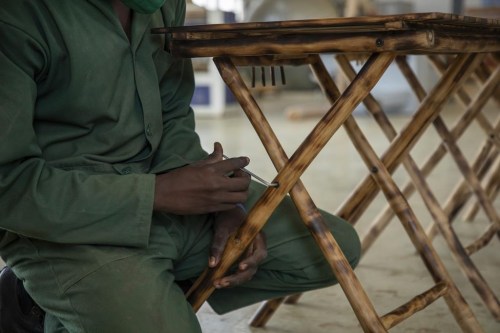
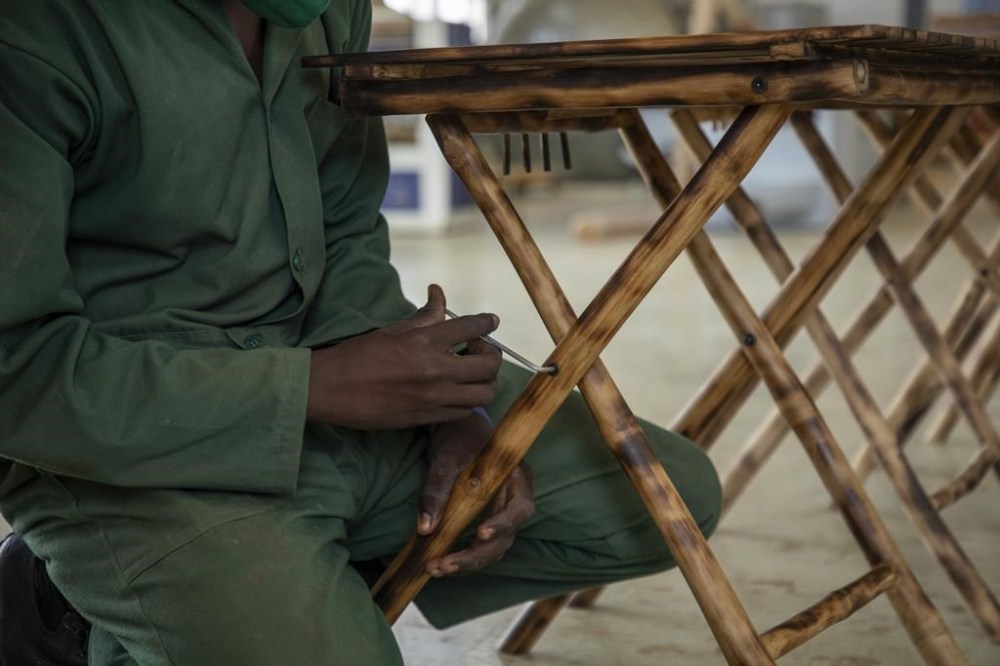
This East African country is seeing growing interest in bamboo, a perennial plant cultivated in many parts of the world. It can be burned for fuel in rural communities, taking pressure off dwindling forest reserves of eucalyptus and other natural resources. It’s a hardy plant that can grow almost anywhere. And businesses can turn it into products ranging from furniture to toothpicks.
Some of the bamboo species grown in Uganda are imported from Asia, but many — like one whose shoots are smoked and then boiled to make a popular traditional meal in eastern Uganda — grow wild.
The Ugandan government has set a 10-year policy that calls for planting 300,000 hectares (about 1,100 square miles) of bamboo, most of it on private land, by 2029 as part of wider reforestation efforts.
That’s an ambitious target. The Uganda Bamboo Association, the largest such group with 340 members, has planted only 500 hectares. Even with growing interest in bamboo farming, authorities will have to encourage more farmers in rural parts of Uganda to plant vast tracts of land with bamboo.
But signs are promising.
Not far from the scene where laborers were tending bamboo plants sits a large commercial farm that includes seven acres of bamboo. The plants at Kitara Farm were well-tended, and a stockpile of 10,000 bamboo poles sat waiting to be sold.
Caretaker Joseph Katumba said the property has become something of a demonstration farm for people who want to learn more about bamboo. He recalled that when they first began planting bamboo in 2017, some people asked why they were “wasting land” by planting bamboo when it grows wild in the bush.
Katumba said that’s changed, with skeptics now interested in planting bamboo “because they have studied it and they love it.” Unlike eucalyptus — a tall flowering plant widely planted here for its timber — “there is no bamboo season. The more you look after it well, weeding around it, the more and more years you will earn from bamboo.”
Bamboo grows faster than eucalyptus and regenerates like a weed. It also can thrive in poor soil. Kitara Farm stopped planting new eucalyptus lots while its bamboo acreage continues to expand, he said.
“We have so many eucalyptus forests. But we realized that once you cut the eucalyptus trees, eventually they get finished, and once they are finished there is no more money,” he said. “But with bamboo, we investigated and found out that when you plant it … the grandkids and their grandkids and their grandkids will earn from bamboo.”
A single bamboo pole brings a little less than a dollar, so farmers need to grow a lot to earn enough. Bamboo promoters are urging them to see a bamboo plantation as the same kind of cash crop as coffee or tea estates. Banks are offering bamboo “plantation capital” to clients, loans that promise ownership of substantial acres of bamboo.
“Each person should actually plant bamboo, and a lot of it,” said Taga Nuwagaba, a bamboo farmer and businessman who owns a bamboo furniture factory near the Ugandan capital of Kampala. He touts the plant as a a renewable resource that sequesters carbon, too.
“You cut one, five will grow,” he said.
Bamboo plants are normally ready for harvesting in three to five years, and a well-maintained plantation can be useful for at least 50 years, said Jacob Ogola, an agronomist who is working as a consultant at Kitara Farm. He said bamboo is easy to manage, and typically doesn’t need spraying for pests.
Bamboo seedlings are now more widely available via private nursery beds.
Steve Tusiime, a self-described bamboo collector, owns one such nursery in Mbarara. Tusiime said he’s been fascinated by the plant since seeing one as a boy. Before he got into growing, he recalls traveling to a farm in central Uganda to “hug” bamboo plants, and in 2018 spending his own money to attend a bamboo convention in China, where he got his first bamboo seeds.
Standing on another stretch of land by the river Rwizi where he and his partners have created a bamboo park in a recreation resort still to be commissioned, he waxed lyrical about how bamboo “energizes” him.

“Each bamboo you see here has a story. It has where it comes from and it has different use and it has a different name,” he said. “When you come here the story is bamboo. You learn about different species, different uses. You see different features of bamboo.”
Still, Uganda’s bamboo plantations aren’t growing fast enough to build an industry around the plant. Tusiime’s nursery has sold fewer than 10,000 seedlings in the past two years, confounding his own assessment of bamboo as an important cash crop which also happens to benefit the environment.
“Bamboo can be a future tree for Uganda or for even Africa. For example, you’ve heard people talking about charcoal and firewood and this and that. Bamboo is a better solution,” he said. “You can produce the briquette, you can use it directly as firewood. Bamboo is going to be a game changer in Africa. You can eat bamboo, you can use it to build, you can create an industry for bamboo, you can feed it to your animals, and it can take care of your land.”
___
The Associated Press’ climate and environmental coverage receives financial support from multiple private foundations. AP is solely responsible for all content. Find AP’s standards for working with philanthropies, a list of supporters and funded coverage areas at AP.org.