US changes how it categorizes people by race and ethnicity. It’s the first revision in 27 years
Advertisement
Read this article for free:
or
Already have an account? Log in here »
To continue reading, please subscribe:

Digital Subscription
One year of digital access for only $205*
- Enjoy unlimited reading on winnipegfreepress.com
- Read the E-Edition, our digital replica newspaper
- Access News Break, our award-winning app
- Play interactive puzzles
*First annual payment billed as $205.00 + GST for one year. This annual subscription will automatically renew at $233.00 + GST every 52 weeks (10% off the regular annual price of $259.35). Offer available to new and qualified returning subscribers only. Cancel any time.
To continue reading, please subscribe:
Add Free Press access to your Brandon Sun subscription for only an additional
$1 for the first 4 weeks*
- Enjoy unlimited reading on winnipegfreepress.com
- Read the E-Edition, our digital replica newspaper
- Access News Break, our award-winning app
- Play interactive puzzles
*Your next Brandon Sun subscription payment will increase by $1.00 and you will be charged $17.95 plus GST for four weeks. After four weeks, your payment will increase to $24.95 plus GST every four weeks.
Read unlimited articles for free today:
or
Already have an account? Log in here »
Hey there, time traveller!
This article was published 28/03/2024 (898 days ago), so information in it may no longer be current.
ORLANDO, Fla. (AP) — For the first time in 27 years, the U.S. government is changing how it categorizes people by race and ethnicity, an effort that federal officials believe will more accurately count residents who identify as Hispanic and of Middle Eastern and North African heritage.
The revisions to the minimum categories on race and ethnicity, announced Thursday by the Office of Management and Budget, are the latest effort to label and define the people of the United States. This evolving process often reflects changes in social attitudes and immigration, as well as a wish for people in an increasingly diverse society to see themselves in the numbers produced by the federal government.
“You can’t underestimate the emotional impact this has on people,” said Meeta Anand, senior director for Census & Data Equity at The Leadership Conference on Civil and Human Rights. “It’s how we conceive ourselves as a society. … You are seeing a desire for people to want to self-identify and be reflected in data so they can tell their own stories.”
Under the revisions, questions about race and ethnicity that previously were asked separately on forms will be combined into a single question. That will give respondents the option to pick multiple categories at the same time, such as “Black,” “American Indian” and “Hispanic.” Research has shown that large numbers of Hispanic people aren’t sure how to answer the race question when that question is asked separately because they understand race and ethnicity to be similar and they often pick “some other race” or do not answer the question.
A Middle Eastern and North African category will be added to the choices available for questions about race and ethnicity. People descended from places such as Lebanon, Iran, Egypt and Syria had been encouraged to identify as white, but now will have the option of identifying themselves in the new group. Results from the 2020 census, which asked respondents to elaborate on their backgrounds, suggest that 3.5 million residents identify as Middle Eastern and North African.
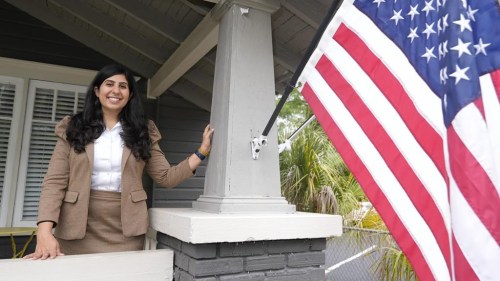
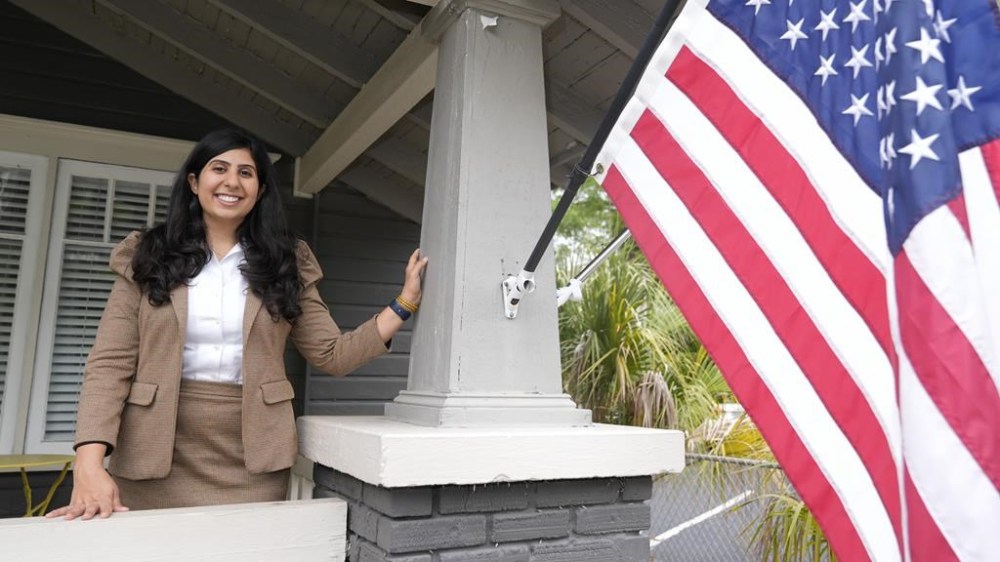
“It feels good to be seen,” said Florida state Rep. Anna Eskamani, a Democrat from Orlando whose parents are from Iran. “Growing up, my family would check the ‘white’ box because we didn’t know what other box reflected our family. Having representation like that, it feels meaningful.”
The changes also strike from federal forms the words “Negro” and “Far East,” now widely regarded as pejorative, as well as the terms “majority” and “minority,” because they fail to reflect the nation’s complex racial and ethnic diversity, some officials say. The revisions also encourage the collection of detailed race and ethnicity data beyond the minimum standards, such as “Haitian” or “Jamaican” for someone who checks “Black.”
Grouping together people of different backgrounds into a single race and ethnicity category, such as Japanese and Filipino in the Asian classification, often masks disparities in income or health, and advocates argued having the detailed data will allow the information about the subgroups to be separated out in a process called disaggregation.
“To be able to disaggregate can really be helpful to distinguish different kinds of discrimination, the ability to enforce laws around discrimination and do research on public health and economic outcomes,” said Allison Plyer, chief demographer of The Data Center in New Orleans.
The changes to the standards were hammered out over two years by a group of federal statisticians and bureaucrats who prefer to stay above the political fray. But the revisions have long-term implications for legislative redistricting, civil rights laws, health statistics, and possibly even politics as the number of people categorized as white is reduced.
Donald Trump, the presumptive GOP nominee for president, recently alluded to arguments made by people who allege Democrats are promoting illegal immigration to weaken the power of white people. As president, Trump unsuccessfully tried to disqualify people who were in the United States illegally from being included in the 2020 census.
Momentum for changing the race and ethnicity categories grew during the Obama administration in the mid-2010s, but was halted after Trump became president in 2017. It was revived after Democratic President Joe Biden took office in 2021.
The changes will be reflected in data collection, forms, surveys and the once-a-decade census questionnaires put out by the federal government, as well as in state governments and the private sector because businesses, universities and other groups usually follow Washington’s lead. Federal agencies have 18 months to submit a plan on how they will put the changes in place.
The first federal standards on race and ethnicity were produced in 1977 to provide consistent data across agencies and come up with figures that could help enforce civil rights laws. They were last updated in 1997 when five minimum race categories were delineated — American Indian or Alaska Native, Asian, Black or African American, Native Hawaiian or other Pacific Islander and white; respondents could pick more than one race. The minimum ethnic categories were grouped separately as not Hispanic or Hispanic or Latino.
Racial and ethnic categories used by the U.S. government reflect their times.
In 1820, the category “Free Colored People” was added to the decennial census to reflect the increase in free Black people. In 1850, the term “Mulatto” was added to the census to capture people of mixed heritage. American Indians were not explicitly counted in the census until 1860. Following years of immigration from China, “Chinese” was included in the 1870 census. There was not a formal question about Hispanic origin until the 1980 census.

Not everyone is on board with the latest revisions.
Some Afro Latinos feel that combining the race and ethnicity question will reduce their numbers and representation in the data, though previous research by the U.S. Census Bureau did not find significant differences among Afro Latino responses when the questions were asked separately or together.
Mozelle Ortiz, for instance, is of mixed Afro Puerto Rican descent. She feels the changes could eliminate that identity, even though people can choose more than one answer once the race and ethnicity questions are combined.
“My entire lineage, that of my Black Puerto Rican grandmother’s and all other non-white Spanish speaking peoples, will be erased,” Ortiz wrote the interagency group.

Others are unhappy about how some groups of people such as Armenians or Arabs from Sudan and Somalia were not included in the examples used to define people of Middle Eastern or North African background.
Maya Berry, executive director of the Arab American Institute, said that while she was “incredibly happy” with the new category, that enthusiasm was tempered by the omissions.
“It is not reflective of the racial diversity of our community,” Berry said. “And it’s wrong.”
___
Follow Mike Schneider on X, formerly known as Twitter: @MikeSchneiderAP