

NASA wants to come up with a new clock for the moon, where seconds tick away faster
Advertisement
Read this article for free:
or
Already have an account? Log in here »
To continue reading, please subscribe:
Monthly Digital Subscription
$0 for the first 4 weeks*
- Enjoy unlimited reading on winnipegfreepress.com
- Read the E-Edition, our digital replica newspaper
- Access News Break, our award-winning app
- Play interactive puzzles
*No charge for 4 weeks then price increases to the regular rate of $19.00 plus GST every four weeks. Offer available to new and qualified returning subscribers only. Cancel any time.
Monthly Digital Subscription
$4.75/week*
- Enjoy unlimited reading on winnipegfreepress.com
- Read the E-Edition, our digital replica newspaper
- Access News Break, our award-winning app
- Play interactive puzzles
*Billed as $19 plus GST every four weeks. Cancel any time.
To continue reading, please subscribe:
Add Free Press access to your Brandon Sun subscription for only an additional
$1 for the first 4 weeks*
*Your next subscription payment will increase by $1.00 and you will be charged $16.99 plus GST for four weeks. After four weeks, your payment will increase to $23.99 plus GST every four weeks.
Read unlimited articles for free today:
or
Already have an account? Log in here »
Hey there, time traveller!
This article was published 02/04/2024 (613 days ago), so information in it may no longer be current.
WASHINGTON (AP) — NASA wants to come up with an out-of-this-world way to keep track of time, putting the moon on its own souped-up clock.
It’s not quite a time zone like those on Earth, but an entire frame of time reference for the moon. Because there’s less gravity on the moon, time there moves a tad quicker — 58.7 microseconds every day — compared to Earth. So the White House Tuesday instructed NASA and other U.S agencies to work with international agencies to come up with a new moon-centric time reference system.
“An atomic clock on the moon will tick at a different rate than a clock on Earth,” said Kevin Coggins, NASA’s top communications and navigation official. “It makes sense that when you go to another body, like the moon or Mars that each one gets its own heartbeat.”
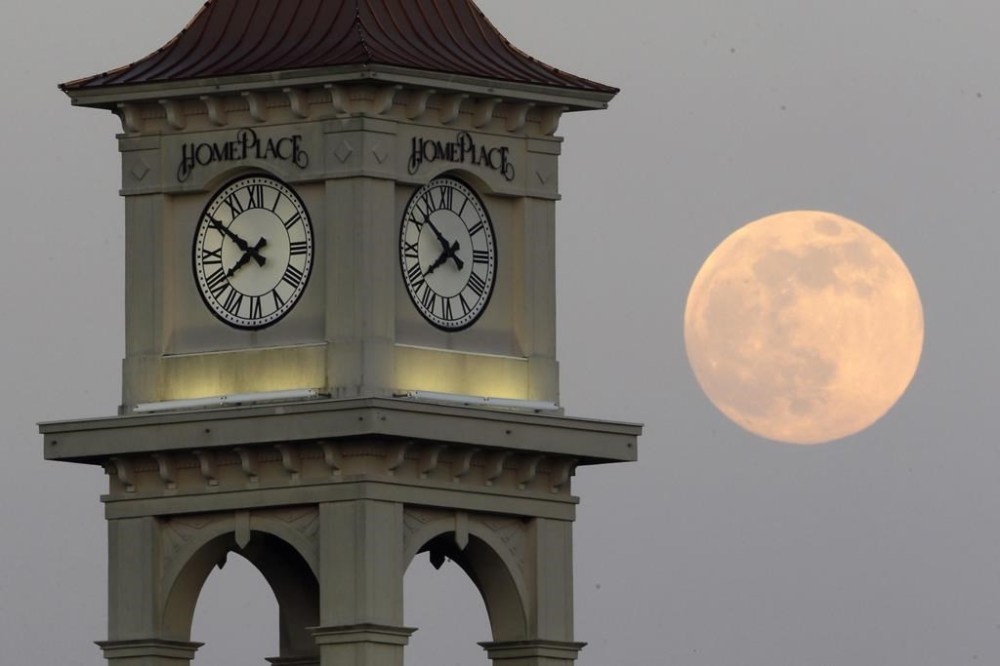
So everything on the moon will operate on the speeded-up moon time, Coggins said.
The last time NASA sent astronauts to the moon they wore watches, but timing wasn’t as precise and critical as it now with GPS, satellites and intricate computer and communications systems, he said. Those microseconds matter when high tech systems interact, he said.
Last year, the European Space Agency said Earth needs to come up with a unified time for the moon, where a day lasts 29.5 Earth days.
The International Space Station, being in low Earth orbit, will continue to use coordinated universal time or UTC. But just where the new space time kicks in is something that NASA has to figure out. Even Earth’s time speeds up and slows down, requiring leap seconds.

Unlike on Earth, the moon will not have daylight saving time, Coggins said.
The White House wants NASA to come up with a preliminary idea by the end of the year and have a final plan by the end of 2026.
NASA is aiming to send astronauts around the moon in September 2025 and land people there a year later.
___
The Associated Press Health and Science Department receives support from the Howard Hughes Medical Institute’s Science and Educational Media Group. The AP is solely responsible for all content.