

Manitoba coalition fights for Equal Pay Day
Gender wage gap has remained for decades as ‘women continue to fall behind’

Advertisement
Read this article for free:
or
Already have an account? Log in here »
To continue reading, please subscribe:
Digital Subscription
One year of digital access for only $1.44 a week*
- Enjoy unlimited reading on winnipegfreepress.com
- Read the E-Edition, our digital replica newspaper
- Access News Break, our award-winning app
- Play interactive puzzles
*Billed as $5.77 plus GST every four weeks. After 52 weeks, price increases to the regular rate of $19.95 plus GST every four weeks. Offer available to new and qualified returning subscribers only. Cancel any time.
To continue reading, please subscribe:
Add Free Press access to your Brandon Sun subscription for only an additional
$1 for the first 4 weeks*
- Enjoy unlimited reading on winnipegfreepress.com
- Read the E-Edition, our digital replica newspaper
- Access News Break, our award-winning app
- Play interactive puzzles
*Your next Brandon Sun subscription payment will increase by $1.00 and you will be charged $17.95 plus GST for four weeks. After four weeks, your payment will increase to $24.95 plus GST every four weeks.
Read unlimited articles for free today:
or
Already have an account? Log in here »
Hey there, time traveller!
This article was published 04/04/2024 (929 days ago), so information in it may no longer be current.
It takes the average Manitoba woman an extra three months to earn the same salary as her male counterpart, a “persistent” wage gap that needs to change, a new coalition says.
The Canadian Centre for Policy Alternatives and Manitoba Federation of Labour chose Thursday as the province’s first Equal Pay Day to bring awareness to the gender pay gap in the province. On average, Manitoba women have to work for 460 days to earn the same salary as Manitoba men do in 365 days, the centre’s data shows.
“The gender pay gap means that women continue to fall behind men and it serves as a major factor in child poverty rates, as many of those households are headed by single mothers,” director Molly McCracken said Thursday.
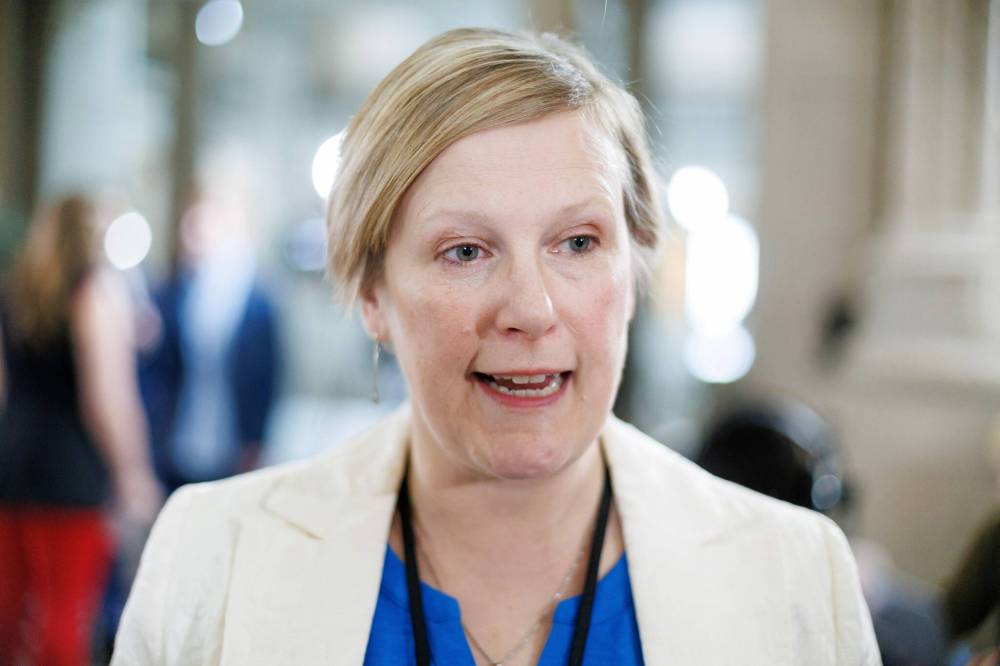
MIKE DEAL / FREE PRESS
Molly Mccracken with the Canadian Centre for Policy Alternatives
The most recent Stats Canada data from 2021 shows working women in Manitoba earned, on average, 74 cents for each dollar a man made. That rose slightly from 72 cents in 2020 and 71 cents in 2019.
Manitoba was the first province to usher in its own pay equity laws, in 1986, but that legislation remains unchanged and only applies to public-sector employees. That scope is too narrow, federation leader Kevin Rebeck said.
“Leaving it to just the public sector is a mistake — it needs to be made more broader than that. Clearly we haven’t done enough to make it penetrate as deeply as we hoped it would.”
The Pay Equity Act also requires the province to establish a pay equity bureau staffed by a commissioner to oversee the implementation of fair pay. In an April 2023 report, the centre couldn’t find evidence of a commissioner or bureau in Manitoba after 1995.
“Past administrations just haven’t made this the priority it needs to be, and for far too long it’s been left,” Rebeck said. “They took some action in the ’80s, and kind of said, ‘OK, we’ll let that work its way through the system,’ and there hasn’t been enough tracking of that, checking on it and updating it.”
Now that Manitoba has a new government, coalition organizers say there’s an opportunity to write legislation that can close that gap.
Families Minister Nahanni Fontaine said the widening pay gap has had generational effects on women and their children.

MIKE DEAL / FREE PRESS
Kevin Rebeck, President of the Manitoba Federation of Labour, said despite legislation mandating equal pay for public sector employees, that scope is too narrow.
“You hear all the time about trying to address pay equity, but nobody really does anything about it, and we still have places of employment that women make significantly less than men,” she said. “It’s simply unacceptable.”
Last year, when she was the NDP critic, Malaya Marcelino introduced a private member’s bill, Bill 228, a proposed pay transparency law that would result in more accountability for pay rates in certain sectors. The bill wasn’t passed by the legislature. Even so, advocates say it had flaws.
The bill would require employers to include pay information in job postings, prevent employers from seeking pay history about employees and require private-sector employers with more than 100 employees to file a pay audit report with the province’s pay equity commissioner that would detail the gender diversity and wages of employees.
But, according to 2022 data from Innovation, Science and Economic Development Canada, 70.9 per cent of private-sector businesses in Manitoba have fewer than 100 employees, which would mean most employers would be subject to the proposed changes.
After winning the election last fall, Marcelino was appointed labour minister.

On Thursday, Fontaine called the proposal a stepping stone.
“The (labour) minister is on top of this, but is doing her due diligence to make sure that the legislation that’s brought forward, and the infrastructure to support that legislation, is comprehensive, so she’s doing that right now as we speak,” she said.
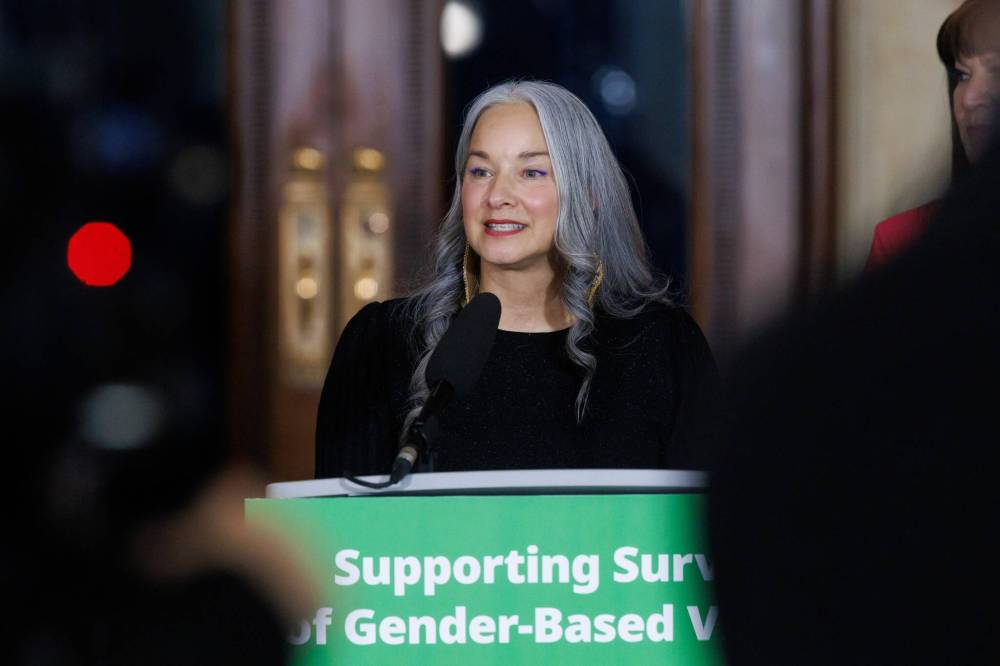
MIKE DEAL / FREE PRESS
Families Minister Nahanni Fontaine said the impact of the widening pay gap has had generational impacts for women and their children in Manitoba.
Not every province has pay equity legislation, but some are outpacing Manitoba in the realm of transparency and gender equity. Ontario’s Pay Equity Act applies to all employers except for those in the private sector with fewer than 10 employees, and Quebec’s also applies to both sectors.
Equal Pay Day has been recognized in other provinces, including Ontario, where it launched in 2014.
malak.abas@freepress.mb.ca
Malak Abas is a city reporter at the Free Press. Born and raised in Winnipeg’s North End, she led the campus paper at the University of Manitoba before joining the Free Press in 2020. Read more about Malak.
Every piece of reporting Malak produces is reviewed by an editing team before it is posted online or published in print — part of the Free Press‘s tradition, since 1872, of producing reliable independent journalism. Read more about Free Press’s history and mandate, and learn how our newsroom operates.
Our newsroom depends on a growing audience of readers to power our journalism. If you are not a paid reader, please consider becoming a subscriber.
Our newsroom depends on its audience of readers to power our journalism. Thank you for your support.
Malak Abas is a city reporter at the Free Press. Born and raised in Winnipeg’s North End, she led the campus paper at the University of Manitoba before joining the Free Press in 2020. Read more about Malak.
Every piece of reporting Malak produces is reviewed by an editing team before it is posted online or published in print — part of the Free Press‘s tradition, since 1872, of producing reliable independent journalism. Read more about Free Press’s history and mandate, and learn how our newsroom operates.
Our newsroom depends on a growing audience of readers to power our journalism. If you are not a paid reader, please consider becoming a subscriber.
Our newsroom depends on its audience of readers to power our journalism. Thank you for your support.
Advertisement Advertise With Us
Advertisement Advertise With Us
History
Updated on Thursday, April 4, 2024 8:14 PM CDT: Fixes reference to labour minister