Many cancer drugs remain unproven 5 years after accelerated approval, a study finds

Advertisement

Advertise with us

The U.S. Food and Drug Administration’s accelerated approval program is meant to give patients early access to promising drugs. But how often do these drugs actually improve or extend patients’ lives?

Read this article for free:


or

Already have an account? Log in here »

To continue reading, please subscribe:

Subscribe and receive a limited-edition Free Press branded hat or tote.

Digital Subscription

One year of digital access for only $205*

  • Enjoy unlimited reading on winnipegfreepress.com
  • Read the E-Edition, our digital replica newspaper
  • Access News Break, our award-winning app
  • Play interactive puzzles

*First annual payment billed as $205.00 + GST for one year. This annual subscription will automatically renew at $233.00 + GST every 52 weeks (10% off the regular annual price of $259.35). Offer available to new and qualified returning subscribers only. Cancel any time.

To continue reading, please subscribe:

Add Free Press access to your Brandon Sun subscription for only an additional

$1 for the first 4 weeks*

  • Enjoy unlimited reading on winnipegfreepress.com
  • Read the E-Edition, our digital replica newspaper
  • Access News Break, our award-winning app
  • Play interactive puzzles
Start now

*Your next Brandon Sun subscription payment will increase by $1.00 and you will be charged $17.95 plus GST for four weeks. After four weeks, your payment will increase to $24.95 plus GST every four weeks.

Hey there, time traveller!
This article was published 07/04/2024 (919 days ago), so information in it may no longer be current.

The U.S. Food and Drug Administration’s accelerated approval program is meant to give patients early access to promising drugs. But how often do these drugs actually improve or extend patients’ lives?

In a new study, researchers found that most cancer drugs granted accelerated approval do not demonstrate such benefits within five years.

“Five years after the initial accelerated approval, you should have a definitive answer,” said Dr. Ezekiel Emanuel, a cancer specialist and bioethicist at the University of Pennsylvania who was not involved in the research. “Thousands of people are getting those drugs. That seems a mistake if we don’t know whether they work or not.”
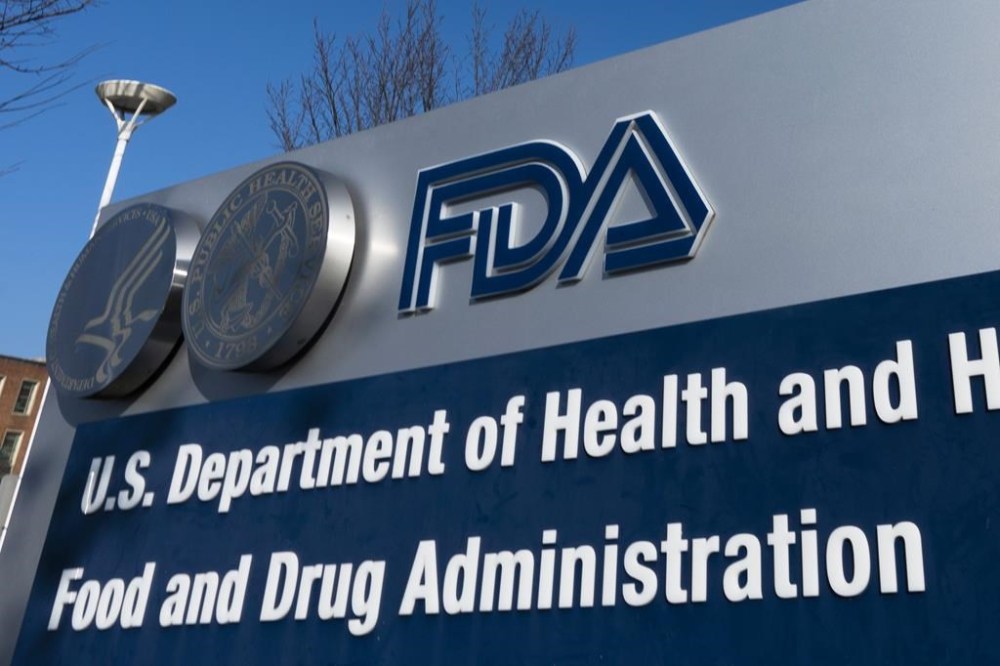
FILE - A sign for the Food and Drug Administration is displayed outside their offices in Silver Spring, Md., on Dec. 10, 2020. According to research published Sunday, April 7, 2024, in the Journal of the American Medical Association, most cancer drugs granted accelerated approval by the FDA, meant to give patients early access to promising drugs, do not demonstrate such benefits within five years. (AP Photo/Manuel Balce Ceneta, File)

The program was created in 1992 to speed access to HIV drugs. Today, 85% of accelerated approvals go to cancer drugs.

It allows the FDA to grant early approval to drugs that show promising initial results for treating debilitating or fatal diseases. In exchange, drug companies are expected to do rigorous testing and produce better evidence before gaining full approval.

Patients get access to drugs earlier, but the tradeoff means some of the medications don’t pan out. It’s up to the FDA or the drugmaker to withdraw disappointing drugs, and sometimes the FDA has decided that less definitive evidence is good enough for a full approval.

The new study found that between 2013 and 2017, there were 46 cancer drugs granted accelerated approval. Of those, 63% were converted to regular approval even though only 43% demonstrated a clinical benefit in confirmatory trials.

The research was published in the Journal of the American Medical Association and discussed at the American Association for Cancer Research annual meeting in San Diego on Sunday.

It’s unclear how much cancer patients understand about drugs with accelerated approval, said study co-author Dr. Edward Cliff of Harvard Medical School.

“We raise the question: Is that uncertainty being conveyed to patients?” Cliff said.

Drugs that got accelerated approval may be the only option for patients with rare or advanced cancers, said Dr. Jennifer Litton of MD Anderson Cancer Center in Houston, who was not involved in the study.

It’s important for doctors to carefully explain the evidence, Litton said.

“It might be shrinking of tumor. It might be how long the tumor stays stable,” Litton said. “You can provide the data you have, but you shouldn’t overpromise.”

Congress recently updated the program, giving the FDA more authority and streamlining the process for withdrawing drugs when companies don’t meet their commitments.

The changes allow the agency “to withdraw approval for a drug approved under accelerated approval, when appropriate, more quickly,” FDA spokesperson Cherie Duvall-Jones wrote in an email. The FDA can now require that a confirmatory trial be underway when it grants preliminary approval, which speeds up the process of verifying whether a drug works, she said.

___

The Associated Press Health and Science Department receives support from the Howard Hughes Medical Institute’s Science and Educational Media Group. The AP is solely responsible for all content.


Report Error Submit a Tip

More Stories

News briefs for Tuesday, October 13, 2026

1 minute read Updated: 8:59 AM CDT

A collection of breaking news briefs filed on Tuesday, October 13, 2026

The Lobster Trap wins 2026 Dafoe Book Prize

8:59 AM

Greg Mercer’s The Lobster Trap: The Global Fight for a Seafood on the Brink has won the 2026 J.W. Dafoe Book Prize.

Riding the Unity Bus to rally support for Canada in Alberta

Melissa Martin 8 minute read Preview

Riding the Unity Bus to rally support for Canada in Alberta

Melissa Martin 8 minute read Updated: Yesterday at 9:57 PM CDT

WAINWRIGHT, Alta. — The Unity Bus arrives right on time, pulling into a parking lot on the edge of this town of about 6,600 people close to the Alberta-Saskatchewan border. As the vehicle slows to a halt, resplendent in its patriotic red-and-white paint, a small group of supporters stand waiting, decked in their own maple leaf garb.

The Unity Bus’s doors open and former Alberta deputy premier Thomas Lukaszuk bounds to the ground. The supporters, volunteers with Lukaszuk’s Forever Canadian campaign, welcome him with applause; he greets them with open arms. He knows many by name, having been to Wainwright four times; some of them fondly call him “the boss.”

“Do you need some stickers?” he asks. “Do you need some swag to give away?”

It’s a chilly Thanksgiving Monday morning on the eastern edge of Alberta. A sharp wind nips at exposed skin and drab grey clouds hang low in the sky. Such weather does not encourage high spirits, but Lukaszuk and these volunteers can’t afford to let theirs falter: in just one week, on Oct. 19, Albertans will vote on a historic question on whether to remain in Canada.

Read
Updated: Yesterday at 9:57 PM CDT

Hurricane Simon pounds resorts and vulnerable towns along Mexico’s Pacific coast

Fernando Llano And Martin Silva, The Associated Press 5 minute read Preview

Hurricane Simon pounds resorts and vulnerable towns along Mexico’s Pacific coast

Fernando Llano And Martin Silva, The Associated Press 5 minute read Updated: Yesterday at 2:38 AM CDT

PUERTO VALLARTA, Mexico (AP) — Hurricane Simon pounded Mexico’s Pacific coast as a Category 3 storm on Sunday, its eye remaining just offshore as its most powerful winds and rain slammed people living between the Sierra Madre and the ocean.

The hurricane's center swirled parallel to the coast, closing in on the Puerto Vallarta area, where its most damaging winds and rain were expected to hit around midnight and continue through Monday morning. Its maximum sustained winds weakened late Sunday to 115 mph (185 kph), according to the U.S. National Hurricane Center in Miami, but it was still expected to remain a dangerous hurricane.

That’s not good news for people in and around Puerto Vallarta, a popular tourist destination in the state of Jalisco. Just inland and uphill from the resort areas, many Mexicans live in communities where housing might not stand up to the storm.

By late Sunday, Simon's eye was moving northwest about 45 miles (75 kilometers) south of Cabo Corrientes at about 5 mph (7 kph). A senior hurricane center specialist, Philippe Papin, said this westernmost tip of mainland Mexico is the area most likely to get a direct hit from the system. Cabo Corrientes is at the southern tip of Bahia de Banderas, the wide bay where Puerto Vallarta looks out to the Pacific.

Read
Updated: Yesterday at 2:38 AM CDT

Carney: Trump’s ‘energy ceasefire’ could ‘de-escalate’ war in Ukraine

Kyle Duggan, The Canadian Press 4 minute read Preview

Carney: Trump’s ‘energy ceasefire’ could ‘de-escalate’ war in Ukraine

Kyle Duggan, The Canadian Press 4 minute read Sunday, Oct. 11, 2026

OTTAWA - Mark Carney thanked U.S. President Donald Trump for “his leadership toward securing an energy ceasefire" between Ukraine and Russia, the Prime Minister's Office said on Sunday.

But on the same day, Carney also expressed to Ukraine's leader that Trump's new diesel supply agreement with Russia undermines Canada's efforts to end the war in Europe.

Trump posted on his Truth Social account on Sunday that Ukraine and Russia have agreed to an "energy ceasefire," but did not immediately offer any details.

Carney expressed “strong support for this agreement," according to a readout from the PMO that followed a conversation between the two leaders. And on his own social media account, Carney offered that Trump’s newly announced “energy ceasefire” could help wind down Russia’s war against Ukraine.

Read
Sunday, Oct. 11, 2026

Letters, Oct. 13

7 minute read Preview

Letters, Oct. 13

7 minute read Updated: 8:14 AM CDT

The major assumption Manitoba Hydro undertakes is the weather. Hydro projected a $214 million profit for the 2025-26 fiscal year. On Sept. 29, it reported a $446 million loss. It took on additional debt due to $751 million in operating losses. In addition, Hydro stated the fiscal results for 2025-26 were “significantly influenced by circumstances largely beyond Hydro’s control.”

Read
Updated: 8:14 AM CDT

Many cancer drugs remain unproven 5 years after accelerated approval, a study finds

Carla K. Johnson, The Associated Press 3 minute read Preview

Many cancer drugs remain unproven 5 years after accelerated approval, a study finds

Carla K. Johnson, The Associated Press 3 minute read Sunday, Apr. 7, 2024

The U.S. Food and Drug Administration’s accelerated approval program is meant to give patients early access to promising drugs. But how often do these drugs actually improve or extend patients’ lives?

In a new study, researchers found that most cancer drugs granted accelerated approval do not demonstrate such benefits within five years.

“Five years after the initial accelerated approval, you should have a definitive answer,” said Dr. Ezekiel Emanuel, a cancer specialist and bioethicist at the University of Pennsylvania who was not involved in the research. “Thousands of people are getting those drugs. That seems a mistake if we don’t know whether they work or not."

The program was created in 1992 to speed access to HIV drugs. Today, 85% of accelerated approvals go to cancer drugs.

Read
Sunday, Apr. 7, 2024