

Quebec zoo examined animal behaviour during last week’s total solar eclipse
Advertisement
Read this article for free:
or
Already have an account? Log in here »
To continue reading, please subscribe:
Digital Subscription
One year of digital access for only $1.44 a week*
- Enjoy unlimited reading on winnipegfreepress.com
- Read the E-Edition, our digital replica newspaper
- Access News Break, our award-winning app
- Play interactive puzzles
*Billed as $5.77 plus GST every four weeks. After 52 weeks, price increases to the regular rate of $19.95 plus GST every four weeks. Offer available to new and qualified returning subscribers only. Cancel any time.
To continue reading, please subscribe:
Add Free Press access to your Brandon Sun subscription for only an additional
$1 for the first 4 weeks*
- Enjoy unlimited reading on winnipegfreepress.com
- Read the E-Edition, our digital replica newspaper
- Access News Break, our award-winning app
- Play interactive puzzles
*Your next Brandon Sun subscription payment will increase by $1.00 and you will be charged $17.95 plus GST for four weeks. After four weeks, your payment will increase to $24.95 plus GST every four weeks.
Read unlimited articles for free today:
or
Already have an account? Log in here »
Hey there, time traveller!
This article was published 14/04/2024 (776 days ago), so information in it may no longer be current.
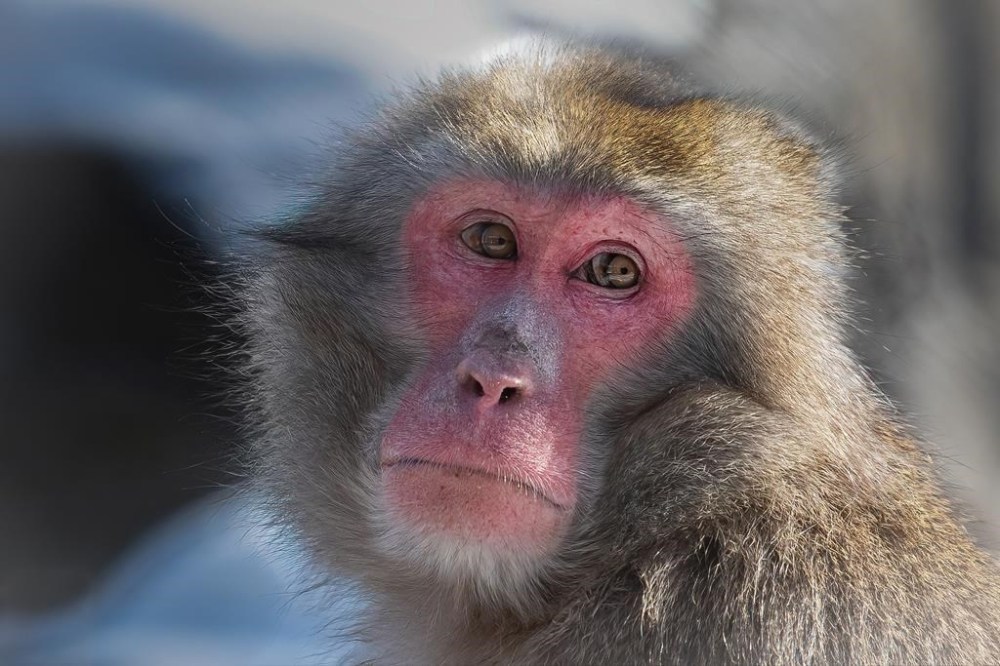
MONTREAL – As darkness settled during last week’s total solar eclipse, Japanese macaques turned their backs to the sun and red crowned cranes went uncharacteristically quiet.
But the Himalayan black bears just slept as if nothing was happening.
A Quebec zoo took advantage of last Monday’s total solar eclipse to study the behaviours of some of its animals. The zoo’s research and conservation department was approached by an astrophysics professor from the Université du Québec à Montréal about taking part in an animal behaviour study and collecting data on how they reacted during the rare phenomenon.
Granby Zoo is located in the province’s Estrie region, which had among the best views of rare total solar eclipse in southern Quebec. While humans were enthralled, few studies have been carried out on animal reactions during the rare event.
Chelsey Paquette, conservation coordinator at Granby Zoo, about 65 kilometres east of Montreal, said the zoo jumped at the chance to be involved. A study will be published to present the findings.
“What we can take from it is that definitely luminosity does have an effect on animals and whatever data we find, the conclusions we can take from the species at the zoo can probably be extrapolated to wildlife species as well,” Paquette said.
“It’s a rare event, so to collect data during a rare event to better understand how luminosity in the presence of the sun can influence animals is quite unique.”
Observers logged the animals’ activities over two days in the week leading up to the eclipse, between 2 and 5 p.m. during the event itself and for another two days later in the week following it.
The reactions they saw varied.
The Japanese macaques, a monkey species native to Japan, for example, had a reaction to the eclipse that was the opposite of what the researchers anticipated.
“We expected them to be agitated and to group together and want to go to the nighttime habitats for example,” Paquette said. “But during the totality of the eclipse, it was almost like they stopped vocalizing, they stopped all their movements and they just turned their backs to the sun and were just Zen and calm.”
The Red-crowned cranes are normally quite vocal, but also went quiet when the eclipse reached totality, Paquette said.
The male red panda spent most of the afternoon walking around his enclosure in the afternoon but as soon as the eclipse came, he climbed up a tree and went and slept with the female during the entire totality, which she said was unusual.
Paquette was assigned to the Himalayan black bears.
“We thought they would probably move towards their nighttime habitat when the sun was completely covered, it was pretty much like nighttime,” Paquette said. “But the bears just continued to sleep throughout the afternoon and they didn’t really seem to be influenced by the solar eclipse.”

Tahrs, ungulates that are related to goats and sheep, normally spend their afternoons calmly resting, with half of those in the zoo usually lying down.
“But during the eclipse, actually 100 per cent of these animals were standing up, they were walking around, so this was actually quite a drastic change for them,” Paquette said.
The zoo tried to collect data on a wide range of species, including some that are typically active during the day and others that tend to be more nocturnal. One observation was that prey species had a stronger reaction to the eclipse than predator species, Paquette said.
“It’s just interesting, these little observations that we were able to make,” Paquette said.
This report by The Canadian Press was first published April 14, 2024.