With ‘functional’ beverages, brands rush to quench a thirst for drinks that do more than taste good
Advertisement
Read this article for free:
or
Already have an account? Log in here »
To continue reading, please subscribe:

Digital Subscription
One year of digital access for only $205*
- Enjoy unlimited reading on winnipegfreepress.com
- Read the E-Edition, our digital replica newspaper
- Access News Break, our award-winning app
- Play interactive puzzles
*First annual payment billed as $205.00 + GST for one year. This annual subscription will automatically renew at $233.00 + GST every 52 weeks (10% off the regular annual price of $259.35). Offer available to new and qualified returning subscribers only. Cancel any time.
To continue reading, please subscribe:
Add Free Press access to your Brandon Sun subscription for only an additional
$1 for the first 4 weeks*
- Enjoy unlimited reading on winnipegfreepress.com
- Read the E-Edition, our digital replica newspaper
- Access News Break, our award-winning app
- Play interactive puzzles
*Your next Brandon Sun subscription payment will increase by $1.00 and you will be charged $17.95 plus GST for four weeks. After four weeks, your payment will increase to $24.95 plus GST every four weeks.
Read unlimited articles for free today:
or
Already have an account? Log in here »
Hey there, time traveller!
This article was published 15/04/2024 (870 days ago), so information in it may no longer be current.
Supermarket beverage aisles are starting to look a lot more like a pharmacy.
There are sodas made with mushrooms that supposedly improve mental clarity and juices packed with bacteria that claim to enhance digestive health. Water infused with collagen carries the promise of better skin, and energy drinks offer to help burn body fat.
Welcome to the frenzy of functional beverages – drinks designed to do more than just taste good or hydrate. What started in the late 1980s with caffeine- and vitamin-laced energy drinks like Red Bull has grown into a multi-billion-dollar industry. Hundreds of brands are vying for consumers’ attention with increasingly exotic ingredients and wellness-focused marketing.
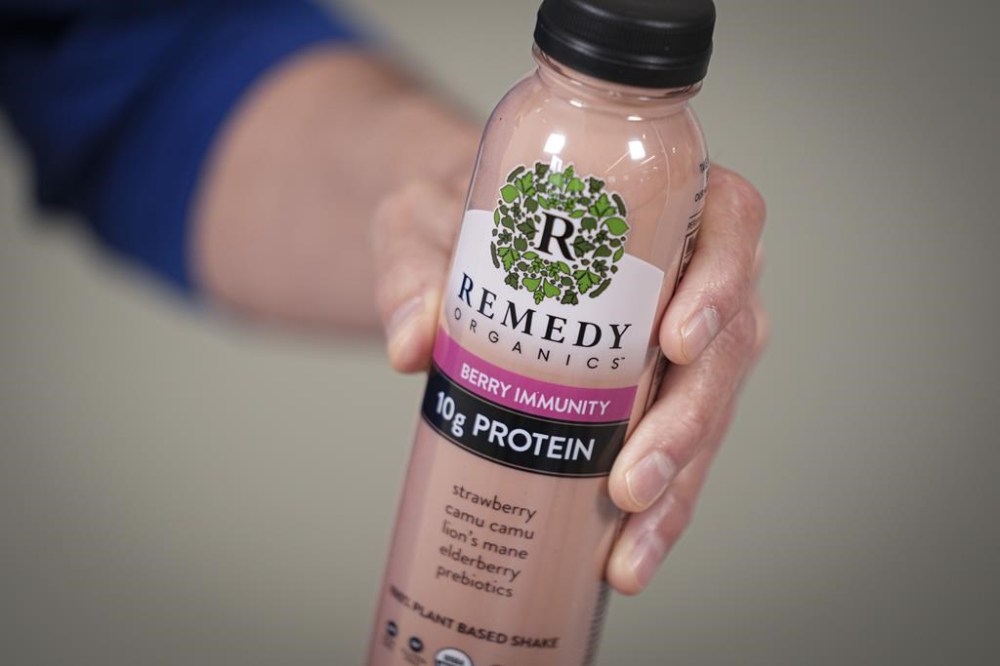
Feeling stressed? Try a drink with ashwagandha, a shrub long used in herbal medicine. Want to enhance your workout? There are drinks containing chromium, a mineral that may boost metabolism. Want to get in a party mood without alcohol? Multiple companies are making non-alcoholic spirits and beers infused with ingredients like guayusa, a leaf containing caffeine and antioxidants.
Consumer intelligence company NielsenIQ counted 53,000 UPC symbols in the U.S. functional beverage category last year, including all of the different flavors of energy drinks, sports drinks, sodas, waters, shakes and teas that are sold on the premise of enhancing mental or physical health.
Nutritionists say the general trend of consumers seeking out healthier beverages is a good one. But experts also say people should be cautious and read ingredient labels, especially if they are pregnant, taking medication or have other health issues. And they should avoid empty calories and sugars that they’re not going to burn off. A 16-ounce Monster energy drink has nearly as much sugar as a regular Coke, for example.
“Someone who’s running a marathon has different needs than someone who’s commuting to work,” said Martha Field, an assistant professor in the division of nutritional sciences at Cornell University.
The U.S. Food and Drug Administration regulates ingredients and requires drink labels to be truthful, and the Federal Trade Commission can step in if companies make false claims. In 2013, the FTC determined that Pom Wonderful pomegranate juice was deceptively advertised as clinically proven to treat, prevent or reduce the risk of heart disease and prostate cancer.
But functional beverage makers generally make less specific claims, and the science behind them is sometimes inconclusive. SkinTe, a sparkling tea, says it “supports skin hydration and elasticity” with 3,000 milligrams of collagen in a 12-ounce can. But last year, Harvard Medical School researchers said there’s not yet solid evidence that collagen drinks or supplements enhance skin, hair or nail growth.
Negative reactions can also happen. Panera Bread faces at least two lawsuits claiming its highly caffeinated Charged Lemonade led to the deaths of people with heart conditions.
“It’s important to remember that everything has the potential to be both toxic and safe, depending on the amounts. The dose makes the poison,” said Joe Zagorski, a toxicologist for the Center of Research on Ingredient Safety at Michigan State University. “Since it’s difficult to determine the amount of specific compounds in many of these beverages, it’s better to proceed cautiously than to over-consume.”
In some ways, there’s nothing new about humans seeking added benefits from their drinks. Ancient Egyptians and Romans sipped chamomile tea for its perceived healing effects. In 1935, a Japanese microbiologist introduced Yakult, a fermented milk drink now sold around the world as a way to improve gut health.
In the last half-century, beverages ranging from Ovaltine to wheatgrass juice had their moments as praised nutritional supplements. What’s different now is social media, which allows the speedy spread of information about less familiar ingredients, Cornell’s Field said.
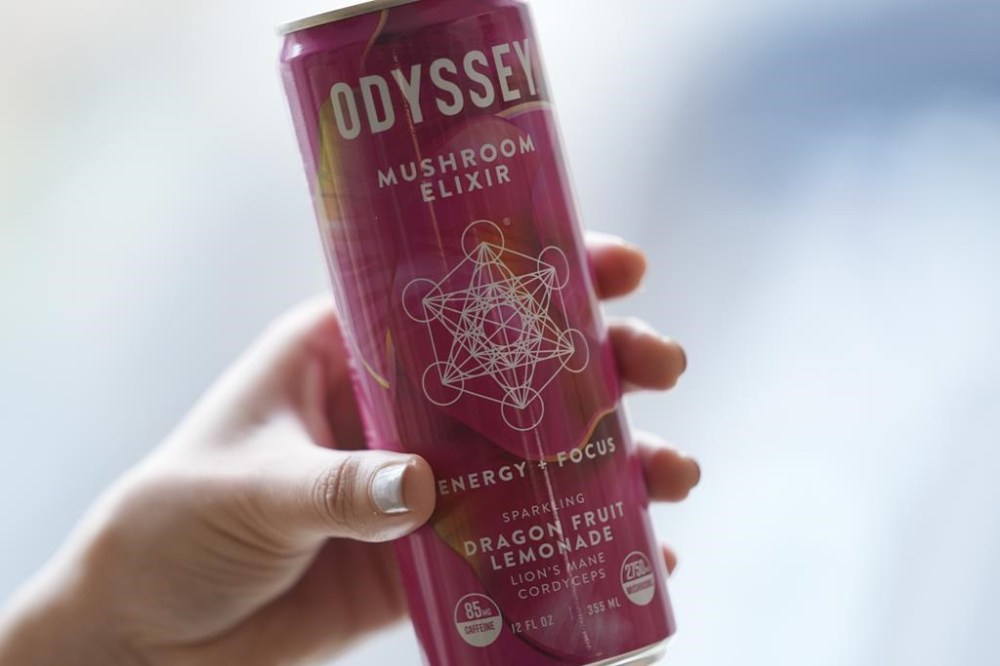
Two of the latest to generate a buzz are adaptogens, which are plants and mushrooms that have been shown to help the body respond to stress and fatigue, and nootropics, which are natural or synthetic cognitive enhancers like caffeine, gingko and amino acids.
Trends ebb and flow within the category. U.S. sales of prebiotic and probiotic drinks more than tripled last year, while sales in the more mature kombucha category rose just 8%, according to data compiled by consulting firm AlixPartners.
“Consumer savviness on functionality of ingredients has really increased,” said Sherry Frey, vice president of wellness at NielsenIQ.
For some, the health claims in functional drinks are secondary. Amy Cassels, a health and fitness coach from Magnolia, Texas, said functional drinks appeal to her because they typically contain natural ingredients, like fruit juice as a sweetener. She enjoys Poppi, a prebiotic soda, as a once-a-day treat.
“When I drink something like that, I do not believe that I am nurturing my health by drinking that. But I’m not harming my health either,” Cassels said. “It’s a guilt-free indulgence.”
A sizeable share of the beverages-with-benefits market is geared toward people who want to curb or cut their alcohol intake. London-based Three Spirit makes non-alcoholic drinks with more than 60 ingredients, including guayusa and schisandra, an Asian berry, that it says mimic the sense of relaxation and social lubrication that drinkers get from beer, wine and spirits.
“Fundamentally, alcohol is the ultimate functional drink,” Three Spirit Co-Founder Dash Lilley said. “People don’t just drink for flavor. It helps people socialize, helps people unwind, helps people perk up. So we thought we could do that really well by coming at it from a new angle.”
Randy Burt, a managing director at AlixPartners who studies food and beverage, said functional drinks align with a decades-long shift consumers have been making toward healthier diets and habits. He doesn’t see demand for the drinks slowing down. Euromonitor, a market research company, expects global sales of functional beverages to grow 7% each year through 2027.
In the U.S., sales of functional beverages jumped 54% to $9.2 billion between March 2020 and March 2024, according to NielsenIQ. That was faster than the 43% growth for the non-alcoholic beverage market overall. Functional beverages now make up about 10% of the total U.S. non-alcoholic beverage market.
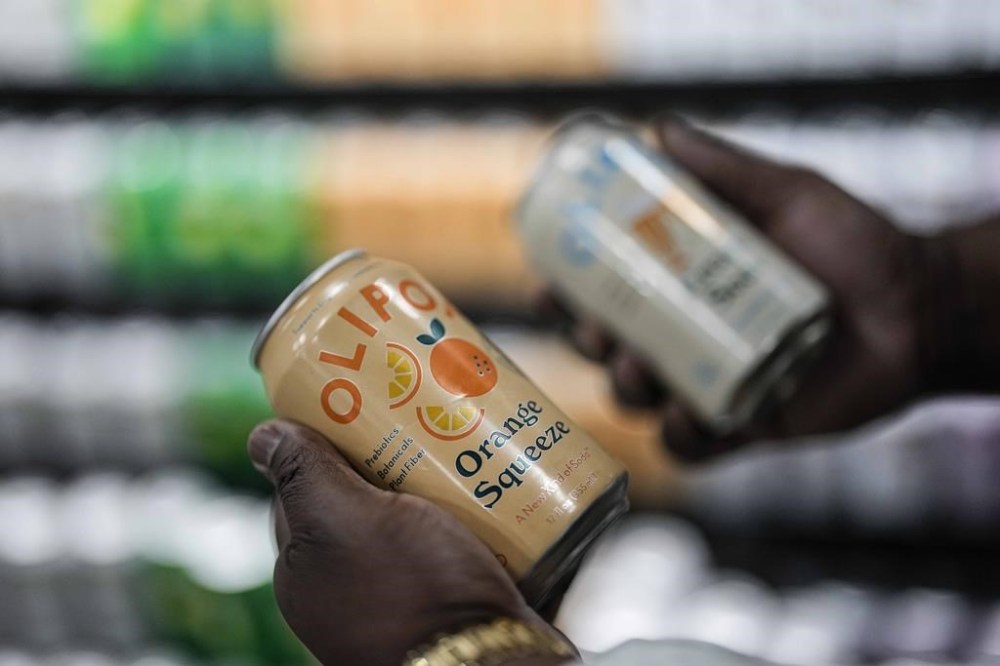
Frey said sales slowed a little in the U.S. last year, which she partly attributed to the relatively high cost of functional beverages. Twelve 12-ounce cans of Olipop, a prebiotic soda, sell for $35.99 on Amazon.com; a 12-pack of Dr. Pepper costs $6.48.
“Consumers are making trades, saying ‘Maybe I’ll still purchase this, but I won’t purchase it as frequently,’” she said.
Henry Chen, the founder and CEO of South San Francisco, California-based ALO Drink, a line of beverages made with aloe vera plants, said the increasing number of brands and promised health benefits is overwhelming for consumers. Chen suspects shoppers eventually will tire of purpose-driven drinks in favor of simpler libations.

“There are just too many narrowly specific functional needs that brands are claiming to address, too many esoteric ingredients that you need a science degree to understand being added to foods and beverages,” he said.
Even better might be bypassing the functional beverage aisle altogether, said Corrie Whisner, an associate professor at Arizona State University’s College of Health Solutions.
“At the end of the day, if someone would ask me, ‘Should I be drinking these for my health?’ I would probably say no and stick to whole foods as much as possible,” Whisner said. “Just eat real food. Then you know what you’re getting.”
___
Durbin reported from Detroit. Dixon reported from London.