Following the food chain Researchers delve into history of Manitoba cuisine
Read this article for free:
or
Already have an account? Log in here »
To continue reading, please subscribe:

Digital Subscription
One year of digital access for only $205*
- Enjoy unlimited reading on winnipegfreepress.com
- Read the E-Edition, our digital replica newspaper
- Access News Break, our award-winning app
- Play interactive puzzles
*First annual payment billed as $205.00 + GST for one year. This annual subscription will automatically renew at $233.00 + GST every 52 weeks (10% off the regular annual price of $259.35). Offer available to new and qualified returning subscribers only. Cancel any time.
To continue reading, please subscribe:
Add Free Press access to your Brandon Sun subscription for only an additional
$1 for the first 4 weeks*
- Enjoy unlimited reading on winnipegfreepress.com
- Read the E-Edition, our digital replica newspaper
- Access News Break, our award-winning app
- Play interactive puzzles
*Your next Brandon Sun subscription payment will increase by $1.00 and you will be charged $17.95 plus GST for four weeks. After four weeks, your payment will increase to $24.95 plus GST every four weeks.
Read unlimited articles for free today:
or
Already have an account? Log in here »
Hey there, time traveller!
This article was published 16/04/2024 (879 days ago), so information in it may no longer be current.
What is Manitoba food?
For historians at the University of Winnipeg, it’s the wrong question to ask if you want to learn about the province’s diverse identity. A more fruitful line of inquiry — and the basis for the Manitoba Food History Project — is how food has been produced, sold and consumed here over time.
“Studying that impinges on many other aspects of history,” says professor and lead investigator Janis Thiessen. “We learn not only about domestic production and reproduction, we learn about ethnicity and government regulation and a half-dozen other types of history.”
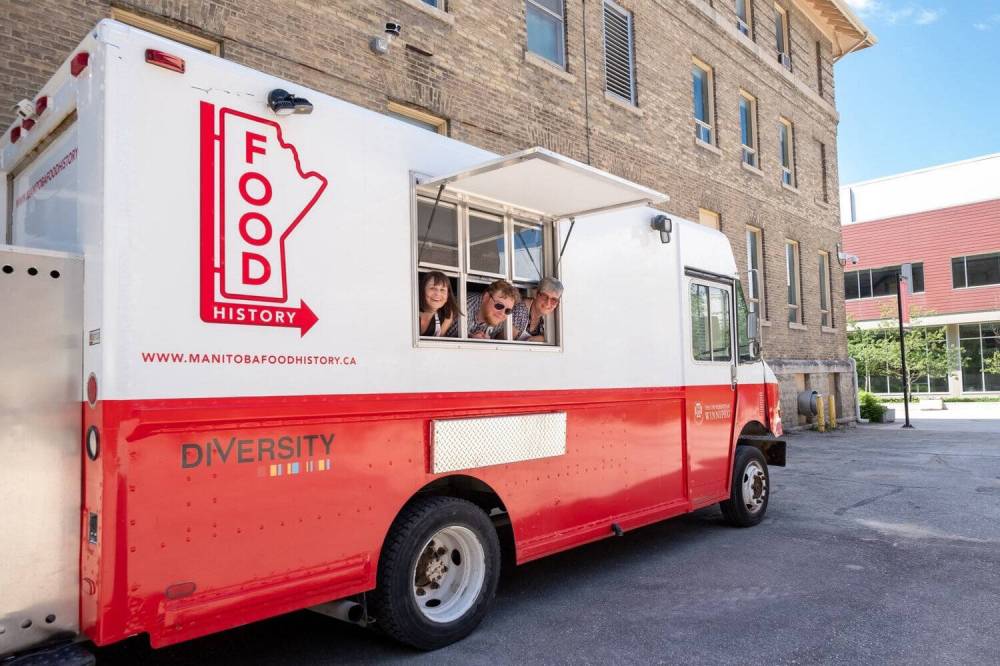
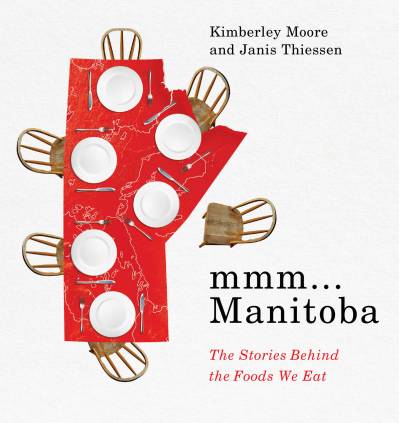
Thiessen and her colleague Kimberley Moore have published a new book, entitled mmm…Manitoba: The Stories Behind the Foods We Eat, based on their years-long oral-history project, which saw them travelling far and wide in a retrofitted food truck to collect stories about local cuisine.
Since launching the Manitoba Food History Project in 2018, the pair — along with collaborator Kent Davies — have conducted nearly 70 interviews and cooking demonstrations aboard the truck with home cooks, chefs, brewers, farmers, grocers and restaurant owners.
Those conversations, along with historic interviews, have been turned into archival material at the university’s Oral History Centre, podcast episodes, live events and, now, a book.
The goal was to visit more communities, but the pandemic threw a sizable wrench in the plans.
“It wasn’t safe to cram our bodies in a food truck together, so it did have real impact and place limitations on the amount of interviews we were able to do,” Moore says. “Lucky for us, we got locked in our houses and could start to write a book … and listen to all the interviews we’d already done.”
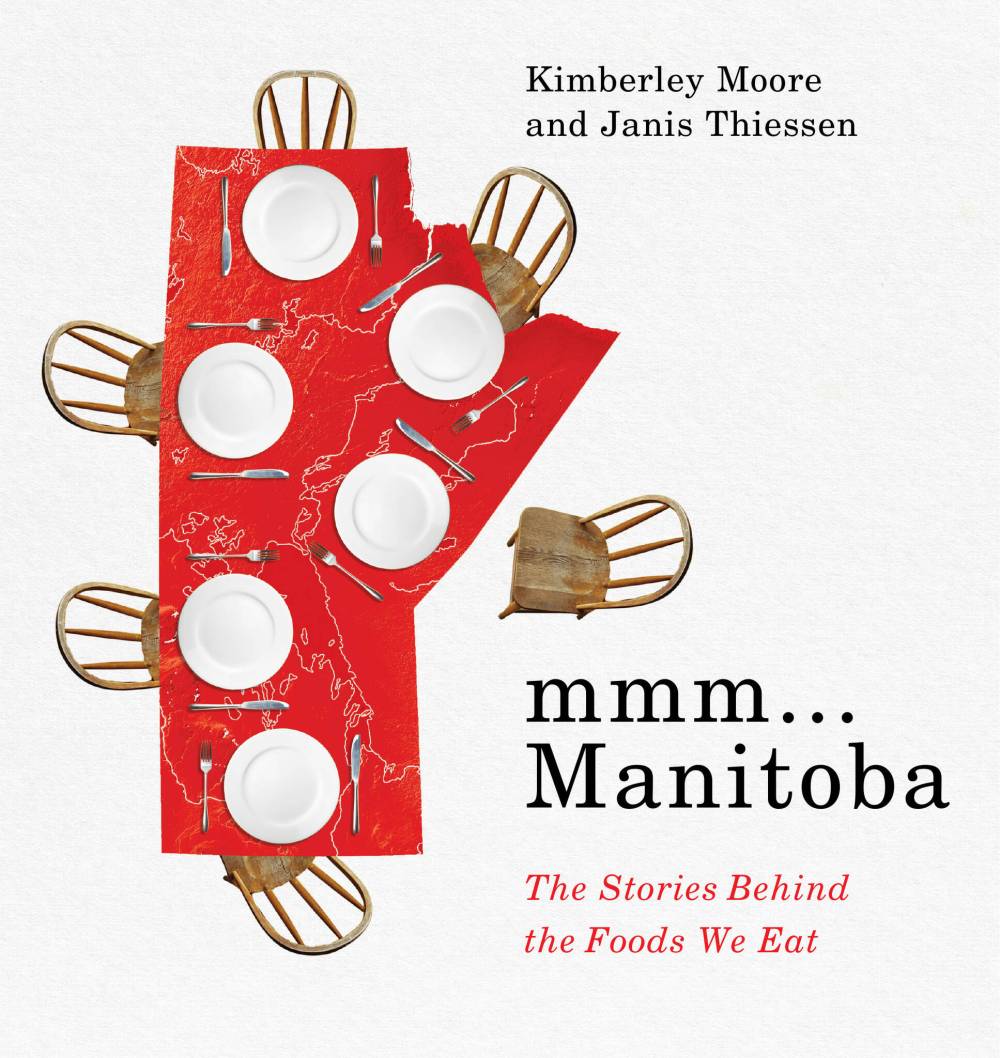
Over seven chapters and 300 pages, mmm…Manitoba explores everything from colonialism and migration to gender through the lens of food, with interactive elements available through QR codes and recipes.
The book highlights stories about local burger joints, such as Salisbury House and Junior’s; the importance of barbecue among diaspora communities; underground perogy production; and the agricultural history of manomin, or wild rice.
The publication is a wide-ranging snapshot of the food history project, rather than a summary.
“We didn’t worry too much about not being able to include everything because that’s not possible. Whoever comes behind us and wants to learn about food history, they’re going to have a set of materials to work with, so we’ve secured a future for ourselves and others to create more stories,” Moore says.
Food history is a relatively new area of study within academia, due in part to a historic lack of attention paid to working-class, non-white and female subjects.
“There’s been a dismissal of the main producers of food, which have often tended to be wives and mothers, so it’s not been taken seriously as a scholarly subject, but over time, especially within the last decade, that’s changed,” Thiessen says.
Thiessen became interested in looking at local history through food after visiting downtown Winnipeg’s Ichiban Japanese Steakhouse for the first time.
“It just seemed like this time capsule from the ‘70s and I couldn’t understand how it was still functioning,” she says.
Further research unveiled a surprising origin story with connections to Las Vegas and Winnipeg’s Jewish business community.
“Maybe this book can challenge some of our assumptions. I also hope it will educate (readers) about the diversity of this province.”– Kimberley Moore
Moore’s interest was piqued when she found out she lived on the same West End street as Paul Faraci, the inventor of the Pizza Pop.
She sees food as a relatable entry point into the past — everybody eats, after all — and oral history as a way to understand the cultural identities and social fabric of place beyond what’s documented in written archives.
“There’s a bottom-up relationship there. Our actions in our everyday life is what becomes the past,” Moore says.
Thiessen hopes mmm…Manitoba can offer new insights into the Prairie province for locals and outsiders alike.
“Maybe this book can challenge some of our assumptions. I also hope it will educate (readers) about the diversity of this province — it has a whole history that a lot of folks aren’t aware of, unless they are part of these very specific communities,” she says.
The authors are hosting a book launch and signing event Wednesday night at the Manitoba Museum (190 Rupert Ave.) beginning at 7 p.m. Entry is free; there will be a cash bar and Fat Boy sliders served by Diversity Foods.
While the food truck has been sold, the Manitoba Food History Project continues through an ongoing podcast, called Preserves, and archival work. Visit their website for more information.
eva.wasney@winnipegfreepress.com
X: @evawasney
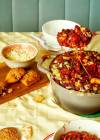
Winnipeg Greek Chili
- 30 ml (2 tbsp) olive oil
- 4 garlic cloves, minced
- 900 g (2 lbs) lean ground beef
- 30 ml (2 tbsp) chili powder
- 15 ml (1 tbsp) ground cumin
- 15 ml (1 tbsp) dried oregano leaves
- 10 ml (2 tsp) unsweetened cocoa powder
- 5 ml (1 tsp) celery seeds
- 5 ml (1 tsp) turmeric
- 5 ml (1 tsp) cinnamon
- 2. 5 ml (½ tsp) red pepper flakes
- 500 ml (2 cups) tomato juice
- 500 ml (2 cups) beef broth
- 60 ml (¼ cup) cornmeal
- 2 yellow onions, minced
Heat oil in Dutch oven over medium heat. Add onion and garlic, sauté until translucent, about 10 minutes. Add ground beef and cook until brown.
Add chili powder, cumin, oregano, cocoa, celery seed, turmeric, cinnamon and pepper flakes, and stir for 3 minutes. Add tomato juice and broth and bring to a boil.
Reduce heat and simmer until liquid reduced by a third, about 90 minutes. Add cornmeal and stir for 2 minutes.
This recipe is included in mmm…Manitoba and was originally published in the Free Press in 2007 as an approximation for Junior’s chili sauce submitted by reader Debbie Saske.

Eva Wasney covers environmental issues in Manitoba for The Narwhal in partnership with the Winnipeg Free Press. Read more about Eva.
Every piece of reporting Eva produces is reviewed by an editing team before it is posted online or published in print — part of the Free Press‘s tradition, since 1872, of producing reliable independent journalism. Read more about Free Press’s history and mandate, and learn how our newsroom operates.
Our newsroom depends on a growing audience of readers to power our journalism. If you are not a paid reader, please consider becoming a subscriber.
Our newsroom depends on its audience of readers to power our journalism. Thank you for your support.



History
Updated on Tuesday, April 30, 2024 8:57 AM CDT: Adds to ingredients list: 2 yellow onions, minced