

Alberta to pilot new social studies curriculum in the fall after facing blowback
Advertisement
Read this article for free:
or
Already have an account? Log in here »
To continue reading, please subscribe:
Monthly Digital Subscription
$1 per week for 24 weeks*
- Enjoy unlimited reading on winnipegfreepress.com
- Read the E-Edition, our digital replica newspaper
- Access News Break, our award-winning app
- Play interactive puzzles
*Billed as $4.00 plus GST every four weeks. After 24 weeks, price increases to the regular rate of $19.95 plus GST every four weeks. Offer available to new and qualified returning subscribers only. Cancel any time.
Monthly Digital Subscription
$4.99/week*
- Enjoy unlimited reading on winnipegfreepress.com
- Read the E-Edition, our digital replica newspaper
- Access News Break, our award-winning app
- Play interactive puzzles
*Billed as $19.95 plus GST every four weeks. Cancel any time.
To continue reading, please subscribe:
Add Free Press access to your Brandon Sun subscription for only an additional
$1 for the first 4 weeks*
*Your next subscription payment will increase by $1.00 and you will be charged $16.99 plus GST for four weeks. After four weeks, your payment will increase to $23.99 plus GST every four weeks.
Read unlimited articles for free today:
or
Already have an account? Log in here »
Hey there, time traveller!
This article was published 26/04/2024 (707 days ago), so information in it may no longer be current.
EDMONTON – The Alberta government says a draft social studies curriculum for elementary schools is ready for classroom-testing this fall, but the teachers’ union says the program is flawed and needs to be delayed.
Education Minister Demetrios Nicolaides says the draft has significantly evolved.
“Not everyone may be happy with the new curriculum, and that’s understandable. Albertans are diverse, and that means we have diverse views,” Nicolaides told reporters Friday.
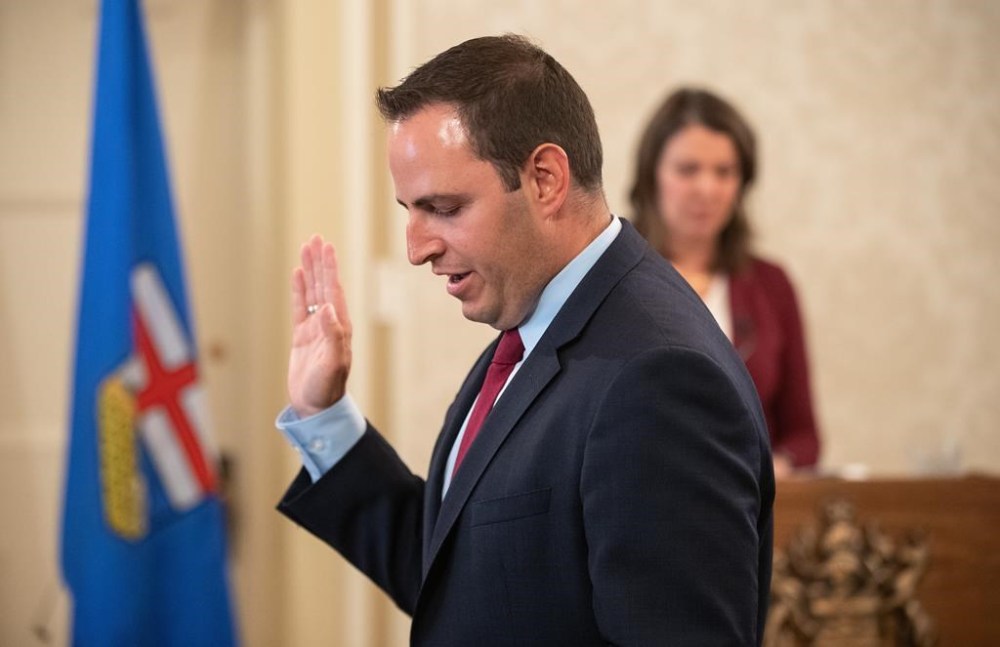
“What I believe, though, is most important is that we take politics out of the classroom.”
Nicolaides said the draft better emphasizes critical thinking, is more culturally inclusive, and shifts some topics to more appropriate age levels.
For example, students are set to learn about taxes in Grade 5 rather than in Grade 2.
Although the latest version adds First Nations, Métis and Inuit content in grades 1, 2 and 3, the government continues to resist a recommendation from the Truth and Reconciliation Commission that instruction on residential schools and treaties begin in kindergarten.
School authorities have until May 15 to decide whether they will pilot the curriculum in the fall.
Nicolaides said feedback from teachers during classroom testing could lead to minor tweaks before the curriculum becomes mandatory in all classrooms in the fall of 2025.
The Alberta Teachers’ Association said teachers’ recommendations are not reflected in the new draft, the content load is unrealistic, and some concepts remain developmentally inappropriate and inaccurate.
It’s calling for a time out.
“What’s the rush?” teachers association president Jason Schilling said in a statement, adding that the fall rollout could overwhelm schools that are already overcrowded and understaffed.
Schilling noted that over the past three years, elementary schools have piloted and implemented new curriculum in four subject areas across seven grades.
“The problems currently being faced by teachers having to implement a flawed math curriculum demonstrate the risk of proceeding prematurely to implement new curriculum content and design,” said Schilling.
The United Conservative Party government tried three years ago to update decades-old curriculum for kindergarten to Grade 6 subjects.
It was condemned by many education experts for being age-inappropriate, not culturally inclusive, and too focused on the rote memorization of facts.
As a result, the province promised to go back to the drawing board on social studies and restart consultations.
A second social studies draft was released last month, but members of the curriculum development specialist group that gave the government feedback wrote in an open letter that their advice was “largely ignored,” and the process needed yet another a restart.
Nicolaides said Friday he recently met with the group.
“Some of their commentary and some of their feedback was absolutely taken into consideration,” he said.
This report by The Canadian Press was first published April 26, 2024.