A horse-shaped nebula gets its close-up in new photos by NASA’s Webb telescope
Advertisement
Read this article for free:
or
Already have an account? Log in here »
To continue reading, please subscribe:

Digital Subscription
One year of digital access for only $205*
- Enjoy unlimited reading on winnipegfreepress.com
- Read the E-Edition, our digital replica newspaper
- Access News Break, our award-winning app
- Play interactive puzzles
*First annual payment billed as $205.00 + GST for one year. This annual subscription will automatically renew at $233.00 + GST every 52 weeks (10% off the regular annual price of $259.35). Offer available to new and qualified returning subscribers only. Cancel any time.
To continue reading, please subscribe:
Add Free Press access to your Brandon Sun subscription for only an additional
$1 for the first 4 weeks*
- Enjoy unlimited reading on winnipegfreepress.com
- Read the E-Edition, our digital replica newspaper
- Access News Break, our award-winning app
- Play interactive puzzles
*Your next Brandon Sun subscription payment will increase by $1.00 and you will be charged $17.95 plus GST for four weeks. After four weeks, your payment will increase to $24.95 plus GST every four weeks.
Read unlimited articles for free today:
or
Already have an account? Log in here »
Hey there, time traveller!
This article was published 29/04/2024 (892 days ago), so information in it may no longer be current.
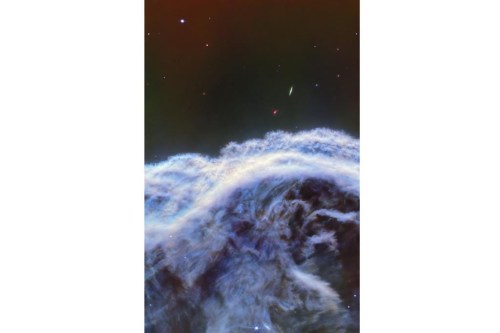
DALLAS (AP) — NASA’s Webb Space Telescope has revealed the sharpest images yet of a portion of a horse-shaped nebula, showing the “mane” in finer detail.
The Horsehead Nebula, in the constellation Orion, is 1,300 light-years away. A light-year is nearly 6 trillion miles (9.7 trillion kilometers).
Discovered over a century ago, its nickname derives from its striking appearance — a wispy pillar of gas and dust that resembles a horse rearing its head.
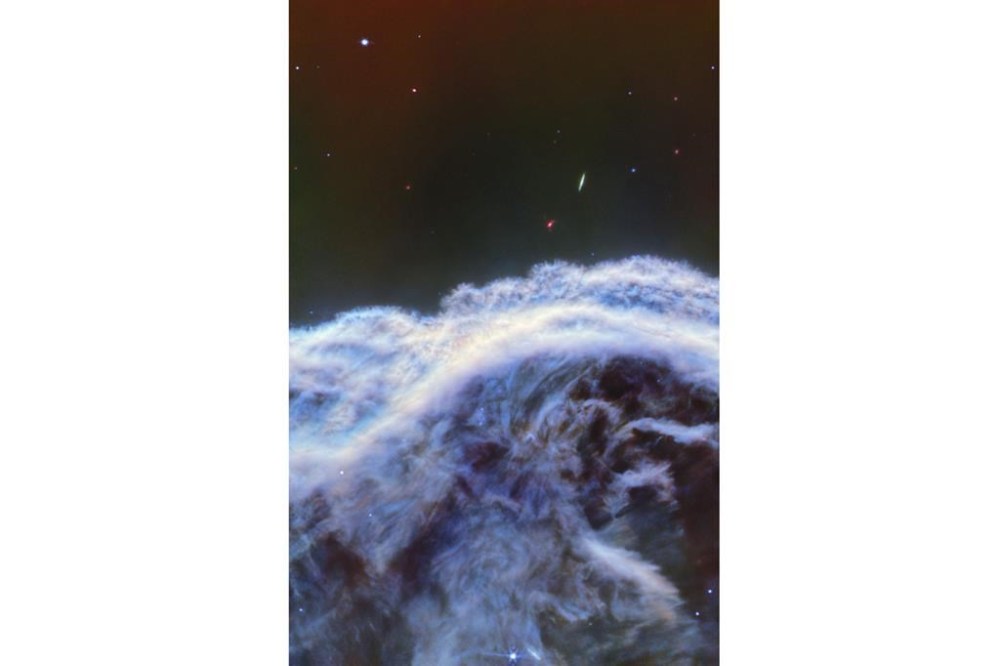
Webb’s latest infrared images released Monday captured the top of Horsehead in greater detail, illuminating clouds of chilly hydrogen molecules and soot-like chemicals. These glamour shots can help refine astronomers’ understanding of the nebula, which acts as a nursery for big stars to brew.
Horsehead is a favorite target of space observatories including the Hubble Space Telescope. Last year, the European space telescope Euclid took fresh photos of the nebula.
___
The Associated Press Health and Science Department receives support from the Howard Hughes Medical Institute’s Science and Educational Media Group. The AP is solely responsible for all content.