Taiwan is selling more to the US than China in major shift away from Beijing
Advertisement
Read this article for free:
or
Already have an account? Log in here »
To continue reading, please subscribe:

Digital Subscription
One year of digital access for only $205*
- Enjoy unlimited reading on winnipegfreepress.com
- Read the E-Edition, our digital replica newspaper
- Access News Break, our award-winning app
- Play interactive puzzles
*First annual payment billed as $205.00 + GST for one year. This annual subscription will automatically renew at $233.00 + GST every 52 weeks (10% off the regular annual price of $259.35). Offer available to new and qualified returning subscribers only. Cancel any time.
To continue reading, please subscribe:
Add Free Press access to your Brandon Sun subscription for only an additional
$1 for the first 4 weeks*
- Enjoy unlimited reading on winnipegfreepress.com
- Read the E-Edition, our digital replica newspaper
- Access News Break, our award-winning app
- Play interactive puzzles
*Your next Brandon Sun subscription payment will increase by $1.00 and you will be charged $17.95 plus GST for four weeks. After four weeks, your payment will increase to $24.95 plus GST every four weeks.
Read unlimited articles for free today:
or
Already have an account? Log in here »
Hey there, time traveller!
This article was published 16/05/2024 (883 days ago), so information in it may no longer be current.
WASHINGTON (AP) — Whether it’s tapioca balls or computer chips, Taiwan is stretching toward the United States and away from China — the world’s No. 2 economy that threatens to take the democratically ruled island by force if necessary.
That has translated to the world’s biggest maker of computer chips — which power everything from medical equipment to cellphones — announcing bigger investments in the U.S. last month after a boost from the Biden administration. Soon afterward, a Taiwanese semiconductor company said it was ending its two-decade-long run in mainland China amid a global race to gain the edge in the high-tech industry.
These changes at a time of an intensifying China-U.S. rivalry reflect Taiwan’s efforts to reduce its reliance on Beijing and insulate itself from Chinese pressure while forging closer economic and trade ties with the United States, its strongest ally. The shift also is taking place as China’s economic growth has been weak and global businesses are looking to diversify following supply chain disruptions during the pandemic.
In a stark illustration of the shift, the U.S. displaced mainland China as the top destination for Taiwan’s exports in the first quarter of the year for the first time since the start of 2016, when comparable data became available. The island exported $24.6 billion worth of goods to the U.S. in the first three months, compared with $22.4 billion to mainland China, according to Taiwan’s official data.
Meanwhile, the island’s investments in mainland China have fallen to the lowest level in more than 20 years, dropping nearly 40% to $3 billion last year from a year earlier, according to Taiwan’s Ministry of Economic Affairs. Yet, Taiwan’s investments in the U.S. surged ninefold to $9.6 billion in 2023.
Washington and Taipei signed a trade agreement last year, and they’re now negotiating the next phase. U.S. lawmakers also have introduced a bill to end double taxes for Taiwanese businesses and workers in the U.S.
“Everything is motivated by … a desire to build Taiwan’s deterrent capability and their resilience, all in support of maintaining the status quo and deterring China from being tempted to take … action against Taiwan,” Assistant Secretary of State Daniel Kritenbrink said.
The world’s biggest computer chip maker, TSMC, announced last month that it would expand its U.S. investments to $65 billion. That came after the Biden administration pledged up to $6.6 billion in incentives that would put the company’s facilities in Arizona on track to produce about one-fifth of the world’s most advanced chips by 2030.
Apart from its U.S. investments, TSMC is putting money into Japan, a staunch U.S. supporter in the region. Foxconn, a Taiwanese conglomerate known for being Apple’s main contractor, is building manufacturing capacity in India, while Pegatron, another Taiwan business that makes parts of iPhones and computers, is investing in Vietnam.
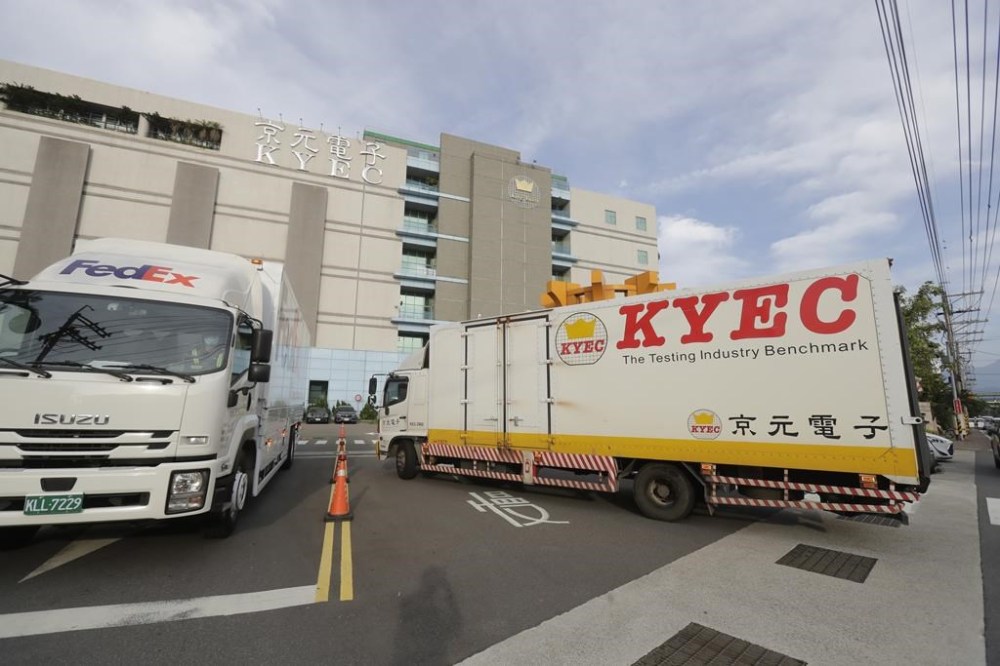
King Yuan Electronics Corp., a Taiwanese company specializing in semiconductor testing and packaging, said last month that it would sell off its $670 million stake in a venture in the eastern Chinese city of Suzhou. KYEC cited geopolitics, the U.S. export ban on advanced chips to China and Beijing’s policy of seeking self-sufficiency in the technology.
“The ecological environment of semiconductor manufacturing in China has changed, and the market competition has become increasingly severe,” KYEC said in a statement.
Exports of semiconductors, electronic components and computer equipment from Taiwan to the U.S. more than tripled from 2018 to reach nearly $37 billion last year. It’s not just tech: The island more than tripled exports of tapioca and its substitute, key ingredients in boba milk tea, to the U.S. between 2018 and 2023 and is shipping more fruits, tree nuts and farmed fish.
The recent trade data reflect “the strategy from both Taiwan and the U.S. to reorient that trade in an effort to de-risk from China,” said Hung Tran, a nonresident senior fellow with the Atlantic Council’s GeoEconomics Center.
The share of Taiwan’s exports to mainland China and Hong Kong fell from about 44% in 2020 to less than one-third in the first quarter of 2024. That was “a very big movement,” Tran said. “And I think that the share (of exports to mainland China and Hong Kong) will probably continue to decline.”
Since the 1990s, Beijing has tried to balance its claim over the island with favorable economic and trade policies, aiming to foster closer ties that could make it harder for Taiwan to break away.
When the independent-leaning Democratic Progressive Party gained power in Taiwan in 2016, the new government put forward a policy to distance the island from the mainland and boost economic ties with other countries in the region, especially in Southeast Asia. Unhappy Beijing turned to its economic leverage to try to bring Taiwan to heel.
It has restricted travel by mainland tourists to the island and suspended imports of Taiwanese seafood, fruits and snacks. In 2021, China banned Taiwan-grown pineapples over biosecurity concerns, devastating Taiwanese farmers whose exported fruit nearly all went to the mainland.

Ralph Cossa, president emeritus of the Honolulu-based foreign policy research institute Pacific Forum, said Beijing’s actions have helped push the island away.
Chinese President “Xi Jinping is tactically clever but strategically foolish in many of the decisions he has made; his loyalty tests on Taiwan businessmen and other heavy-handed business practices and decisions have been a major contributor to the success of Taiwan’s” policy to distance itself from China, he said.
And that policy will continue with Lai Ching-te, the island’s new president, Cossa said.
____
AP data reporter Aaron Kessler in Washington and videojournalist Johnson Lai in Taipei contributed.