What to do when facing extended summer power outages
Advertisement
Read this article for free:
or
Already have an account? Log in here »
To continue reading, please subscribe:

Digital Subscription
One year of digital access for only $205*
- Enjoy unlimited reading on winnipegfreepress.com
- Read the E-Edition, our digital replica newspaper
- Access News Break, our award-winning app
- Play interactive puzzles
*First annual payment billed as $205.00 + GST for one year. This annual subscription will automatically renew at $233.00 + GST every 52 weeks (10% off the regular annual price of $259.35). Offer available to new and qualified returning subscribers only. Cancel any time.
To continue reading, please subscribe:
Add Free Press access to your Brandon Sun subscription for only an additional
$1 for the first 4 weeks*
- Enjoy unlimited reading on winnipegfreepress.com
- Read the E-Edition, our digital replica newspaper
- Access News Break, our award-winning app
- Play interactive puzzles
*Your next Brandon Sun subscription payment will increase by $1.00 and you will be charged $17.95 plus GST for four weeks. After four weeks, your payment will increase to $24.95 plus GST every four weeks.
Read unlimited articles for free today:
or
Already have an account? Log in here »
Hey there, time traveller!
This article was published 17/05/2024 (828 days ago), so information in it may no longer be current.
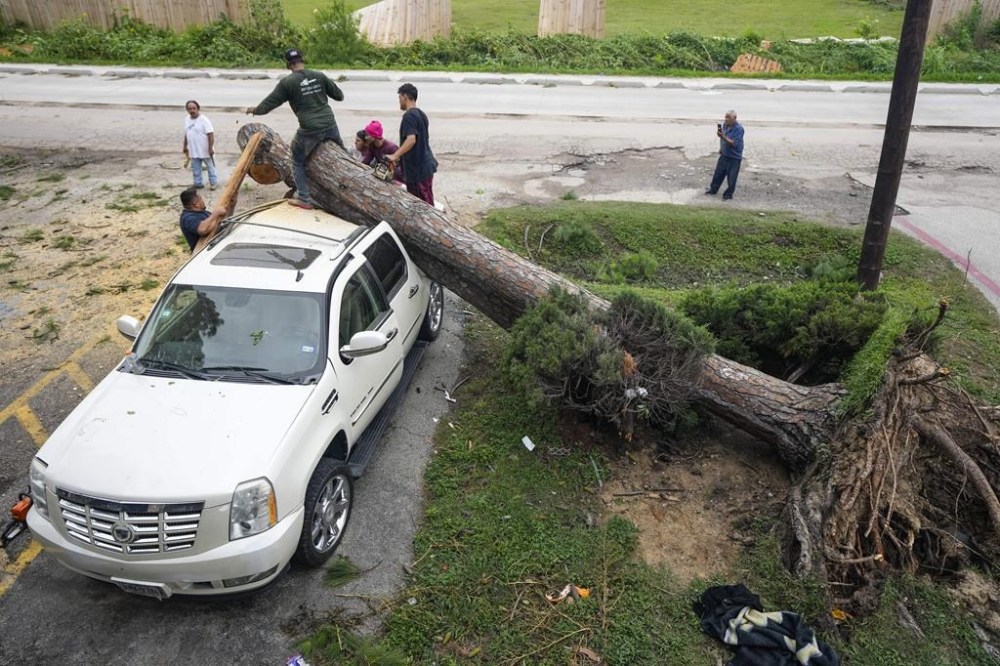
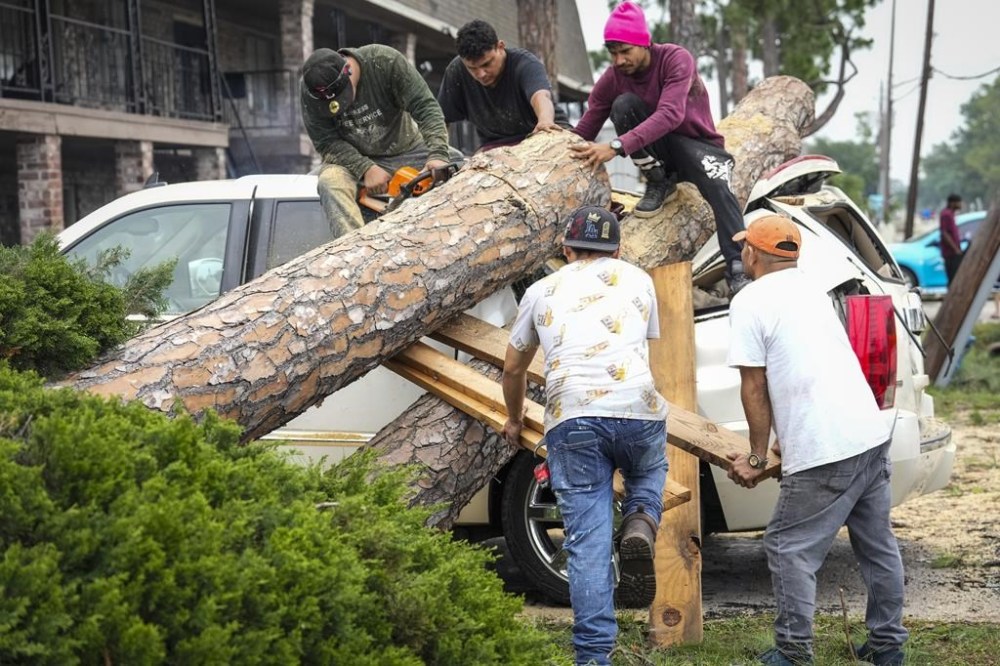
Texas officials say power outages could last weeks in parts of Houston after thunderstorms with hurricane-force winds tore through the city and killed at least four people.
The storm knocked out electricity to nearly 1 million homes and businesses in the region as temperatures hover around 90 degrees Fahrenheit (32.2 Celsius). Multiple transmission towers were downed, and thousands of utility workers have headed to the area, said Harris County Judge Lina Hidalgo, the county’s top elected official.
What should you do to stay cool and safe at home when summer power outages prevent you from using fans and air conditioners? Emergency response and medical experts share their tips.
HOW TO STAY COOL
To avoid overheating, it’s key to stay hydrated. If your home is without water during a power outage, be sure to stock up on bottled water.
It’s also important to refrain from exertion, if possible. Avoid the sun, especially during the hottest part of the day, and stay in the shade when outside.
When it’s hot, the body cools off by sweating. Soaking T-shirts or other clothing with water, or frequently spraying your skin with water, can help boost this effect, said Zachary McKenna, post-doctoral fellow in the department of internal medicine at the University of Texas Southwestern.
“That does two things that are pretty beneficial: One, you have the potential for all of that water to evaporate off the skin and actually cool the body. And two, it lowers the need for your own body to produce that sweat,” he said.
McKenna says such strategies could be particularly helpful for older people because our bodies produce less sweat as we age.
If the temperature inside your house during the day is the same, or warmer, than it is outside, you can open windows to increase air flow — but make sure to keep curtains closed, especially if windows are receiving direct sunlight, he added. At night, if temperatures drop, open windows help increase the flow of cooler air.
FOOD SAFETY
If the power goes out, the food that’s in your refrigerator can keep cold for about four hours, and what’s in your freezer can keep cold for up to two days, according to the Federal Emergency Management Agency.
You can transfer food to a cooler. But make sure there is enough ice and cold packs to keep the cooler temperature below 40 degrees (4.4 C), says the U.S. Department of Agriculture. Add more ice as it melts.
If food that must be kept cold has been exposed to temperatures of at least 40 degrees (4.4 C) for longer than four or 48 hours, depending on whether it was refrigerated or frozen, it should be thrown away so that you don’t give yourself food poisoning, according to FEMA. If food in your fridge starts to have an unusual odor, texture or color, it should also be tossed.
People should seek out nonperishable foods, such as canned goods, that don’t require refrigeration.
If using camp stoves or charcoal barbecues to cook, make sure to use them outside and at least 20 feet away from windows, FEMA says.
HOW TO CHARGE PHONES AND DEVICES
One way to preserve your cellphone’s battery is to limit calling, texting and app use. Dimming the brightness of the display screen, or putting a phone in low power mode, can also help. Turning it off can also help save battery.
A number of vendors offer affordable solar-powered chargers for phones and other devices.
You can also charge your phone in your car. But FEMA warns that you should always run your car outside, and not in an enclosed space like a garage, to avoid carbon monoxide poisoning.
Generators, which are largely fueled by gasoline and diesel, can be used as an external power source during an outage. But it is essential to know how to use one safely.
Generators should always be used outdoors, at least 20 feet away from windows, doors and garages, according to FEMA.
Those who use generators should install battery-powered carbon monoxide alarms inside their home, FEMA says, as the gas is odorless and colorless. Carbon monoxide poisoning can be deadly.
Generators should be kept dry and protected from rain or flooding, as FEMA warns that touching a wet generator can cause electrical shock. Before refueling, make sure they have cooled down.
Heavy-duty extension cords should be used to connect appliances or devices to generators. And extra precaution should be taken when hooking up a generator to a home power source, as doing so could cause a dangerous surge in electricity, according to FEMA.
“You don’t want to hook your generator into your system without having an isolation switch to keep it from charging the power lines going out from your house,” said Kenneth Gray, a senior lecturer at the University of New Haven. “Because you may, as a result, electrocute people working in the area,” such as crews restoring downed power lines, he said.
Generator transfer switches and any other necessary equipment should be installed by an electrician, per FEMA recommendations.
OTHER SAFETY TIPS
Officials recommend unplugging electronics in your home so as to avoid damage from electrical surges. And battery-powered flashlights and lanterns should be used for lighting instead of candles, which can be a fire hazard.
It’s also important to check in on older people and those with disabilities or living alone when you can, McKenna said.
“Make sure that they know the strategies and that they have somebody that they can reach out to and if they need help,” he said.