What is in-flight turbulence, and when does it become dangerous for passengers and crews?
Advertisement
Read this article for free:
or
Already have an account? Log in here »
To continue reading, please subscribe:

Digital Subscription
One year of digital access for only $205*
- Enjoy unlimited reading on winnipegfreepress.com
- Read the E-Edition, our digital replica newspaper
- Access News Break, our award-winning app
- Play interactive puzzles
*First annual payment billed as $205.00 + GST for one year. This annual subscription will automatically renew at $233.00 + GST every 52 weeks (10% off the regular annual price of $259.35). Offer available to new and qualified returning subscribers only. Cancel any time.
To continue reading, please subscribe:
Add Free Press access to your Brandon Sun subscription for only an additional
$1 for the first 4 weeks*
- Enjoy unlimited reading on winnipegfreepress.com
- Read the E-Edition, our digital replica newspaper
- Access News Break, our award-winning app
- Play interactive puzzles
*Your next Brandon Sun subscription payment will increase by $1.00 and you will be charged $17.95 plus GST for four weeks. After four weeks, your payment will increase to $24.95 plus GST every four weeks.
Read unlimited articles for free today:
or
Already have an account? Log in here »
Hey there, time traveller!
This article was published 21/05/2024 (849 days ago), so information in it may no longer be current.
NEW YORK (AP) — The death of a British man and injuries impacting dozens of other people aboard a Singapore Airlines flight that hit severe turbulence Tuesday highlighted the potential dangers of flying through unstable air.
The exact cause of the 73-year-old man’s death is under investigation. Authorities said he may have suffered a heart attack, though that hasn’t been confirmed. Based on witness accounts, the number of injuries and the airliner’s sharp descent, experts point to the significant safety hazards that in-flight turbulence poses to airline passengers and crews.
While turbulence-related fatalities are quite rare, injuries have piled up over the years. Some meteorologists and aviation analysts note that reports of turbulence encounters also have been increasing and point to the potential impacts that climate change may have on flying conditions.
Most incidents of planes hitting bumpy air are minor, however, and airlines have made steady improvements to reduce accident rates from turbulence over time. Experts advise air travelers to stay vigilant, stressing the importance of wearing a seat belt whenever possible as a first line of protection.
WHAT IS TURBULENCE?
Turbulence is essentially unstable air that moves in a non-predictable fashion. Most people associate it with heavy storms. But the most dangerous type is clear-air turbulence, which often occurs with no visible warning in the sky ahead.
Clear-air turbulence happens most often in or near the high-altitude rivers of air called jet streams. The culprit is wind shear, which is when two huge air masses close to each other move at different speeds. If the difference in speed is big enough, the atmosphere can’t handle the strain, and it breaks into turbulent patterns like eddies in water.
“When you get strong wind shear near the jet stream, it can cause the air to (overturn). And that creates these chaotic motions in the air,” Thomas Guinn, chair of applied aviation sciences department at Embry-Riddle Aeronautical University in Daytona Beach, Florida, explained.
HOW COMMON ARE TURBULENCE-RELATED INJURIES?
Tracking the total number of turbulence-related injuries around the world is difficult. But some individual countries publish national data.
More than one-third of all airline incidents in the United States from 2009 through 2018 were related to turbulence, and most of them resulted in one or more serious injuries but no damage to the plane, the National Transportation Safety Board reported.
Between 2009 and 2022, 163 people were injured seriously enough during turbulence events to require hospital treatment for at least two days, according to NTSB figures. Most of them were flight attendants, who are particularly at risk since they are more likely to be out of their seats during a flight.
Investigations are underway into what happened during Tuesday’s Singapore Airlines flight. The carrier said the Boeing 777-300ER descended 6,000 feet (around 1,800 meters) in about three minutes after hitting severe turbulence over the Indian Ocean.
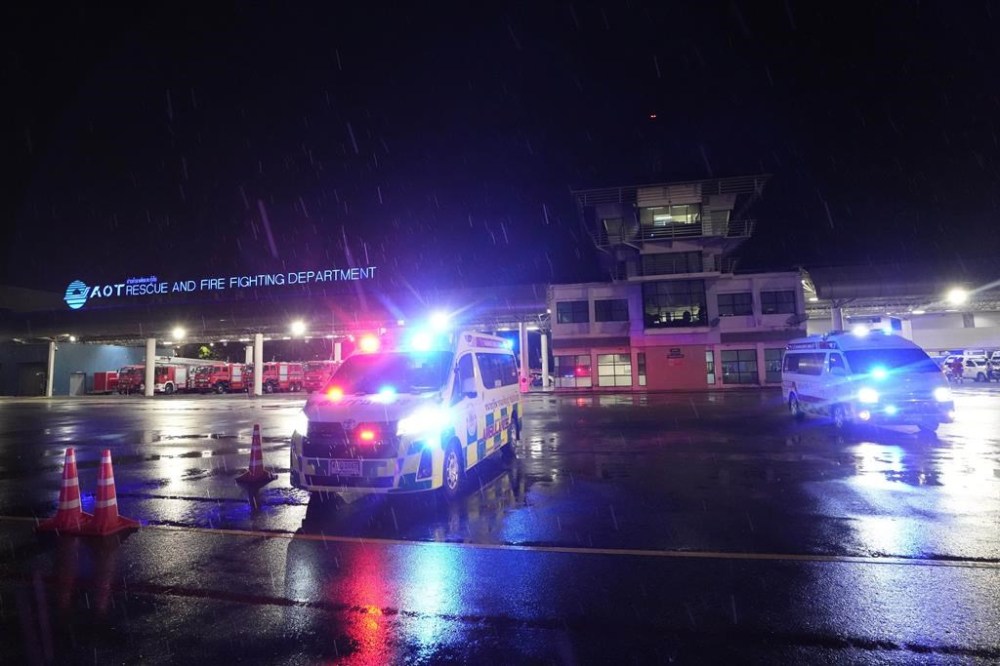
Preliminary casualty figures from the airport and a hospital in Bangkok, where the plane headed from London to Singapore landed in stormy weather, indicated that in addition to the one death, six or seven passengers were severely injured. Dozens of other travelers and crew members were reported to have suffered moderate or less serious injuries.
“It’s not uncommon to have turbulence encounters that cause minor injuries up to, say, a broken bone,” said Larry Cornman, a project scientist at the National Science Foundation’s National Center for Atmospheric Research who has long studied turbulence. “But fatalities are very, very rare — especially for large transport aircraft.”
According to Stuart Fox, director of flight and technical operations at the International Air Transport Association, the last clear air turbulence-related death reported from a major carrier took place in 1997. A few fatalities on smaller planes have been reported since, including a death on a private jet last year, Fox said.
Now-standardized safety procedures have significantly helped prevent more cases of serious injuries over the years. Fox noted. They include reviewing weather forecasts, having pilots report when they encounter turbulence and suspending cabin service when planes hit rough air.
CAN PILOTS AVOID TURBULENCE?
Pilots use a variety of methods to avoid turbulence, including using a weather radar display. Sometimes they can simply see and fly around thunderstorms.
But clear-air turbulence “is altogether another animal,” according to Doug Moss, a former airline pilot and safety consultant. It can be devastating, he said, “because the time before the incident can be very calm, and people are caught off-guard.”
Air traffic controllers will warn pilots after another plane runs into clear-air turbulence, Moss said. Many pilots also look at the upper-level jet streams along their route for signs of wind shear, then plan to fly above, below or around those areas, he said.
Modern planes are strong enough to handle just about any turbulence. Cabin areas such as overhead bins may receive cosmetic damage, “but these don’t impact the structural integrity of the planes,” Moss said.
IS CLIMATE CHANGE CAUSING TURBULENCE TO INCREASE?
Some scientists note that reports of turbulence encounters are on the rise. There are a number of possible explanations for that, but several researchers have pointed to potential climate impacts.
Guinn, of Embry-Riddle Aeronautical University, explains that some predict climate change could alter the jet stream and up the wind shear, which would consequently drive up turbulence in the air.
In a statement Tuesday, Paul Williams, a professor of atmospheric science at the University of Reading in England, said there was “strong evidence that turbulence is increasing because of climate change.”
Williams said his research team recently discovered that severe clear-air turbulence in the North Atlantic has increased by 55% since 1979, for example. The team’s latest projections signal that severe turbulence in the jet streams could double or triple in the coming decades if global conditions continue as expected, he said.
Still, others say other factors could also be at play. Cornman notes that there could be a rise in overall air traffic — which may increase turbulence encounters as the number of flight tracks, including those in areas of more turbulence, goes up.
HOW CAN TRAVELERS STAY SAFE?
In short, buckle up. Turbulence can be tricky to predict, but experts stress that the first line of defense in the air is keeping the seat belt fastened, whenever possible.
“Planes are generally built to withstand turbulence,” Guinn said, noting that passengers not wearing their seat belts is a large source of injuries from in-flight turbulence. While no precaution is foolproof, wearing a seat belt greatly increases an individual’s chances of avoiding serious injuries, he said.
“Wear your seat belt,” Guinn said. he stressed. “That’s just a really quick fix to prevent injury.”
___
Chalida Ekvitthayavechnukul in Bangkok and David Koenig in Dallas contributed reporting.
___
This story was first published on May 21, 2024. It was updated on May 22, 2024 to make clear that Embry-Riddle Aeronautical University professor Thomas Guinn intended to say that strong wind shear causes air to overturn, not overflow.