Brilliantly brief
Short-story form a beautiful fit for Belcourt’s crucial, familiar themes
Advertisement
Read this article for free:
or
Already have an account? Log in here »
To continue reading, please subscribe:

Digital Subscription
One year of digital access for only $205*
- Enjoy unlimited reading on winnipegfreepress.com
- Read the E-Edition, our digital replica newspaper
- Access News Break, our award-winning app
- Play interactive puzzles
*First annual payment billed as $205.00 + GST for one year. This annual subscription will automatically renew at $233.00 + GST every 52 weeks (10% off the regular annual price of $259.35). Offer available to new and qualified returning subscribers only. Cancel any time.
To continue reading, please subscribe:
Add Free Press access to your Brandon Sun subscription for only an additional
$1 for the first 4 weeks*
- Enjoy unlimited reading on winnipegfreepress.com
- Read the E-Edition, our digital replica newspaper
- Access News Break, our award-winning app
- Play interactive puzzles
*Your next Brandon Sun subscription payment will increase by $1.00 and you will be charged $17.95 plus GST for four weeks. After four weeks, your payment will increase to $24.95 plus GST every four weeks.
Read unlimited articles for free today:
or
Already have an account? Log in here »
Hey there, time traveller!
This article was published 25/05/2024 (809 days ago), so information in it may no longer be current.
Billy-Ray Belcourt writes in the realm of possibility. His groundbreaking 2022 anti-novel, A Minor Chorus, ended with a question. His first two collections of poetry grieve colonial violence while creating a vision and futurity for queer Indigenous experience. His 2020 memoir, A History of My Brief Body, weaves together the personal and political, theory and lived experience, bending the essay genre and culminating in a rallying cry for queer and racialized peoples: “In the face of an antagonistic relation to the past, let us start anew in the haven of a world in the image of our radical art.”
Belcourt’s activism reaches into the academic world as well. Currently assistant professor of Indigenous creative writing at UBC, Belcourt was a recipient of the prestigious Rhodes Scholarship at an early age, which saw him study feminist theory in Oxford. He returned to the University of Alberta to complete his PhD and to continue his academic career closer to his home community of Driftpile Cree Nation.
All of Belcourt’s books have achieved great success, from his Griffin Poetry Award-winning debut collection, This Wound Is a World; to his national bestseller sophomore poetry collection, NDN Coping Mechanisms: Notes from the Field; to his Governor General’s Literary Award-nominated memoir, A History of My Brief Body; to his Ethel Wilson Fiction Prize-winning novel A Minor Chorus.

Jaye Simpson photo
Billy-Ray Belcourt
In Belcourt’s newest book, Coexistence: Stories, his brilliance graces yet another genre. This collection of short stories, some of which are connected and some of which revisit characters from his previous fiction, explores Indigenous life on the rez and in the city, family and community bonds, queer love, art and survival — all within the paradox of grief and joy of contemporary Indigenous life.
As one character in Coexistence puts it, “[b]eing Indigenous in the twenty-first century means that a single hour can be governed simultaneously by joy and sadness. If sadness could fill up a truck we’d be drowning right now, but that’s only part of the story. We still believe in the future, so we keep surviving to live in it.”
The short story form is a beautiful fit for Belcourt, whose prose, like that of Maggie Nelson and Leanne Betasamosake Simpson, communicates complex philosophical ideas with a compressed and striking clarity, as with this articulation by the narrator in the story summer research: “to be queer in Alberta was to be a one-person protest against the normative. This hypervisibility, obviously, also made me into a moving target.”
The collection begins and ends with stories featuring mother and son, Louise and Paul. Louise, a widow, has lived her whole life on her reserve in northern Alberta. Her family’s status and identity were shaped by the sexism within the Indian Act, which for many years allowed men but not women to pass down their status.
Louise is ready for the first time to tell Paul about her past, the time just after she left “the mission,” the residential school she was forced to attend in her youth. She speaks about a deep love she shared with her teen friend Sue — “what they had was more than friendship” — and how they supported each other during that difficult time. Paul listens intently, acutely aware of how little he knows about his mother’s past, feeling “a pang of shame about this state of unknowing.”
In the closing story, various peoples, Paul visits his mother, who is nearing the end of her life. He contemplates “the distance between who he is and who he could’ve been,” his life shaped in many ways by his marriage to a woman who came from wealth and never lived on the rez. He thinks of the racism of his city neighbours that he’s laughed off, how “there was no way Paul could exist outside history.” His grief is palpable as he remains present to his mother in her dying days.
Coexistence also sees the return of characters and scenarios from A Minor Chorus. In summer research an unnamed narrator, who is working on his doctoral thesis, returns to northern Alberta to dog-sit at his parents’ home, which was once the lodgings for nuns who ran the residential school.
When the dog escapes into a nearby campsite, the narrator encounters casual menace and racism from a white male camper, bringing into stark focus the daily threat and violence against Indigenous people that lurks in the everyday. When he texts his mom about what happened, the message — in a kind of fatalistic, humorous twist that can be read into more broadly — fails to deliver.
Then there is the return of Jack, whose unforgettable, moving monologue from within the confines of the remand centre concluded Belcourt’s A Minor Chorus. Jack claimed the first thing he’d do when he got out was to sign up for Tinder and, sure enough, with his reappearance in the Coexistence story outside, he follows through with that pledge.
Through Tinder, Jack meets Lucy and embarks on a healthy relationship while reckoning with the consequences of his past behaviours and being put through the paces by a power-abusing parole officer — ever supported by the steadfast love of his kokum Mary.
Belcourt’s character of Jack brings to mind katherena vermette’s Phoenix Stranger, whose experiences of systemic racism and imprisonment at a very young age as well as life on the outside after prison are also chronicled over the course of several works of fiction within vermette’s trilogy, The Break, The Strangers and The Circle.
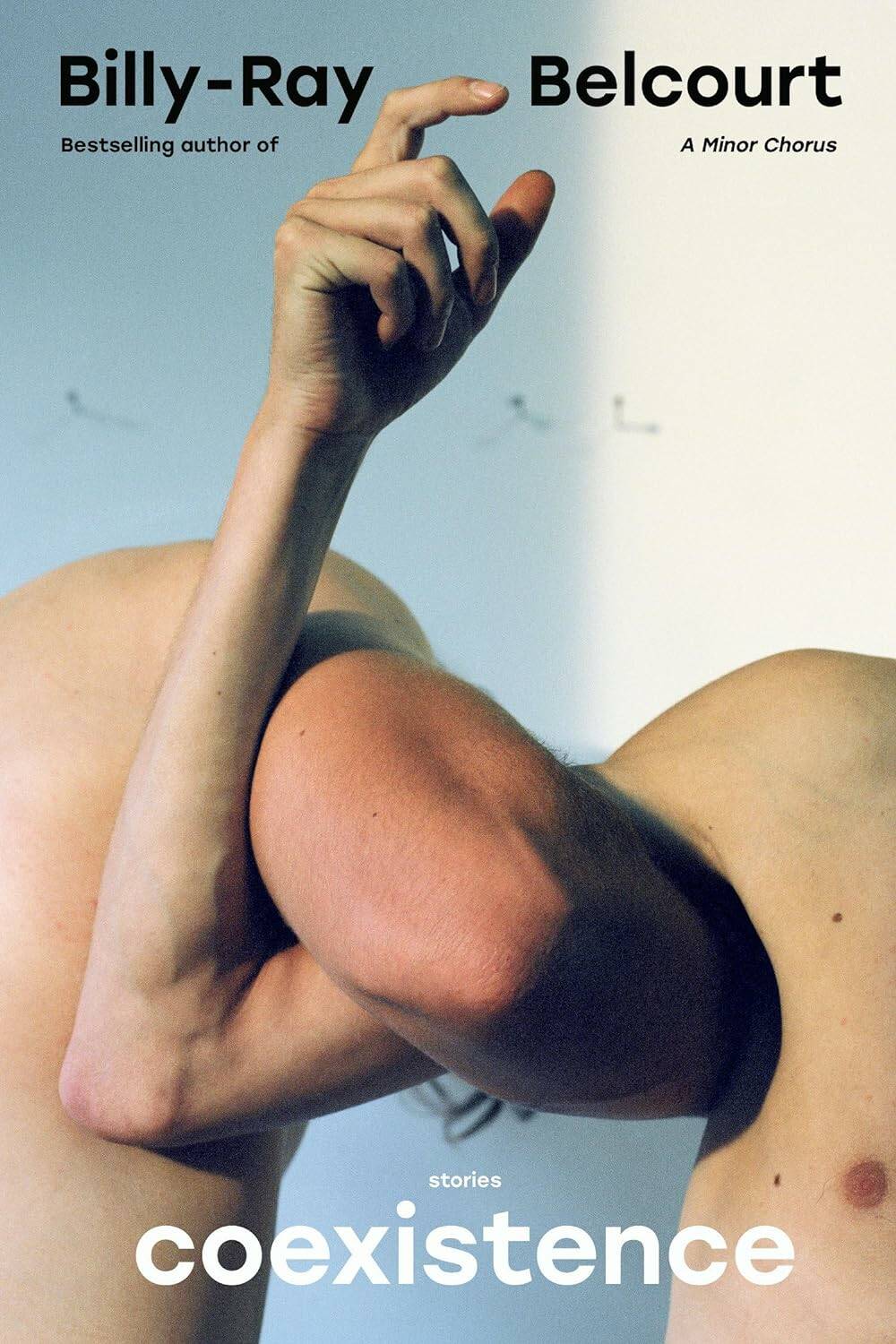
Coexistence: Stories
Phoenix’s sister Cedar Sage might find meaningful connection with Jack’s insight that “being in jail wasn’t a shock or a disgrace — it was something that sometimes happened to people you loved.”
A number of the stories in Coexistence explore tenderness, sex and love in queer relationships. Lived experience follows two Cree university students who fall in love. When Will brings his partner to his reserve to visit his family, the narrator has the opportunity of “relaxing, for the first time, into the publicness of our queer Cree joy.”
Another story, poetry class, explores the complex dynamics of a relationship in which one person is Indigenous and the other is white — a scenario recently depicted with great humour and empathy in Sam Vint and Trish Cooper’s play The Comeback, which had its world première at Winnipeg’s Royal Manitoba Theatre Centre this month.

The narrator of poetry class articulates to his partner the tension and difficulty around discussions about racism and privilege: “I had tried to communicate to him in the past that I needed space to air my frustrations about racism without his feeling personally affronted. To be in a relationship with a non-Indigenous person took work. Because I loved him, I was happy to do the work.” One can see The Comeback’s couple, Jesse and Adam, nodding in recognition.
During interviews, Belcourt often deepens the question asked by quoting a theorist — Judith Butler or Christina Sharpe; or another poet, Audre Lorde or Ocean Vuong — and then posits another question or response to suggest or reach a new position or idea.
In the presence of hearing Belcourt think out loud, one’s mind is expanded, challenged, broadened, enriched — it is an experience of suspended nourishment within the act of critical thinking.
Reading Belcourt’s fiction is a similar experience, but for the added joy of re-reading, absorbing and re-absorbing his crystallized insights that arise from exquisite writing. One might do well to ponder, over the course of a lifetime, for instance, the line that “to be Canadian required a degree of violence,” or the brimming-with-possibility question, “Can love undermine a settler state?”
Sara Harms is a Winnipeg editor.