

Xi pledges more Gaza aid and talks trade at summit with Arab leaders
Advertisement
Read this article for free:
or
Already have an account? Log in here »
To continue reading, please subscribe:

Digital Subscription
One year of digital access for only $205*
- Enjoy unlimited reading on winnipegfreepress.com
- Read the E-Edition, our digital replica newspaper
- Access News Break, our award-winning app
- Play interactive puzzles
*First annual payment billed as $205.00 + GST for one year. This annual subscription will automatically renew at $233.00 + GST every 52 weeks (10% off the regular annual price of $259.35). Offer available to new and qualified returning subscribers only. Cancel any time.
To continue reading, please subscribe:
Add Free Press access to your Brandon Sun subscription for only an additional
$1 for the first 4 weeks*
- Enjoy unlimited reading on winnipegfreepress.com
- Read the E-Edition, our digital replica newspaper
- Access News Break, our award-winning app
- Play interactive puzzles
*Your next Brandon Sun subscription payment will increase by $1.00 and you will be charged $17.95 plus GST for four weeks. After four weeks, your payment will increase to $24.95 plus GST every four weeks.
Read unlimited articles for free today:
or
Already have an account? Log in here »
Hey there, time traveller!
This article was published 29/05/2024 (841 days ago), so information in it may no longer be current.
BEIJING (AP) — Chinese President Xi Jinping reiterated calls for the establishment of an independent Palestinian state and promised more humanitarian aid for people in Gaza as he opened a summit with leaders of Arab states Thursday in Beijing.
“Since last October, the Palestinian-Israeli conflict has escalated drastically, throwing people into tremendous suffering,” Xi said in a speech opening the China-Arab States Cooperation Forum. “War should not continue indefinitely.”
He called for an international peace conference for resolving the Israel-Hamas war and pledged 500 million yuan ($69 million) in humanitarian aid for Gaza. He also promised to donate $3 million to a United Nations agency that provides assistance and relief to refugees of the Israel-Hamas war.
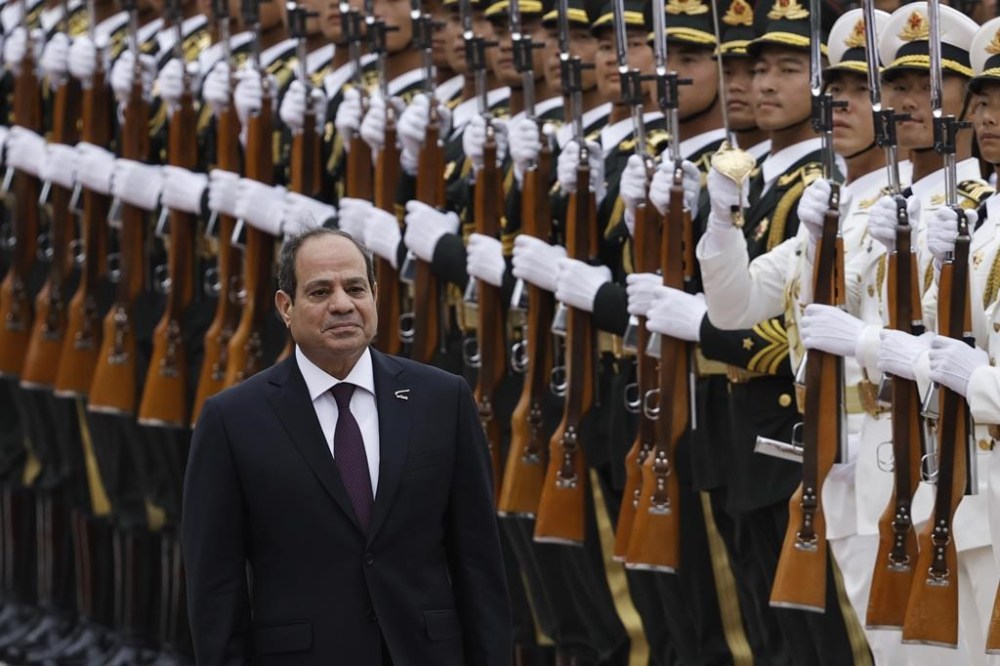
Beijing and the Arab states support Palestinians in the conflict, where Israel is facing growing international condemnation after its strike in the southern Gaza city of Rafah in which at least 45 people were killed over the weekend. The overall Palestinian death toll in the war exceeds 36,000, according to the Gaza Health Ministry.
Beijing has long backed Palestinians and denounced Israel over its settlements in the occupied territories. It has not criticized the Hamas attack on Oct. 7 — which killed about 1,200 Israelis — while the United States and others have called it an act of terrorism. However, China has growing economic ties with Israel.
Egyptian President Abdel-Fattah el-Sissi, who spoke at the opening ceremony, praised China for supporting an immediate ceasefire in Gaza and the establishment of an independent Palestinian state.
“I call on all active actors of the international community to assume their moral and legal responsibilities to stop the outrageous Israeli war,” el-Sissi said. “I further urge the international community to take immediate and decisive action to enforce the instantaneous and unfettered delivery of humanitarian aid and assistance to the Gaza Strip to break the Israeli siege and counter any attempts to forcibly displace the Palestinians from their lands,” el-Sissi said.
Besides addressing the war, the Chinese leader also called on Arab states to deepen cooperation in areas such as trade, clean energy, space exploration and health care.
The summit attended by heads of state from the United Arab Emirates, Bahrain and Tunisia among others was set to focus on China’s expanding trade ties and on security concerns related to the Israel-Hamas war.
“China’s priorities in the region are primarily economic,” said Maria Papageorgiou, a lecturer in politics and international relations at University of Exeter. “It wants to continue the momentum established in recent years with Gulf states and expand its investments, particularly in trade, technology (5G networks), and other cyber initiatives.”
Additionally, China wants to present itself as an alternative to the West and a more credible partner to the region, one that doesn’t interfere in the nations’ domestic affairs nor exert pressure, Papageorgiou said.
Xi and el-Sissi had a bilateral meeting on Wednesday, during which they signed a series of cooperation agreements in areas such as infrastructure, technology and food imports meant to strengthen their ties.
China has invested billions of dollars in Egyptian state projects, including a Suez Canal economic zone and a new administrative capital east of Cairo. Investments between Egypt and China amounted to around $14 billion in 2023, compared to $16.6 billion in 2022, according to Egypt’s statistics agency.
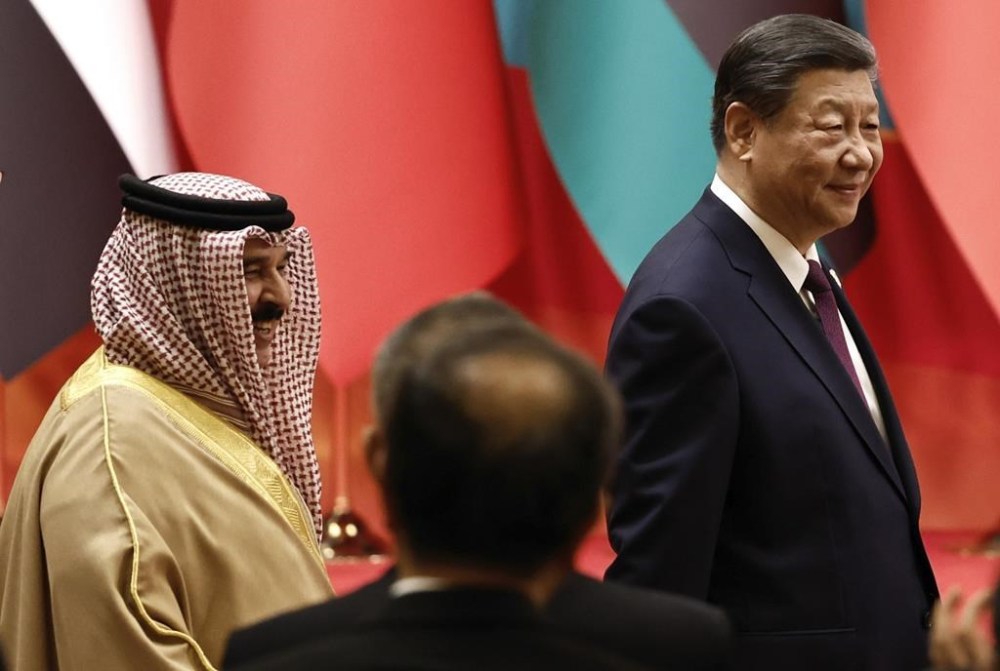
Also at the forum are Tunisia’s President Kais Saied, Emirati President Sheikh Mohammed bin Zayed Al Nahyan and Bahrain King Hamad.
The China-Arab States Cooperation Forum was established in 2004 as a formal dialogue mechanism between China and Arab states.

China is Tunisia’s fourth-largest trading partner after Germany, Italy and France. Beijing has financed hospitals and sports complexes in Tunisia, and its companies have been contracted to build strategic infrastructure such as bridges and deep-water Mediterranean ports.
The UAE also has expansive, growing economic relations with China and has faced U.S. criticism for an alleged Chinese military facility being built in Abu Dhabi.
Besides China’s expansive trade ties in the Middle East, it has increasingly sought to play a diplomatic role in the region. In 2023, Beijing helped broker an agreement that saw Saudi Arabia and Iran reestablish diplomatic relations after seven years of tension in a role previously reserved for longtime global heavyweights like the U.S. and Russia.
___
Mistreanu reported from Taipei, Taiwan. Associated Press journalists Fatma Khaled in Cairo; Jon Gambrell in Dubai, United Arab Emirates; and Sam Metz in Agadir, Morocco; and video producer Liu Zheng in Beijing contributed to this report.