

Sexist tropes and misinformation swirl online as Mexico prepares to elect its first female leader
Advertisement
Read this article for free:
or
Already have an account? Log in here »
To continue reading, please subscribe:
Monthly Digital Subscription
$0 for the first 4 weeks*
- Enjoy unlimited reading on winnipegfreepress.com
- Read the E-Edition, our digital replica newspaper
- Access News Break, our award-winning app
- Play interactive puzzles
*No charge for 4 weeks then price increases to the regular rate of $19.00 plus GST every four weeks. Offer available to new and qualified returning subscribers only. Cancel any time.
Monthly Digital Subscription
$4.75/week*
- Enjoy unlimited reading on winnipegfreepress.com
- Read the E-Edition, our digital replica newspaper
- Access News Break, our award-winning app
- Play interactive puzzles
*Billed as $19 plus GST every four weeks. Cancel any time.
To continue reading, please subscribe:
Add Free Press access to your Brandon Sun subscription for only an additional
$1 for the first 4 weeks*
*Your next subscription payment will increase by $1.00 and you will be charged $16.99 plus GST for four weeks. After four weeks, your payment will increase to $23.99 plus GST every four weeks.
Read unlimited articles for free today:
or
Already have an account? Log in here »
Hey there, time traveller!
This article was published 31/05/2024 (560 days ago), so information in it may no longer be current.
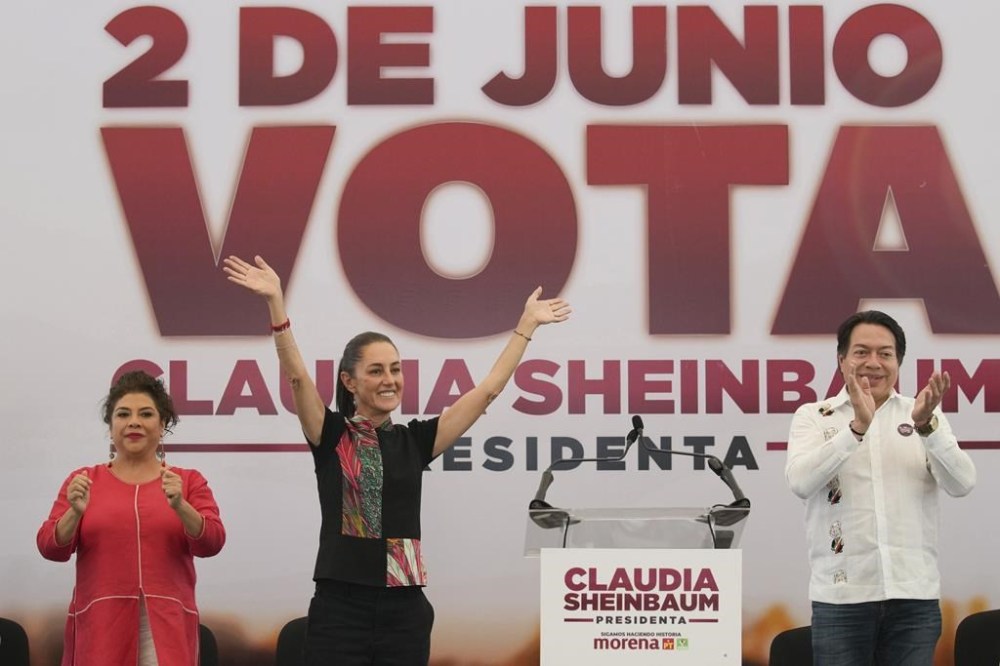
Mexican voters are poised to elect their first female president, a cause of celebration for many that has also touched off a flurry of false and misogynist online claims, blurring the lines behind fact and fiction.
The two leading candidates, both women, have had to respond to demeaning attacks about their appearance, their credentials and their ability to lead the nation.
The candidate considered the favorite in Sunday’s contest, former Mexico City Mayor Claudia Sheinbaum, has also faced slurs about her Jewish background as well as repeatedly debunked claims she was born in Hungary. This week, in an apparent bid to undermine her candidacy, a social media account impersonating a legitimate news outlet posted fake, AI-generated audio of Sheinbaum admitting that her campaign was failing in a key Mexican state.
The wave of election misinformation facing voters in Mexico is the latest example of how the internet, social media and AI are fueling the spread of false, misleading or hateful content in democracies around the world, warping public discourse and potentially influencing election outcomes.
“We have a general atmosphere of disinformation here in Mexico, but it’s slightly different from what is happening in India, or the U.S.,” said Manuel Alejandro Guerrero, a professor and communications researcher at the Universidad Iberoamericana in Mexico City.
In Mexico’s case, that misinformation is the result of growing distrust of the news media, violence committed by drug cartels, and rapid increases in social media usage coupled with a lag in digital literacy. Guerrero added one more contributing factor now familiar to Americans: political leaders who willingly spread disinformation themselves.
Sheinbaum is a member of the Morena party, led by current President Andrés Manuel López Obrador. She faces opposition candidate Xóchitl Gálvez and Jorge Álvarez Máynez of the small Citizen Movement party.
Compared with election misinformation spread about male candidates, the attacks against Gálvez and Sheinbaum often take a particularly personal nature and focus on their gender, according to Maria Calderon, an attorney and researcher from Mexico who works with the Mexico Institute, a think tank based in Washington, D.C., that studies online politics.
“I was surprised by how cruel the comments could be,” said Calderon, whose analysis found that attacks on female candidates like Sheinbaum and Gálvez typically focus on their appearance, or their credentials, whereas misinformation about male candidates is more often about policy proposals.
“A lot of direct attacks on their weight, their height, how they dressed, the way they behave, the way they talk,” Calderon said.
She suggested that some of the sexism can be traced back to Mexico’s “machismo” culture and strong Catholic roots. Women only received the right to vote in Mexico in 1953.
Lopez Obrador has spread some of the false claims targeting Gálvez, as he did last year when he erroneously said she supported plans to end several popular social programs if elected. Despite her efforts to set the record straight, however, the narrative continues to dog her campaign, showing just how effective political misinformation can be even if debunked.
Con artists have also gotten in on the misinformation business in Mexico, using AI deepfake videos of Sheinbaum in an effort to peddle investment scams, for instance.
“You’ll see that it’s my voice, but it’s a fraud,” Sheinbaum said after one deepfake of her supposedly pitching an investment scam went viral.

As they have in other nations, the tech companies that operate most of the major social media platforms say they have rolled out a series of programs and policies designed to blunt the effect of misinformation ahead of the election.
Meta and other U.S.-based tech platforms have been criticized for focusing most of their efforts on misinformation in English while taking a “ cookie-cutter ” approach to the rest of the globe.
“We are focused on providing reliable election information while combating misinformation across languages,” according to a statement from Meta, the owner of Facebook, Instagram and WhatsApp, about its election plans.
The specter of violence has haunted the election since the first campaigns began. Dozens of candidates for smaller offices have been killed or abducted by criminal gangs. Drug cartels have spread terror in the lead up to the election, spraying campaign rallies with gunfire, burning ballots and preventing polling places from being set up.
“This has been the most violent election that Mexico has had since we started recording elections,” Calderon said.