What’s the Hajj, the Islamic pilgrimage, and why is it significant for Muslims?

Advertisement

Advertise with us

Once a year, Muslim pilgrims flowing into Saudi Arabia unite in a series of religious rituals and acts of worship as they perform the Hajj, one of the pillars of Islam. As they fulfill a religious obligation, they immerse themselves in what can be a spiritual experience of a lifetime for them and a chance to seek God's forgiveness and the erasure of past sins.

Read this article for free:


By clicking the button above, an account will be created and you will begin to receive some of our recommended newsletters. You may opt out of any newsletter by visiting your Email and Communication Preferences page or by clicking "unsubscribe" at the bottom of any email.

or

Already have an account? Log in here »

To continue reading, please subscribe:

Digital Subscription

One year of digital access for only $1.44 a week*

  • Enjoy unlimited reading on winnipegfreepress.com
  • Read the E-Edition, our digital replica newspaper
  • Access News Break, our award-winning app
  • Play interactive puzzles

*Billed as $5.77 plus GST every four weeks. After 52 weeks, price increases to the regular rate of $19.95 plus GST every four weeks. Offer available to new and qualified returning subscribers only. Cancel any time.

To continue reading, please subscribe:

Add Free Press access to your Brandon Sun subscription for only an additional

$1 for the first 4 weeks*

  • Enjoy unlimited reading on winnipegfreepress.com
  • Read the E-Edition, our digital replica newspaper
  • Access News Break, our award-winning app
  • Play interactive puzzles
Start now

*Your next Brandon Sun subscription payment will increase by $1.00 and you will be charged $17.95 plus GST for four weeks. After four weeks, your payment will increase to $24.95 plus GST every four weeks.

Hey there, time traveller!
This article was published 10/06/2024 (864 days ago), so information in it may no longer be current.

Once a year, Muslim pilgrims flowing into Saudi Arabia unite in a series of religious rituals and acts of worship as they perform the Hajj, one of the pillars of Islam. As they fulfill a religious obligation, they immerse themselves in what can be a spiritual experience of a lifetime for them and a chance to seek God’s forgiveness and the erasure of past sins.

Here’s a look at the pilgrimage and its significance to Muslims.

WHAT IS HAJJ?
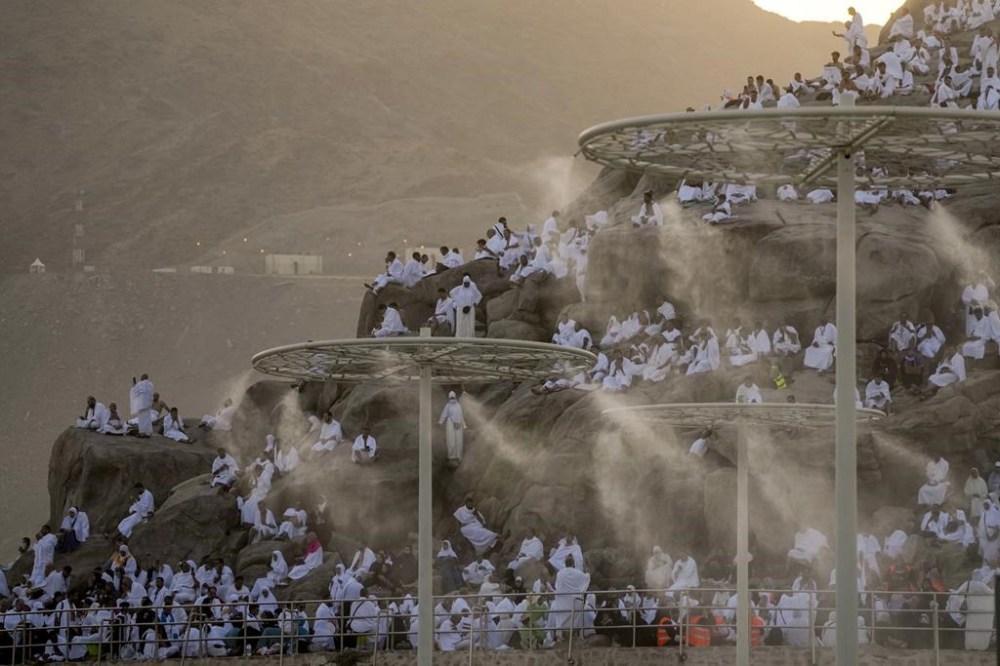
FILE - Water mist is sprayed on Muslim pilgrims as they pray on the rocky hill known as the Mountain of Mercy, on the Plain of Arafat, during the annual Hajj pilgrimage, near the holy city of Mecca, Saudi Arabia, on June 27, 2023. (AP Photo/Amr Nabil, File)

Hajj is the annual Islamic pilgrimage to Mecca in Saudi Arabia that is required once in a lifetime of every Muslim who can afford it and is physically able to make it. Some Muslims make the journey more than once.

Hajj is one of the Five Pillars of Islam, in addition to the profession of faith, prayer, almsgiving and fasting.

WHEN IS HAJJ?

The Hajj occurs once a year during the Islamic lunar month of Dhul-Hijja, the 12th and final month of the Islamic calendar year. This year, Hajj will take place this month.

WHAT’S THE SIGNIFICANCE OF HAJJ TO MUSLIMS?

For pilgrims, performing Hajj fulfills a religious obligation, but it’s also a deeply spiritual experience of a lifetime for many. It’s seen as a chance to seek God’s forgiveness for past sins, to grow closer to God and to walk in the footsteps of prophets.

Communally, Hajj unites Muslims of diverse races, ethnicities, languages and economic classes from around the world in performing religious rituals and acts of worshipping God at the same time and place. That leaves many feeling a sense of unity, connection, humility and equality. Pilgrims also show up with their own personal appeals, wishes and experiences.

Many pilgrims bring with them prayer requests from family and friends that they would like to be said on their behalf.

Some spend years hoping and praying to one day perform Hajj or saving up money and waiting for a permit to embark on the trip.

In 2019, nearly 2.5 million Muslims performed Hajj before the coronavirus pandemic disrupted religious and other gatherings the world over and took its toll on the Islamic pilgrimage. Last year’s Hajj was the first to be held without COVID-19 restrictions since the start of the pandemic in 2020.

Ahead of the journey, preparations may include packing various essentials for the physically demanding trip, seeking tips from those who’ve performed the pilgrimage before, attending lectures or consuming other educational material on how to properly perform a series of Hajj rituals as well as spiritually readying oneself.

At times, pilgrims brave intense heat or other challenging conditions during the pilgrimage.

WHAT ARE SOME OF THE RITUALS THAT PILGRIMS PERFORM?

Pilgrims make the intention to perform Hajj and they enter a state of “ihram.” Being in ihram includes abiding by certain rules and prohibitions. For instance, men are not to wear regular sewn or stitched clothes that encircle the body, such as shirts, during ihram; there are simple ihram cloth garments for men instead. Scholars say the intention is to discard luxuries and vanity, shed worldly status symbols and immerse the pilgrim in humility and devotion to God.
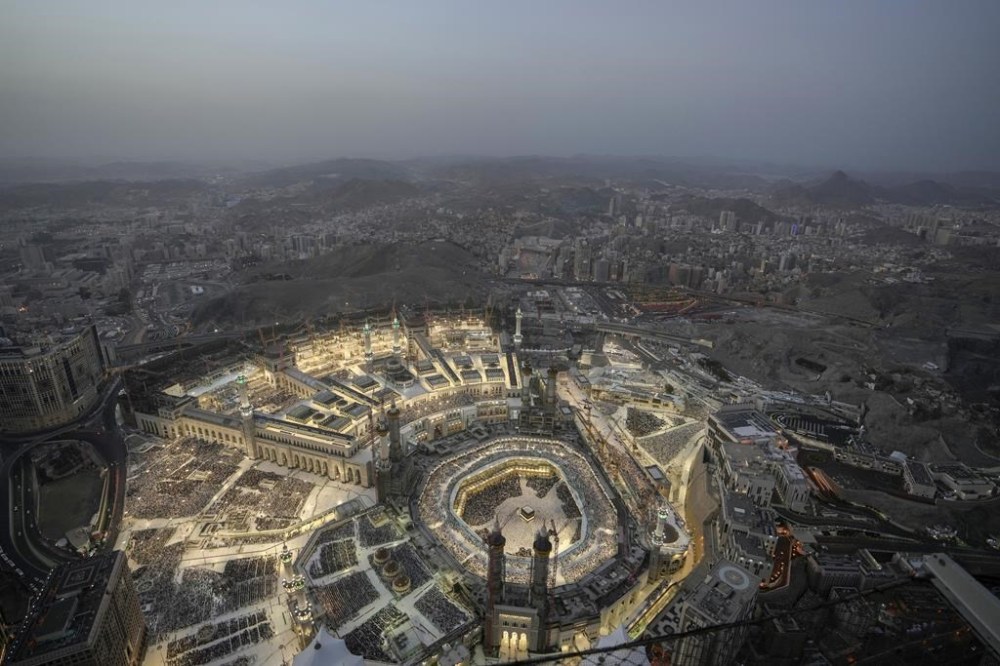
FILE - A general view of the Grand Mosque is seen from the Clock Tower during the Hajj pilgrimage in the Muslim holy city of Mecca, Saudi Arabia, on June 22, 2023. Once a year, Muslim pilgrims coming to Saudi Arabia from around the world unite in a series of religious rituals and acts of worship as they perform Hajj, one of the pillars of Islam. (AP Photo/Amr Nabil, File)

A spiritual highlight of Hajj for many is the standing on the plain of Arafat, where pilgrims praise God, plead for forgiveness and make supplications.

Other rituals include performing “tawaf,” circumambulating, or circling the Kaaba in Mecca counterclockwise seven times.

Muslims do not worship the Kaaba, a cube-shaped structure that they consider the metaphorical house of God; it’s the focal point toward which devout Muslims face during their daily prayers from anywhere in the world.

Pilgrims also trace the path of Hagar, or Hajar, the wife of Prophet Ibrahim, Abraham to Jews and Christians, who Muslims believe ran between two hills seven times searching for water for her son.

Among other rituals, pilgrims throw pebbles in a symbolic stoning of the devil.

WHAT IS EID AL-ADHA?

Eid al-Adha, or the “Feast of Sacrifice,” is the Islamic holiday that begins on the 10th day of the Islamic lunar month of Dhul-Hijja, during Hajj.

Celebrated by Muslims around the world, Eid al-Adha marks Prophet Ibrahim’s test of faith and his willingness to sacrifice his son as an act of submission to God. During the festive holiday, Muslims slaughter sheep or cattle and distribute some meat to the poor.

___

Associated Press religion coverage receives support through the AP’s collaboration with The Conversation US, with funding from Lilly Endowment Inc. The AP is solely responsible for this content.

Report Error Submit a Tip

The Free Press acknowledges the financial support it receives from members of the city’s faith community, which makes our coverage of religion possible.
More Stories

Rich get richer as NDP policy shifts leave opponents in dust

Dan Lett 5 minute read Preview

Rich get richer as NDP policy shifts leave opponents in dust

Dan Lett 5 minute read Yesterday at 2:21 PM CDT

Last week, Finance Minister Adrien Sala made two announcements that showed why the NDP will remain the party to beat in the next provincial election.

Read
Yesterday at 2:21 PM CDT

Winnipeg business closure scare leads Hydro to reschedule planned outage

Free Press staff 2 minute read Preview

Winnipeg business closure scare leads Hydro to reschedule planned outage

Free Press staff 2 minute read Updated: Yesterday at 8:19 PM CDT

Manitoba Hydro has cancelled a planned River Heights neighbourhood outage after a miscommunication led to area businesses fearing unexpected closure.

Hydro had planned to shut down power along Lanark and Renfrew streets between Corydon Avenue and John Brebeuf Place on Friday.

Overhead electrical maintenance work can only be done with the power off, during the day, for safety reasons, Hydro spokesman Peter Chura said. It chose Friday from 9 a.m. to 3 p.m. because St. John Brebeuf School had an in-service day.

However, the affected area houses a strip of businesses including a Royal Bank of Canada, eateries, shops, services such as physiotherapy and a medical centre.

Read
Updated: Yesterday at 8:19 PM CDT

Play asks the cutting questions

Ben Waldman 5 minute read Preview

Play asks the cutting questions

Ben Waldman 5 minute read 2:00 AM CDT

An IKEA nursery awaiting its tenant is the first stage into which visitors are allowed entry in playwright Jordi Mand’s The Cut.

We see an antique rocker and unmarked boxes strewn about, with a table lamp — an unofficial Ner tamid, eternal candle — sitting on the unblemished carpet in the centre of the room. Sarah (Hallie Seline) and Andrew (Wade Bogert O’Brien) have a lot to unpack as they settle into their own home: two shelves of biography waiting for a third.

The box of books from Sarah’s parents is opened early.

“Something From Nothing? Goodnight Bubbala?” Andrew laughs, turning the volumes cover-out on the wall of his future son’s room. “What are they building? A Jewish bookshelf?”

Read
2:00 AM CDT

Manitoba First Nation taking federal government, department to court over damage to sturgeon population

Morgan Modjeski 5 minute read Preview

Manitoba First Nation taking federal government, department to court over damage to sturgeon population

Morgan Modjeski 5 minute read Yesterday at 11:27 AM CDT

A remote Manitoba First Nation is taking the federal government to court over claims a Manitoba Hydro project is hurting the sturgeon population in the lower Churchill River.

In an Oct. 15 statement of claim filed in Manitoba’s Court of King’s Bench, Tataskweyak Cree Nation said the Churchill River diversion operated by Manitoba Hydro has had widespread ecological effects and damaged sturgeon populations in the area.

The lawsuit alleges Ottawa has breached its treaty obligations to protect the community’s right to harvest the fish.

The lawsuit names both His Majesty the King in Right of Canada, the minister of fisheries and Oceans Canada as defendants.

Read
Yesterday at 11:27 AM CDT

Puzzles Palace

1 minute read Friday, Oct. 16, 2026

To solve our puzzles, please subscribe with this special offer: |

A vote for public education

Shannon D. M. Moore and Melanie Janzen 4 minute read 2:00 AM CDT

On Wednesday, Oct. 28, Manitobans will head to the polls for municipal elections. Alongside their choices for mayors, reeves and councillors, voters will also have an opportunity to elect their school trustees.

In 2021, people across Manitoba rejected the government’s attempts to eradicate locally elected school boards and to centralize school governance. By defeating Bill 64, Manitobans demonstrated their commitment to maintaining locally elected school boards and to the ideals of public education.

School trustees are locally elected representatives who help govern their public school divisions. They make decisions about the direction and priorities of their school divisions, oversee budgets and help establish policies and programs that shape students’ educational experiences. Trustees also help determine how resources are allocated, advocate for the needs of students and communities and provide a link between local residents and the provincial government. They can raise — and address — concerns about class sizes, staffing, student supports, accessibility, school facilities and the resources educators need to do their jobs.

Despite the important role trustees play in communities across the country, school board elections in Canada have historically received little public or media attention. Low voter turnout for municipal elections (25 to 35 per cent), combined with ballot drop-off for the section on school trustees, single-digit turnouts for standalone school board elections and the number of trustees who run unopposed are all emblematic of the perception that school board elections are low stakes.