Converting cow manure to fuel is growing climate solution, but critics say communities put at risk
Advertisement
Read this article for free:
or
Already have an account? Log in here »
To continue reading, please subscribe:

Digital Subscription
One year of digital access for only $205*
- Enjoy unlimited reading on winnipegfreepress.com
- Read the E-Edition, our digital replica newspaper
- Access News Break, our award-winning app
- Play interactive puzzles
*First annual payment billed as $205.00 + GST for one year. This annual subscription will automatically renew at $233.00 + GST every 52 weeks (10% off the regular annual price of $259.35). Offer available to new and qualified returning subscribers only. Cancel any time.
To continue reading, please subscribe:
Add Free Press access to your Brandon Sun subscription for only an additional
$1 for the first 4 weeks*
- Enjoy unlimited reading on winnipegfreepress.com
- Read the E-Edition, our digital replica newspaper
- Access News Break, our award-winning app
- Play interactive puzzles
*Your next Brandon Sun subscription payment will increase by $1.00 and you will be charged $17.95 plus GST for four weeks. After four weeks, your payment will increase to $24.95 plus GST every four weeks.
Read unlimited articles for free today:
or
Already have an account? Log in here »
Hey there, time traveller!
This article was published 14/06/2024 (851 days ago), so information in it may no longer be current.
PIXLEY, Calif. (AP) — The stench of cow feces, urine and ammonia forces residents to keep windows and doors closed in parts of California’s farming country. Some people constantly run air purifiers at home to counter the smell and, they say, fight off air-related ailments.
“We have a lot of health problems going around in this community and most of them are respiratory problems,” said Beverly Whitfield amid dairies in Pixley, a small town in Tulare County. She believes her allergies, her adult son’s asthma and others’ breathing issues are linked to pollution from nearby dairies.
Industrial-scale dairy farms already are among the biggest polluters in the San Joaquin Valley, a premier U.S. agricultural region with poor air quality. Now residents like Whitfield worry methane digesters, which can turn manure into a biofuel that is cleaner than traditional fuels like gasoline, could exacerbate health issues. Biofuel experts say digesters can reduce air pollution.
Dairy and digester capital
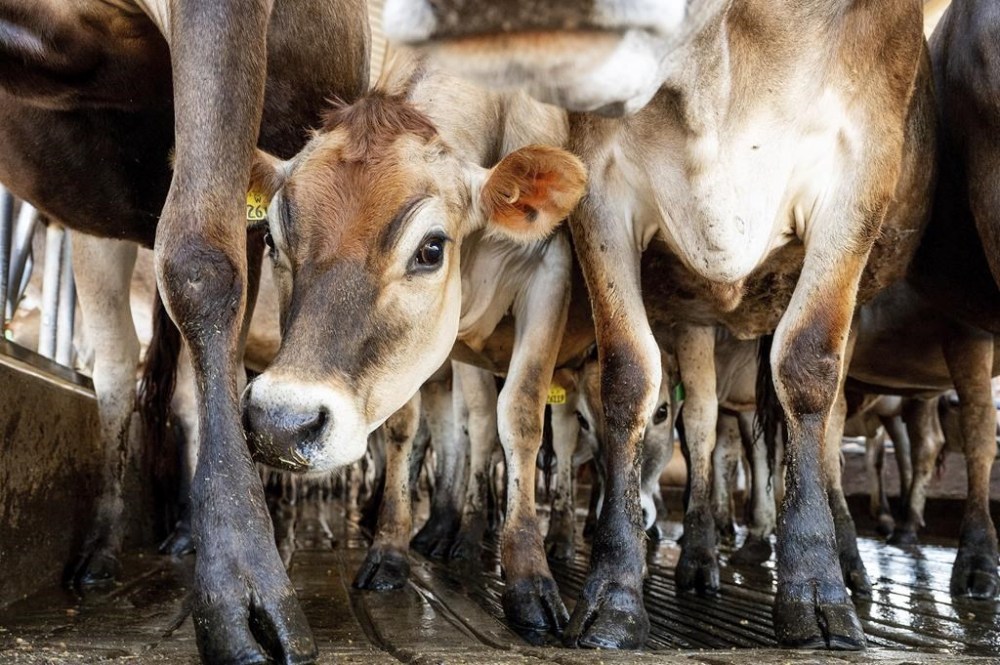
Home to about 1.7 million cows, California is the country’s leading dairy producer and a large contributor of methane. Cow burps and manure emit the potent planet-warming gas, which over a shorter period is much more powerful than carbon dioxide.
In recent decades, digesters that convert manure and other organic waste into biogas to create electricity or to power vehicles have spread across the country.
The number’s expected to grow since waste management practices such as digesters became eligible for funding from the Inflation Reduction Act — President Joe Biden’s law to combat climate change.
Most digesters are in dairies that capture methane from lagoons of cow manure and turn it into biofuel. Liquified cow manure commonly is stored in a covered digester where microbes from the animals’ digestive systems produce gas. The gas then is cleaned and compressed into a liquid fuel that can be used as an energy source.
In the last decade, about 120 digesters have cropped up across California and roughly 100 more are in the pipeline. But a technology hailed as a cost-effective way to help the state reach its methane reduction goals has become controversial.
Environmental justice organizations say mostly low-income, Latino communities are dealing with pollution from nearby digesters, and they want California to stop providing financial incentives for more. Critics also say state policies favor industrial dairies, entrenching unsustainable animal agriculture.
Rebecca Wolf with the environmental group Food and Water Watch said the state is incentivizing dairies to keep running large operations that already pollute. “You’re never going to stop polluting” with this system in place, she said.
Dairies argue the state’s financial program plays an important role. “There’s got to be some financial incentive there to give up some portion of your land to operate these systems,” said dairyman Brent Wickstrom, whose digester recently went online.
Supporters point to the technology’s effectiveness at mitigating climate change. AgSTAR, sponsored by the Environmental Protection Agency and the U.S. Department of Agriculture, estimates manure-based digesters reduced greenhouse gas emissions by more than 10 million metric tons of carbon dioxide equivalent in 2022. That’s roughly the annual greenhouse gas emissions from more than 2 million passenger vehicles.
Supporters note that biofuel from methane reduces pollution by replacing fossil fuels like gasoline with cleaner vehicle fuel.
“This technology reduces odors and some local air pollutants,” said Sam Wade, director of public policy for the Coalition for Renewable Natural Gas. “At the same time, it reduces greenhouse gas emissions.”
Dairies, digesters and pollution
Residents near dairies complain about flies and strong odors.
“You don’t want the doors open because you’re afraid of all the smells,” said Whitfield, whose family left doors open when they moved to Pixley in the 1970s. “Everything’s changed now with the dairies.”
Some dairies say digester tarps that cover manure reduce smells. “If anything, it should be keeping some of that odor in as opposed to making more,” said Wickstrom, the Merced County dairyman.
Studies have found people living near large dairies can experience fatigue, respiratory problems, burning eyes and runny noses if odors are concentrated enough. A 2017 University of Wisconsin study found digesters can increase ammonia emissions by up to 81%. Ammonia may form fine particulate matter that can enter lungs and the bloodstream. Long-term exposure to particulates has been linked to heart and respiratory issues.
“Having a reduction in greenhouse gas emissions is good, but you also want to think about the human health impact,” said lead author Michael A. Holly, an associate professor at the Green Bay campus.
California air regulators said the Midwest study doesn’t necessarily apply to this state’s different meteorological conditions and types of digesters. They added that studies are underway to understand effects of digesters on ammonia emissions.
A recent study funded by the California Air Resources Board found San Joaquin Valley dairy waste emissions contributed little to ozone and fine particulate matter concentrations.
“The air quality implications are basically zero, and really we can make a decision about whether or not digesters should be adopted based on greenhouse gas emissions,” said Michael Kleeman, lead study researcher and a University of California, Davis professor. “There’s already so much excess ammonia in the agriculture-rich regions that (digesters) are not going to significantly influence the air quality.”
Maria Arevalo, a 74-year-old activist and former farmworker, believes her asthma and sleep apnea are linked to pollution from dairies near her home in Pixley. She sleeps with a machine to help her breathe. So do her son, 34, and grandson, 11.
Her neighborhood often smells of ammonia, she said, but many families can’t afford air conditioning and open windows to let breeze in. “These dairies shouldn’t be in areas where communities are.”
In her town of about 4,000 there are more cows than people. According to the nonprofit Leadership Counsel for Justice and Accountability, Pixley’s 26 dairies house approximately 140,000 cows. Nine have digesters operating on farms with thousands of animals, according to AgSTAR.
Recently, 15 members of Congress wrote opposing USDA’s decision to make some large-scale farming practices, such as roofs and covers for waste management facilities, eligible for federal funding.
“The storage of hundreds of thousands of gallons of liquid manure … pollutes the air and water of surrounding communities,” they said. “This inherently unsustainable manure storage system is only further entrenched by … digesters.”
Tradeoffs of a climate solution
Researchers have found nearly 40% of methane emissions from human activity come from livestock and agriculture. EPA estimates each cow can produce 154 to 264 pounds (about 70 to 120 kilograms) of methane annually.
In California, supporters view digesters as important in helping the state meet climate goals and as a source of renewable natural gas for vehicles.
Biomethane improves air in cities “because trucks don’t emit very much emission at all when they run on natural gas,” said Eric McAfee, CEO of the renewable fuels and biochemicals company Aemetis.
Joey Airoso, who’s had a digester on his 2,900-cow farm since 2018, found that odors declined and nitrogen-rich remnants could be used as crop fertilizer. “That’s a big deal environmentally because it alleviates extra nitrogen being put on,” he said.
Colin Murphy, from the Policy Institute for Energy, Environment and the Economy at UC Davis, said that while digesters have benefits, they don’t solve air pollution “and don’t make it any more pleasant to live near one.”
Some valley residents who have complained about odors and respiratory issues say they have been told to move. But many have lived in small, rural towns long before dairies arrived — and relocating is not always financially feasible.

“Where are you going to move at? You don’t have money to move,” said Whitfield, the Pixley resident with allergies.
___
Pineda reported from Los Angeles.
___
The Associated Press receives support from the Walton Family Foundation for coverage of water and environmental policy. The AP is solely responsible for all content. For all of AP’s environmental coverage, visit https://apnews.com/hub/climate-and-environment