

Liberal government’s proposed capital gains tax changes come into effect today
Advertisement
Read this article for free:
or
Already have an account? Log in here »
To continue reading, please subscribe:

Digital Subscription
One year of digital access for only $205*
- Enjoy unlimited reading on winnipegfreepress.com
- Read the E-Edition, our digital replica newspaper
- Access News Break, our award-winning app
- Play interactive puzzles
*First annual payment billed as $205.00 + GST for one year. This annual subscription will automatically renew at $233.00 + GST every 52 weeks (10% off the regular annual price of $259.35). Offer available to new and qualified returning subscribers only. Cancel any time.
To continue reading, please subscribe:
Add Free Press access to your Brandon Sun subscription for only an additional
$1 for the first 4 weeks*
- Enjoy unlimited reading on winnipegfreepress.com
- Read the E-Edition, our digital replica newspaper
- Access News Break, our award-winning app
- Play interactive puzzles
*Your next Brandon Sun subscription payment will increase by $1.00 and you will be charged $17.95 plus GST for four weeks. After four weeks, your payment will increase to $24.95 plus GST every four weeks.
Read unlimited articles for free today:
or
Already have an account? Log in here »
Hey there, time traveller!
This article was published 25/06/2024 (773 days ago), so information in it may no longer be current.
OTTAWA – The Liberal government’s changes to capital gains taxation came into effect Tuesday, despite significant pushback from business and physicians’ groups.
Finance Minister Chrystia Freeland’s spring budget proposed making two-thirds of capital gains — the profit made on the sale of assets such as a secondary residence or stocks — taxable, rather than one-half.
For individuals’ capital gains of $250,000 or less, the inclusion rate would remain the same, at 50 per cent.
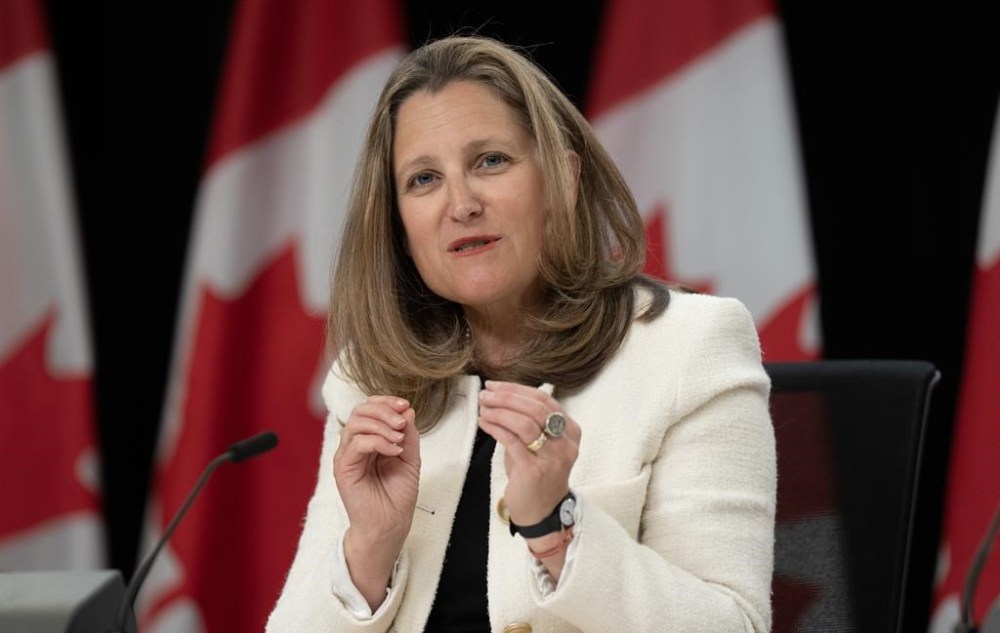
The Liberal government's proposed changes to capital gains taxation came into effect Tuesday, despite significant pushback from some special interest groups. Finance Minister Chrystia Freeland speaks during a news conference in Ottawa, Tuesday, June 18, 2024. THE CANADIAN PRESS/Adrian Wyld
At a time when the Liberals are looking to woo back young voters, Prime Minister Justin Trudeau has pitched the effective tax increase as a way to deliver generational fairness.
The Liberal government says the $19.4 billion it expects to raise in five years due to the changes will help pay for housing and other priorities for young people.
Freeland introduced a standalone motion on the changes, which easily passed the House of Commons earlier this month.
The NDP, Bloc Québécois and Greens voted with the Liberals in favour of the motion while the Conservatives, who had been silent on the tax changes until then, voted against it.
Conservative Leader Pierre Poilievre insisted the wealthy will find ways to move their money out of Canada to avoid paying the tax, which will negatively affect farmers, small businesses, doctors and homebuilders.
The changes have sparked backlash from business groups who say that the higher inclusion rate will hurt the economy by lessening competition and innovation.
Physicians’ groups have spoken out against it as well, noting that many doctors have used their incorporated medical practices to invest and save for retirement.
But the Liberals have brushed off the opposition, arguing that only a small portion of wealthy Canadians will face a higher tax bill.
During a speech earlier this month, Freeland questioned Canada’s wealthiest on what kind of country they want to live in. The finance minister painted a bleak picture of the alternative to hiking taxes and increasing spending on health care and social services.
“Do you want to live in a country where those at the very top live lives of luxury, but must do so in gated communities behind ever-higher fences using private health care and airplanes because the public sphere is so degraded and the wrath of the vast majority of their less privileged compatriots burns so hot?” Freeland said.

Ottawa estimates that in any given year, 0.13 per cent of Canadians would pay higher taxes on their capital gains.
To encourage entrepreneurship, the government is also proposing the Canadian Entrepreneurs’ Incentive, which will reduce the inclusion rate to a third on a lifetime maximum of $2 million in eligible capital gains.
A statement by The International Monetary Fund on June 11, written by IMF staff after concluding a regularly scheduled visit to Canada, was quietly positive about the capital gains change.
The preliminary concluding statement said the change “improves the tax system’s neutrality with respect to different forms of capital income and is likely to have no significant impact on investment or productivity growth.”
This report by The Canadian Press was first published June 25, 2024.