China calls on scientists of all nations to study lunar samples, but notes obstacle with the US
Advertisement
Read this article for free:
or
Already have an account? Log in here »
To continue reading, please subscribe:

Digital Subscription
One year of digital access for only $205*
- Enjoy unlimited reading on winnipegfreepress.com
- Read the E-Edition, our digital replica newspaper
- Access News Break, our award-winning app
- Play interactive puzzles
*First annual payment billed as $205.00 + GST for one year. This annual subscription will automatically renew at $233.00 + GST every 52 weeks (10% off the regular annual price of $259.35). Offer available to new and qualified returning subscribers only. Cancel any time.
To continue reading, please subscribe:
Add Free Press access to your Brandon Sun subscription for only an additional
$1 for the first 4 weeks*
- Enjoy unlimited reading on winnipegfreepress.com
- Read the E-Edition, our digital replica newspaper
- Access News Break, our award-winning app
- Play interactive puzzles
*Your next Brandon Sun subscription payment will increase by $1.00 and you will be charged $17.95 plus GST for four weeks. After four weeks, your payment will increase to $24.95 plus GST every four weeks.
Read unlimited articles for free today:
or
Already have an account? Log in here »
Hey there, time traveller!
This article was published 27/06/2024 (804 days ago), so information in it may no longer be current.
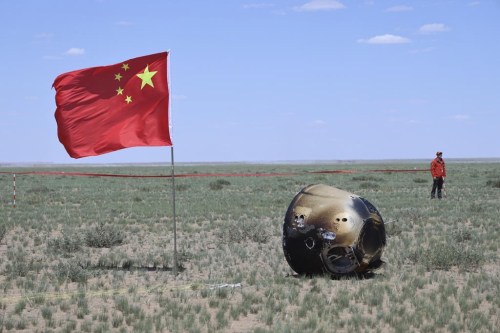
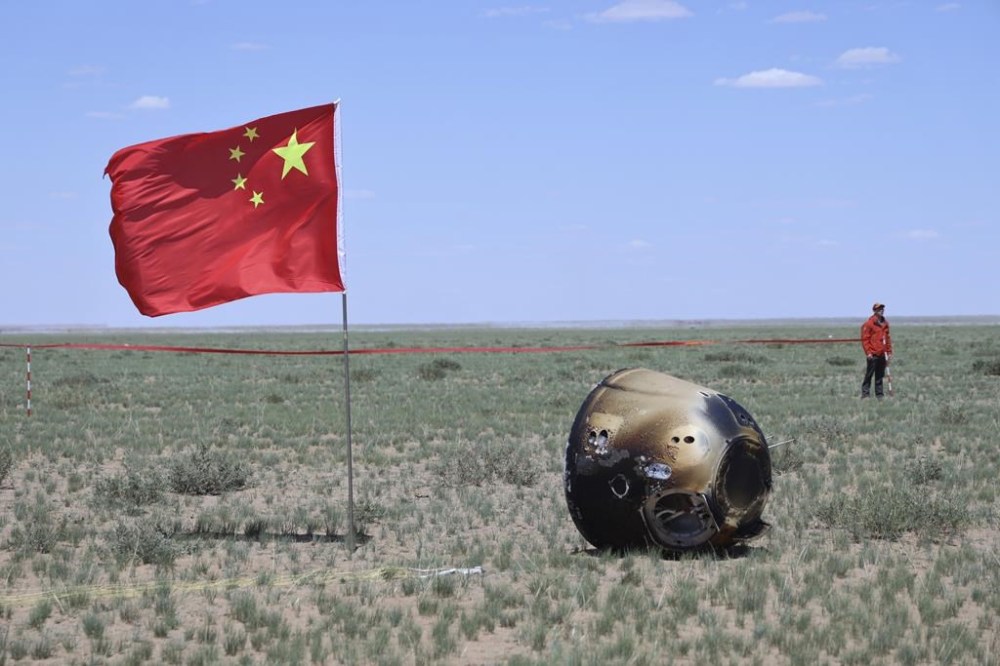
BANGKOK (AP) — China’s space officials said Thursday they welcomed scientists from around the world to apply to study the lunar rock samples that the Chang’e 6 probe brought back to Earth in a historic mission, but noted there were limits to that cooperation, specifically with the United States.
Officials said at a televised news conference in Beijing meant to introduce the mission’s achievements that any cooperation with the U.S. would be hinged on removing an American law that bans direct bilateral cooperation with NASA.
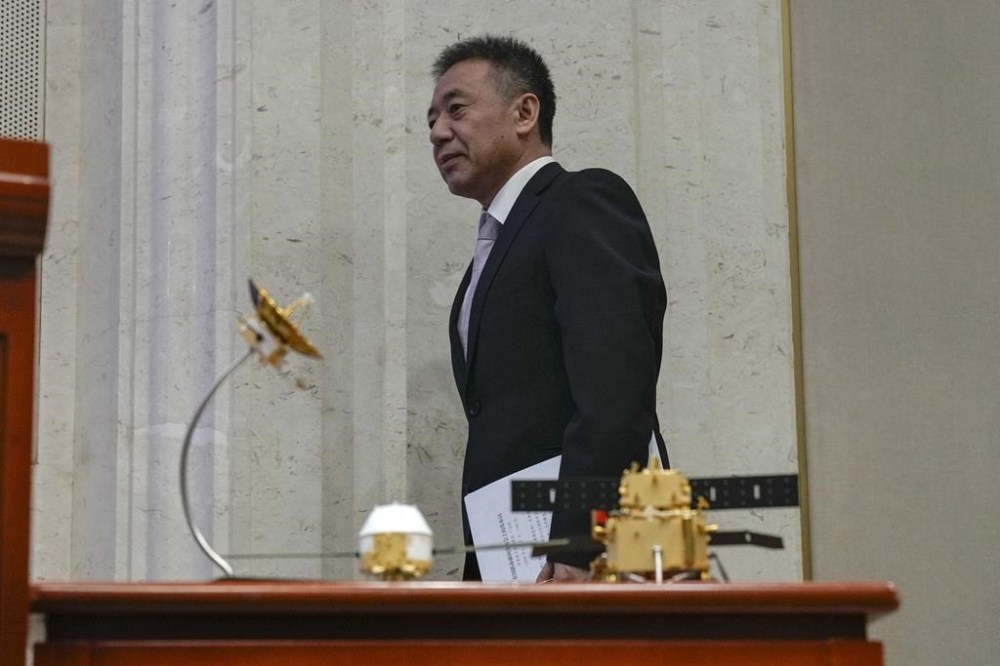
“The source of the obstacle in US-China aerospace cooperation is still in the Wolf Amendment,” said Bian Zhigang, vice chair of the China National Space Administration. “If the U.S. truly wants to hope to began regular aerospace cooperation, I think they should take the appropriate measures to remove the obstacle.”
The Wolf Amendment was enacted in 2011 and prevents direct U.S.-Chinese bilateral cooperation except in cases where the FBI can certify that there is no national security risk to sharing information with the Chinese side in the course of work.
Still, China could cooperate with scientists of other countries. It worked with the European Space Agency, France, Italy and Pakistan in the Chang’e 6 mission.
“China welcomes scientists from all countries to apply according to the processes and share in the benefits,” said Liu Yunfeng, director of the international cooperation office of the China National Space Administration.
Meanwhile, little information about the global first achieved Tuesday was announced. Chinese officials declined to reveal how many samples they actually gathered or any preliminary findings.
“I’m afraid this matter will not be revealed until tomorrow, so I hope everyone can wait patiently for another day,” Chang’e 6 chief designer Hu Hao said at the news conference.

On Monday, Chinese scientists said that they anticipate the returned samples will include 2.5 million-year-old volcanic rock and other material that scientists hope will answer questions about geographic differences on the moon’s two sides. The mission had aimed to gather two kilograms (more than four pounds) of material.
The near side of the moon is what is seen from Earth, and the far side faces outer space. The far side is also known to have mountains and impact craters and is much more difficult to reach.
The probe’s journey to the far side of the moon was historic in that it was the first time a probe had successfully taken off and brought back samples from the far side directly. Previous samples thought to be from the far side of the moon are from meteorites found on Earth.
The probe had landed in the moon’s South Pole-Aitken Basin, an impact crater created more than 4 billion years ago. The samples scientists are expecting will likely come from different layers of the basin, which will bear traces of the different geological events across its long chronology, such as when the moon was younger and had an active inside that could produce volcanic rock.
Officials did announce some future plans, with a planned Chang’e 7 probe to explore resources on the moon’s South Pole. Further down the line, they have planned Tianwen-3 for around 2030 to carry out a Mars sample return mission and a Tianwen-4 Jupiter exploration mission.