After years-long effort, IndyCar is ready to unveil its hybrid engine system this weekend in Ohio
Advertisement
Read this article for free:
or
Already have an account? Log in here »
To continue reading, please subscribe:

Digital Subscription
One year of digital access for only $205*
- Enjoy unlimited reading on winnipegfreepress.com
- Read the E-Edition, our digital replica newspaper
- Access News Break, our award-winning app
- Play interactive puzzles
*First annual payment billed as $205.00 + GST for one year. This annual subscription will automatically renew at $233.00 + GST every 52 weeks (10% off the regular annual price of $259.35). Offer available to new and qualified returning subscribers only. Cancel any time.
To continue reading, please subscribe:
Add Free Press access to your Brandon Sun subscription for only an additional
$1 for the first 4 weeks*
- Enjoy unlimited reading on winnipegfreepress.com
- Read the E-Edition, our digital replica newspaper
- Access News Break, our award-winning app
- Play interactive puzzles
*Your next Brandon Sun subscription payment will increase by $1.00 and you will be charged $17.95 plus GST for four weeks. After four weeks, your payment will increase to $24.95 plus GST every four weeks.
Read unlimited articles for free today:
or
Already have an account? Log in here »
Hey there, time traveller!
This article was published 03/07/2024 (831 days ago), so information in it may no longer be current.
INDIANAPOLIS (AP) — On the second floor of an upscale steakhouse in downtown Indianapolis, just days before their engines would be put to the test against each other in the Indianapolis 500, engineers from Chevrolet and Honda sat side-by-side and shared a toast.
In a collaboration of rivals, they had worked to push the IndyCar Series into a new era.
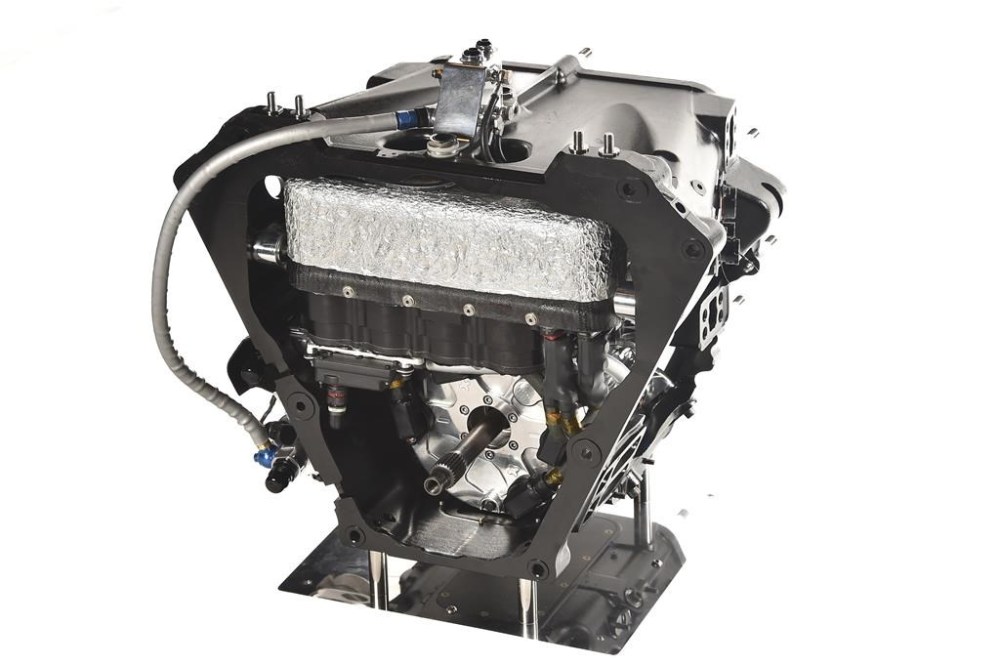
Over in the corner, sitting on a stand, was the product of their work, a hybrid unit that will fit neatly inside the existing chassis from Dallara, and works with each manufacturer’s existing 2.2-liter, twin-turbocharged V-6 engines. Once installed, the first-of-its-kind design promises to dramatically alter the way IndyCar races are run.
“It’s going to be a massive shift,” said Team Penske driver Scott McLaughlin. “We think we’ve got some sort of an idea of what it will do from the testing we’ve done previously with the hybrid. But it’s going to be different for everybody.”
They will find out precisely how different this weekend.
After no hiccups during a final full-field test June 11, the hybrid system is poised to make its debut on Sunday at Mid-Ohio in an IndyCar regular-season race presented, quite fittingly, by the 2025 Honda Civic Hybrid.
“I think we’re well-placed for this,” said Arrow McLaren team principal Gavin Ward, whose teams in Formula 1 already are familiar with hybrid systems. “We were keen to have hybrid. We were very keen for the hybrid system in general. We’re looking for a new car. We’re keen for areas for us to really catch up. Frankly, this is an opportunity for us.”
Back to the future
The push to engine hybridization began in earnest years ago, when Chevrolet and Honda wanted to better align their racing programs with a shift in consumer demand toward hybrid and electric vehicles. U.S. automakers face slowing EV sales even while investing billions to produce them in hopes that Americans will embrace battery-powered autos. Last year, the sale of electric and hybrids jumped to more than 16% of all light-duty sales, according to the U.S. Energy Information Administration.
At first, engineers struggled to fit a wholly unique hybrid unit into an IndyCar chassis designed more than a decade ago and work with engines that had been honed over nearly as long.
It wasn’t until engineers from Chevrolet and Honda — bitter rivals on the track, but compatriots in this particular effort — chose to each focus on a small part of the greater whole that the project took off.
Chevrolet turned its attention to the motor generator unit, or MGU, which produces electricity when a driver brakes or changes throttle position. Honda focused on the energy storage system, or ESS, where the electricity is stored in 20 ultracapacitors.
The pieces work in concert in a system that fits into an empty space inside the bellhousing, between the engine and gearbox.
Beginning with its first real test at Sebring last August, the hybrid system has been put through more than 20,000 miles over the course of its development. Teams have tried it everywhere from oval tracks such as Indianapolis Motor Speedway and World Wide Technology Raceway to road courses at Barber Motorsports Park in Alabama and Road America in Wisconsin.
“The partnership between Chevrolet and Honda has been phenomenal,” IndyCar president Jay Frye said “The IndyCar-specific hybrid power unit is dynamic and an engineering marvel, and we’re completely committed to its successful introduction.”
So committed that, despite myriad delays that cost IndyCar its chance of introducing the hybrid system at the start of the year, the decision was made to implement the technology at Mid-Ohio, right in the middle of the current season.
It would be like changing the rules of football at halftime, except that football players aren’t hitting 200 mph on a race track.
“We just want to make it introduced at the right time,” Ward said, “and I think mid-season is pretty aggressive.”
How hybridization works
“The world is changing. We all know that,” Honda Racing president David Salters said. “We want to be part of that, be responsible. We want to educate our engineers. And we want to show off what we can do. Racing is meant to have a form of innovation, and it does. This is new.”
In some ways, IndyCar has been playing catch-up in the race to hybridization.
Formula 1 began tinkering with kinetic energy recovery systems 15 years ago, and new engine regulations a decade ago made hybrid engines standard. Similar designs have been used at prestigious endurance races, such as the 24 Hours of Le Mans and Daytona, while an entire series — Formule E — has championed fully electric cars for the past decade.
NASCAR is expected to introduce a prototype of an electric stock car this weekend at its race in Chicago.
In other ways, the product produced by the engineering teams at Chevrolet and Honda is entirely novel.
Rather than relying on heavy batteries to store energy, such as the hybrid systems found in other racing series, IndyCar has turned to ultracapacitors. While it may not hold as much power, they have some advantages: They are much lighter and provide quick, powerful boosts, which can be deployed by drivers similar to the existing push-to-pass button.
The boost provides about 120 extra horsepower, pushing the total for IndyCar engines over 800 for the first time in decades.
“This system, it’s our first start, really,” said Eric Warren, the executive director of global motorsports competition for General Motors. “It gives us an option that can fit in the current car. It’s something the teams can digest. It gives more control to a driver, and as an engineer, of course we like more options. And it gives you a different strategy where you deploy.”
It should speed up races in another way: Drivers can use the electric power to fire their own engines. In the past, crew members would have to use an external electric motor to crank the engine at the beginning of a race or if a car stalled.
Arrow McLaren isn’t the only team with hybrid experience. Most of the major IndyCar teams — Team Penske, Chip Ganassi Racing, Rahal Letterman Lanigan Racing and Andretti Global, among others — have worked with them through their IMSA sports cars programs, which went hybrid last year. Andretti has an all-electric Formula E team. IndyCar owner Roger Penske’s son, Jay, also fields a Formula E team.
When it comes to the drivers, most have tested the hybrid system enough that they have an idea what to expect. But they also admit that the learning curve will be sharp as they learn its nuances, such as when to deploy that extra shot of power.

“I think it’s something that our series needs,” said Santino Ferrucci, who drives for A.J. Foyt Racing. “As far as technology goes, adding in that hybrid is going to add in a completely different dynamic to a driver, and I think it’s going to make the series more challenging and it’s going to be more rewarding to those that can process faster, be more adaptable.”
Still, the hybrid system also marks the end of an era in IndyCar.
“We grew up falling in love with this sport with the framework of what it is now. At the same time if you look at where the world is going, where manufacturers are going, you got to evolve,” Arrow McLaren driver Alexander Rossi said. “It’s an exciting time for the series to take that step towards the future. It’s something that’s important to all of us and the partners involved.”
___
AP auto racing: https://apnews.com/hub/auto-racing