

An Australian computer scientist who claimed to invent bitcoin referred to prosecutors for perjury
Advertisement
Read this article for free:
or
Already have an account? Log in here »
To continue reading, please subscribe:
Digital Subscription
One year of digital access for only $1.44 a week*
- Enjoy unlimited reading on winnipegfreepress.com
- Read the E-Edition, our digital replica newspaper
- Access News Break, our award-winning app
- Play interactive puzzles
*Billed as $5.77 plus GST every four weeks. After 52 weeks, price increases to the regular rate of $19.95 plus GST every four weeks. Offer available to new and qualified returning subscribers only. Cancel any time.
To continue reading, please subscribe:
Add Free Press access to your Brandon Sun subscription for only an additional
$1 for the first 4 weeks*
- Enjoy unlimited reading on winnipegfreepress.com
- Read the E-Edition, our digital replica newspaper
- Access News Break, our award-winning app
- Play interactive puzzles
*Your next Brandon Sun subscription payment will increase by $1.00 and you will be charged $17.95 plus GST for four weeks. After four weeks, your payment will increase to $24.95 plus GST every four weeks.
Read unlimited articles for free today:
or
Already have an account? Log in here »
Hey there, time traveller!
This article was published 16/07/2024 (830 days ago), so information in it may no longer be current.
LONDON (AP) — An Australian computer scientist found to have falsely claimed to be the mysterious creator of the bitcoin cryptocurrency will be referred to British prosecutors for “wholescale perjury and forgery of documents,” a London judge said Tuesday.
Judge James Mellor, who ruled after a civil trial in March that Craig Wright was not the man behind “Satoshi Nakamoto,” the pseudonym that has masked the creator of bitcoin’s identity, said he will refer evidence from the case to the Crown Prosecution Service to consider whether to bring charges.
“In advancing his false claim to be Satoshi through multiple legal actions, Dr. Wright committed ‘a most serious abuse’ of the process of the courts of the U.K., Norway and the U.S.A.,” Mellor said. “If what happened in this case does not warrant referral to the CPS, it is difficult to envisage a case which would.”
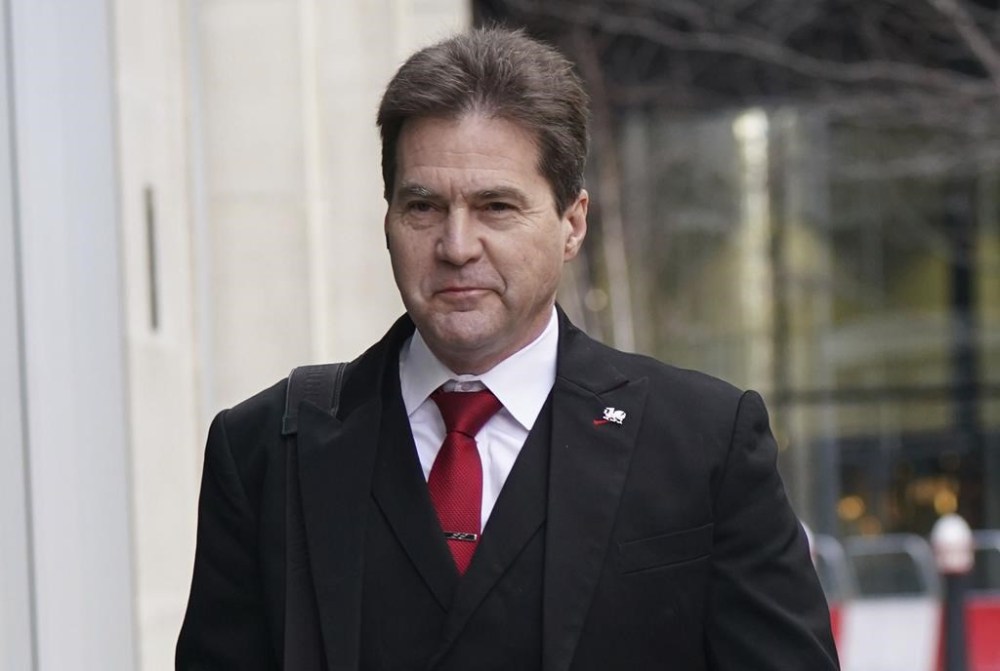
Mellor had ruled at trial that Wright did not invent bitcoin, was not the man behind Nakamoto, or creator of the bitcoin software.
The murky origins of bitcoin date to the height of the financial crisis in 2008, when a person or group using the Nakamoto pen name issued a paper explaining how digital currency could be sent around the world anonymously, without banks or national currencies.
Speculation on the identity of Nakamoto swirled for years and several candidates had emerged when Wright emerged to claim the identity in 2016, only to quickly return to the shadows, saying he didn’t “have the courage” to provide more proof.
In what was considered a major victory for open source developers, a nonprofit group of technology and crypto companies successfully sued in the High Court to prove Wright is not Nakamoto.
The Crypto Open Patent Alliance (COPA) had argued that Wright had committed “forgery on an industrial scale” to support a “brazen lie” he was Nakamoto. The alliance said he used his claim as bitcoin’s inventor to “terrorize” developers by filing litigation to prevent them from further developing the open-source technology.
Wright, who testified over several days of the five-week trial, denied the allegations. In May, he said on the social media platform X that he plans to appeal the decision “on the matter of the identity issue.”

The trial had implications for control of the intellectual property rights of the world’s most popular virtual currency. The ruling affected three pending lawsuits Wright filed based on his claim to having the intellectual property rights to bitcoin.
Mellor granted two injunctions Tuesday preventing Wright from threatening to sue or filing lawsuits aimed at developers.
He also ordered Wright to publish details of the ruling against him to “dispel residual uncertainty” that he’s not Nakamoto and post notices to that effect on his website and his profile on X, the social media platform, and his Slack channels.
Messages seeking comment from Wright’s attorneys were not immediately returned.
Bitcoin is the world’s most high-profile digital currency, and like others is not tied to any bank or government. Like cash, it allows users to spend and receive money anonymously, or mostly so. It can be converted to cash when deposited into accounts at prices set in online trading.