Federal control board sues Puerto Rico’s governor over net metering law

Advertisement

Advertise with us

SAN JUAN, Puerto Rico (AP) — A federal control board overseeing Puerto Rico’s finances filed a lawsuit Friday challenging amendments to the island’s net metering law, which compensates solar-equipped households for their contributions to the grid, triggering a backlash.

Read this article for free:


or

Already have an account? Log in here »

To continue reading, please subscribe:

Subscribe and receive a limited-edition Free Press branded hat or tote.

Digital Subscription

One year of digital access for only $205*

  • Enjoy unlimited reading on winnipegfreepress.com
  • Read the E-Edition, our digital replica newspaper
  • Access News Break, our award-winning app
  • Play interactive puzzles

*First annual payment billed as $205.00 + GST for one year. This annual subscription will automatically renew at $233.00 + GST every 52 weeks (10% off the regular annual price of $259.35). Offer available to new and qualified returning subscribers only. Cancel any time.

To continue reading, please subscribe:

Add Free Press access to your Brandon Sun subscription for only an additional

$1 for the first 4 weeks*

  • Enjoy unlimited reading on winnipegfreepress.com
  • Read the E-Edition, our digital replica newspaper
  • Access News Break, our award-winning app
  • Play interactive puzzles
Start now

*Your next Brandon Sun subscription payment will increase by $1.00 and you will be charged $17.95 plus GST for four weeks. After four weeks, your payment will increase to $24.95 plus GST every four weeks.

Hey there, time traveller!
This article was published 26/07/2024 (810 days ago), so information in it may no longer be current.

SAN JUAN, Puerto Rico (AP) — A federal control board overseeing Puerto Rico’s finances filed a lawsuit Friday challenging amendments to the island’s net metering law, which compensates solar-equipped households for their contributions to the grid, triggering a backlash.

The lawsuit filed against Gov. Pedro Pierluisi aims to protect the independence of the Puerto Rico Energy Bureau so it “can continue to operate free from political influence,” the board said.

The board said that it is not seeking to end net metering as alleged, nor impose changes to the net metering program. It noted that if it wins the lawsuit, there would be no changes to the island’s current rooftop solar program.
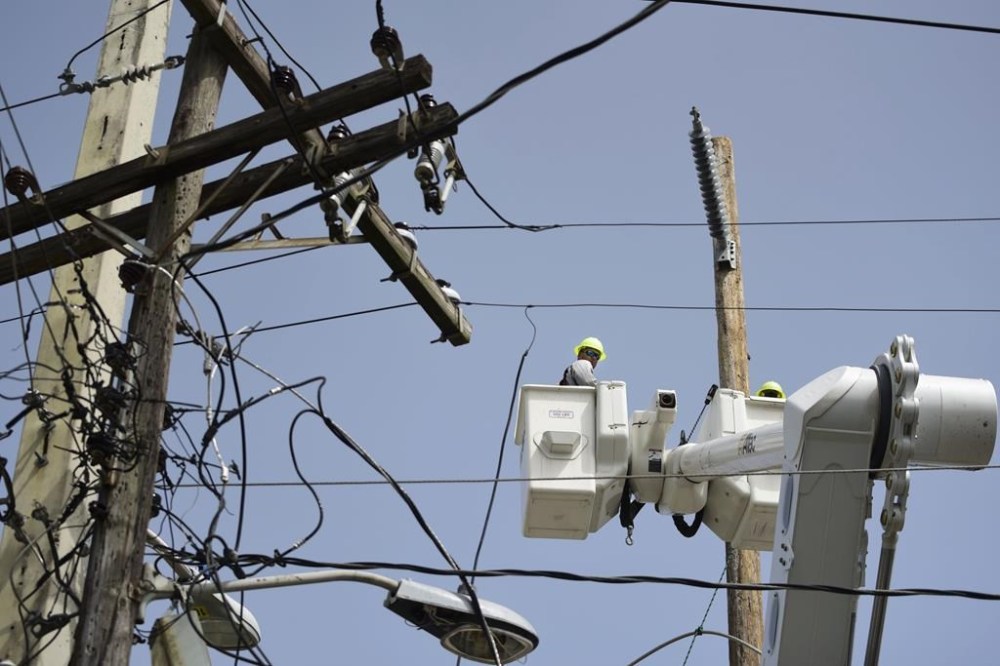
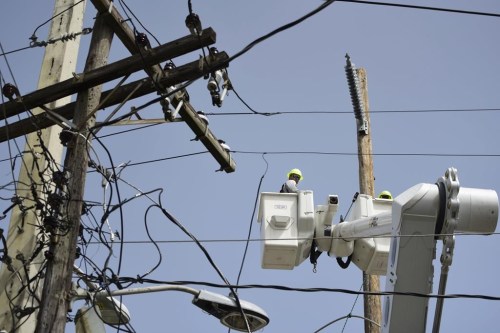
FILE - A brigade from the Electric Power Authority repairs distribution lines damaged by Hurricane Maria in the Cantera community of San Juan, Puerto Rico, Oct. 19, 2017. A federal judge overseeing a drawn-out debt-restructuring process for the power company ordered all parties to mediation on Wednesday, July 10, in the latest attempt to break an impasse that has sparked widespread anger and frustration. (AP Photo/Carlos Giusti, File)

A spokeswoman for Pierluisi said he was analyzing the lawsuit and would soon respond to it.

In April, the board had ordered Pierluisi and Puerto Rico’s legislature to amend or repeal the law, which prohibits the energy bureau from making any changes to the net metering program until 2031 at the earliest.

The law also requires the energy bureau to honor the program’s current terms for an additional 20 years, meaning that many customers would continue under those terms until at least 2051, the lawsuit states.

“The government failed to act in a prudent and fiscally responsible manner in enacting (the law),” it said.

While most U.S. net-metering programs offer reduced credits, excess energy in Puerto Rico is credited one-to-one.

The lawsuit noted that the net metering terms would affect demand for the power company’s service, “as higher net metering rates will likely incentivize more customers to switch to distributed generation.”

It said the net metering program also directly affects the revenues of Puerto Rico’s Electric Power Authority, which is struggling to restructure its more than $9 billion debt load as it clashes with creditors seeking to recuperate their investments.

Puerto Rico’s Energy Bureau currently has a draft of a study available that analyzes the island’s net metering program and recommends that a public debate be held. If the bureau were to decide that changes to the program should be made, it is currently barred from implementing them until 2031.

A group of federal lawmakers including U.S. Rep. Raúl Grijalva have opposed the board’s call to repeal or amend the law, warning there’s a possibility that “the study’s results could be used to weaken or functionally eliminate net metering in Puerto Rico.”

“Any attempt to reduce the economic viability of rooftop solar and batteries by paring back net metering should be rejected at this critical stage of Puerto Rico’s energy system transformation,” Grijalva and others wrote in a May 17 letter to the board.

Also rejecting the board’s move was Puerto Rico’s Solar Energy and Storage Association, which said that a reduction or elimination of net metering would affect the most vulnerable. More than 40% of the island’s 3.2 million people live below the poverty rate.

“(The program) is essential for Puerto Rican families to have an incentive that makes access to alternative energy sources cost-effective,” said Javier Rúa Jovet, the association’s public policy director.

In its lawsuit, the board also seeks that the governor submit an estimate of the law’s impact on the government’s revenues and expenditures, among other things.

The board stressed Friday that invalidating the net metering law would not change the terms for customers who already have solar panels.

Robert F. Mujica, Jr., the board’s executive director, said in a statement that the energy bureau was created to “oversee the energy system after years of political mismanagement that led the Puerto Rico Electric Power Authority into bankruptcy and left Puerto Rico with a dilapidated electric grid.”

He said renewable energy is key to Puerto Rico’s energy transformation and called net metering “a very important tool” for making rooftop solar more accessible and affordable.

“Determining what is in the public interest, however, should not be left to special interests,” Mujica said.

Supporters of the law have said that net metering makes rooftop solar and other renewable energy sources more affordable for those in a U.S. territory with a disintegrating power grid where the average electricity rate is 41% higher than the U.S. mainland.

Installation of rooftop solar systems have surged ever since Hurricane Maria hit Puerto Rico as a powerful Category 4 storm in September 2017, razing the electrical grid. At the time, there were 8,000 rooftop installations, compared with more than 117,000 currently, according to the Institute for Energy Economics and Financial Analysis.

Fossil fuels currently generate 94% of Puerto Rico’s electricity, according to the U.S. Energy Information Administration.

The U.S. territory has new laws calling for the power company to obtain 40% of its electricity supply from renewable sources by 2025 and 100% by 2050.

___

Follow AP’s coverage of Latin America and the Caribbean at https://apnews.com/hub/latin-america

Report Error Submit a Tip

More Stories

Letters, Oct. 13

7 minute read Preview

Letters, Oct. 13

7 minute read Updated: Yesterday at 8:14 AM CDT

The major assumption Manitoba Hydro undertakes is the weather. Hydro projected a $214 million profit for the 2025-26 fiscal year. On Sept. 29, it reported a $446 million loss. It took on additional debt due to $751 million in operating losses. In addition, Hydro stated the fiscal results for 2025-26 were “significantly influenced by circumstances largely beyond Hydro’s control.”

Read
Updated: Yesterday at 8:14 AM CDT

Federal control board sues Puerto Rico’s governor over net metering law

Dánica Coto, The Associated Press 5 minute read Preview

Federal control board sues Puerto Rico’s governor over net metering law

Dánica Coto, The Associated Press 5 minute read Friday, Jul. 26, 2024

SAN JUAN, Puerto Rico (AP) — A federal control board overseeing Puerto Rico’s finances filed a lawsuit Friday challenging amendments to the island’s net metering law, which compensates solar-equipped households for their contributions to the grid, triggering a backlash.

The lawsuit filed against Gov. Pedro Pierluisi aims to protect the independence of the Puerto Rico Energy Bureau so it “can continue to operate free from political influence,” the board said.

The board said that it is not seeking to end net metering as alleged, nor impose changes to the net metering program. It noted that if it wins the lawsuit, there would be no changes to the island’s current rooftop solar program.

A spokeswoman for Pierluisi said he was analyzing the lawsuit and would soon respond to it.

Read
Friday, Jul. 26, 2024

Hydro’s unpredictable fortunes

Editorial 4 minute read Preview

Hydro’s unpredictable fortunes

Editorial 4 minute read Yesterday at 2:00 AM CDT

Hope for rain. Or snow. Or both. There’s a truism buried deep in a financial outlook in Manitoba Hydro’s 2025-26 annual report, released in late September: “Manitoba Hydro’s net income is highly dependent on several uncontrollable factors.”

Read
Yesterday at 2:00 AM CDT

Every few years, a sword over the baby

Hersh Seth 5 minute read Preview

Every few years, a sword over the baby

Hersh Seth 5 minute read 2:00 AM CDT

On Oct. 19, people in Alberta will answer 10 referendum questions. Nine are about things such as immigration, voter ID, judges and the Senate. The other asks if Alberta should remain in Canada or begin the legal steps toward a binding vote on leaving.

I want to share a perspective, as a patriotic Canadian, which I feel is lacking from the discourse.

Many of us who read those nine complaints can understand where Alberta is coming from. Ottawa kept control of the Prairies’ Crown lands and resources until 1930, allowing the East to grow at the West’s expense. The national energy program of the 1970s is still a sore spot west of Kenora, nearly 50 years later. Ontario and Quebec have almost 60 per cent of the seats in the House of Commons, so you can win everywhere from the Lakehead to the Pacific and still not change anything. Decisions are made about us, not with us. That frustration is real and being a Manitoban shouldn’t mean having to be Ottawa’s lawyer in this case. We are the original West, born in 1870 from Métis resistance to the same kind of treatment Alberta is protesting now.

So yes, we can understand how truly frustrated they are with the state of things in this country. But what bothers us even more is seeing someone threaten our children’s future every few years and call it leadership in their province.

Read
2:00 AM CDT

Manitoba delegation to join trade mission to India

Free Press staff 2 minute read 2:01 AM CDT

A delegation from Manitoba will travel to India seeking to bolster economic ties with the South Asia nation.

The province announced Tuesday it will send representatives to join what the federal government is dubbing the “Team Canada trade mission” in India this week.

The Manitoba delegation includes business leaders and Indigenous leadership, including representatives from the University of Winnipeg, Assembly of Manitoba Chiefs and Agricultural Manufacturers of Canada.

The mission will look to strengthen ties with a shared goal of doubling bilateral trade by 2030, according to the province. It will focus on priority sectors including aerospace and space, clean technologies and energy transition, information and communications technologies, life sciences, products and agri-food.

MPI not sleeping on ride-share fraud

Editorial 4 minute read Preview

MPI not sleeping on ride-share fraud

Editorial 4 minute read 2:00 AM CDT

Rust never sleeps.

You may remember those words as the title of a Neil Young and Crazy Horse album from 1979. You might even recognize an even older use of the words as an advertising slogan for anti-rust paint Rust-Oleum.

Or you might be more familiar with the overall concept behind the saying.

That is, that corrosion is a continuous thing that requires constant attention and action, rather than one simple fix. You might even look at it specifically from the point of view of society, as defined by Quora: “neglect, decadence, or entropy accumulate quietly; vigilance and maintenance of institutions or values are necessary.”

Read
2:00 AM CDT