Code blue
Vibrant underwater ecosystems face an uncertain future — largely due to human activity
Advertisement
Read this article for free:
or
Already have an account? Log in here »
To continue reading, please subscribe:

Digital Subscription
One year of digital access for only $205*
- Enjoy unlimited reading on winnipegfreepress.com
- Read the E-Edition, our digital replica newspaper
- Access News Break, our award-winning app
- Play interactive puzzles
*First annual payment billed as $205.00 + GST for one year. This annual subscription will automatically renew at $233.00 + GST every 52 weeks (10% off the regular annual price of $259.35). Offer available to new and qualified returning subscribers only. Cancel any time.
To continue reading, please subscribe:
Add Free Press access to your Brandon Sun subscription for only an additional
$1 for the first 4 weeks*
- Enjoy unlimited reading on winnipegfreepress.com
- Read the E-Edition, our digital replica newspaper
- Access News Break, our award-winning app
- Play interactive puzzles
*Your next Brandon Sun subscription payment will increase by $1.00 and you will be charged $17.95 plus GST for four weeks. After four weeks, your payment will increase to $24.95 plus GST every four weeks.
Read unlimited articles for free today:
or
Already have an account? Log in here »
Hey there, time traveller!
This article was published 27/07/2024 (809 days ago), so information in it may no longer be current.
The human species has been awarded its own geological epoch, sparking controversy among scientists who trace humanity’s relatively brief dominance in planet Earth’s long evolutionary history.
Yet as the author of this evocatively written book reveals, there’s no doubt our species is leaving a lasting impression like the ancient dinosaurs once did. Humans are affecting other life forms and shaping an uncertain future while constructing a dubious legacy that will define the age of humans, also known as the Anthropocene.
Helen Scales is an acclaimed marine biologist who teaches at Cambridge University and writes for periodicals such as National Geographic Magazine, the Guardian and New Scientist. Her many books about the ocean, including The Brilliant Abyss (2021) and a popular children’s book, The Great Barrier Reef (2022), reveal an exceptional interest in Earth’s oceans, evident once again in her newest book.
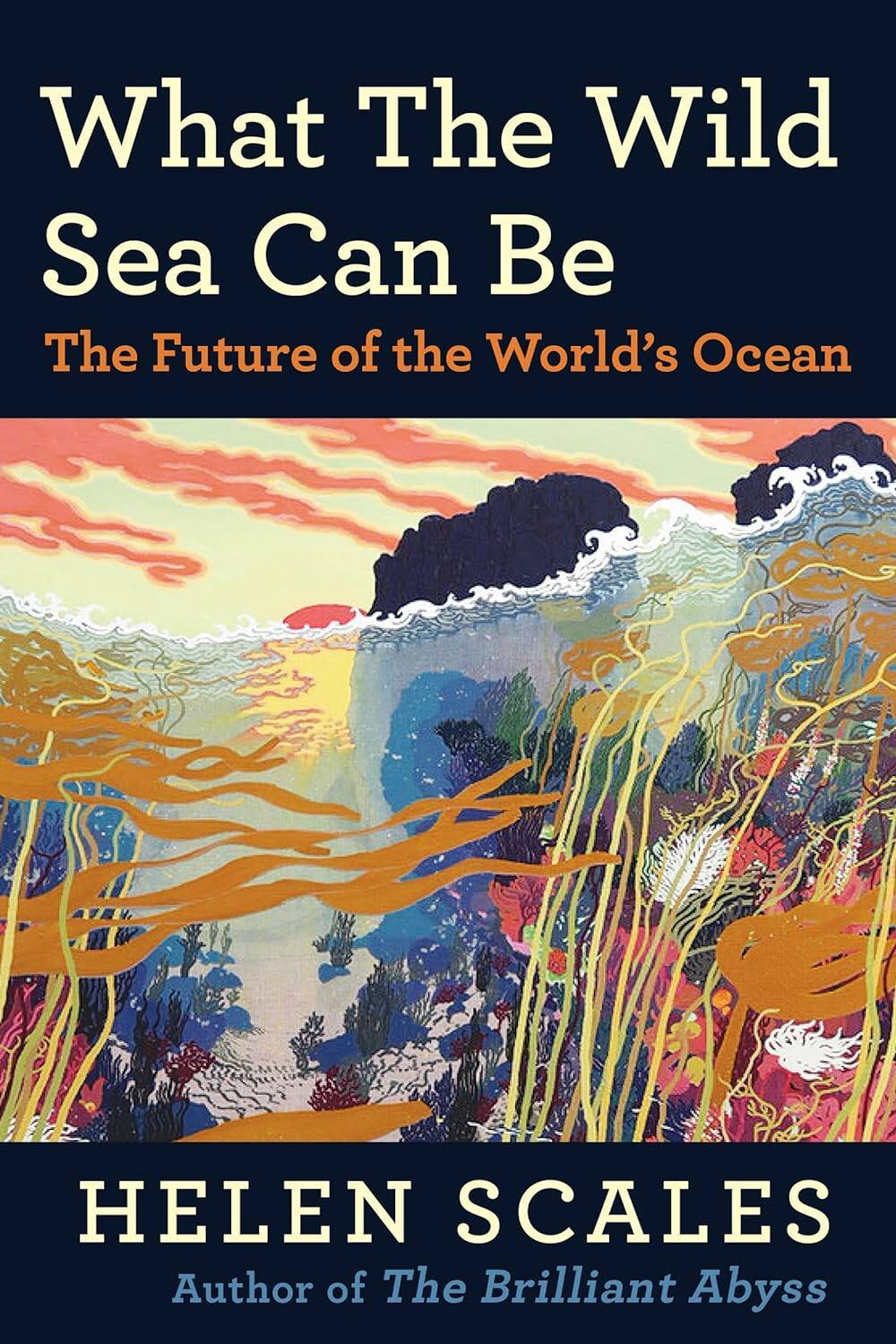
What the Wild Sea Can Be
What The Wild Sea Can Be is a disturbing portrayal of oceanic ecosystems undergoing threats to their survival instigated in large part by humans, who like all life on Earth can trace their evolutionary paths back to the primordial seas.
“We are all ocean people,” writes Scales; “you would not exist without the ocean.” It covers almost three quarters of the Earth’s surface, is many kilometres deep in places, generates weather systems and mitigates the climate crisis “by removing at least a quarter of humanity’s carbon emissions from the atmosphere.”
Adding that “planet earth is in the throes of extreme environmental change,” Scales reveals dramatic developments occurring in the oceans and provides data that supports the lament of scientists. “The ocean has never been hotter, sea levels are rising, and polar sea ice is shrinking,” she notes.
Humanity’s legacy to Earth’s long history will include polluted air, ravaged forests and melting icebergs. But it’s the cesspools of plastic waste on formerly pristine ocean surfaces that are especially concerning, as they signal grievous harm to ocean life.
Scales takes readers into the darker, murkier depths of oceans, using an assortment of sea-dwelling species and their habitats as centrepieces for the book’s 10 chapters, constructing a vivid portrayal of entire ecosystems affected by human activities.
These watery habitats are responding in different ways to human dominance, a few even exhibiting renewed vibrancy with the increasing populations of some species — elephant seals, bluefish tuna and the legendary cod fish, as examples — but Scales warns such modest recovery of a few endangered ocean species hardly curbs the trend towards species depletion and eventual extinction.
Especially worrisome is the advent of deep-sea mining, a much bigger threat to ocean life than deep-sea oil drilling has been.
An agreement by the International Seabed Authority on regulations governing future ocean floor mining for metals such as cobalt — used for constructing batteries that power electric vehicles — was temporarily stalled in 2023, but the inevitability of rampant ore extraction from seabeds is troubling.
Not only will oceanic ecosystems be affected by extensive mining, but so too will the ocean’s ability to sequester carbon that helps alleviate symptoms of the climate crisis.

RIA MISHAAL PHOTO
Helen Scales
Rising global temperatures — largely attributable to humanity’s reliance on fossil fuels for ever-expanding industrial societies supporting ever-increasing human populations — are forcing Earth’s life forms to embark on what Scales calls “climate migration.”
Species on land and in oceans have begun seeking out new spaces comfortable for their body temperatures, a change happening at a pace faster in oceans than on land as temperatures rise, water warms and oxygen levels decline.
Ocean species are migrating towards ever deeper depths, perhaps signalling a worst case legacy of the Anthropocene. “Once they reach the bottom of the sea, they’ll have nowhere deeper to go,” Scales warns.
This engaging book suggests a better future for Earth’s oceans is possible. But it’s only possible if humans recognize how our lives are interconnected with other life forms, and can commit to broadening already successful projects like those helping to restore coral reefs and kelp forests, which can harbour a variety of life forms while offering protection from destructive storm surges.
Joseph Hnatiuk is a retired teacher.