

Legal assistance should be required
Advertisement
Read this article for free:
or
Already have an account? Log in here »
To continue reading, please subscribe:

Digital Subscription
One year of digital access for only $205*
- Enjoy unlimited reading on winnipegfreepress.com
- Read the E-Edition, our digital replica newspaper
- Access News Break, our award-winning app
- Play interactive puzzles
*First annual payment billed as $205.00 + GST for one year. This annual subscription will automatically renew at $233.00 + GST every 52 weeks (10% off the regular annual price of $259.35). Offer available to new and qualified returning subscribers only. Cancel any time.
To continue reading, please subscribe:
Add Free Press access to your Brandon Sun subscription for only an additional
$1 for the first 4 weeks*
- Enjoy unlimited reading on winnipegfreepress.com
- Read the E-Edition, our digital replica newspaper
- Access News Break, our award-winning app
- Play interactive puzzles
*Your next Brandon Sun subscription payment will increase by $1.00 and you will be charged $17.95 plus GST for four weeks. After four weeks, your payment will increase to $24.95 plus GST every four weeks.
Read unlimited articles for free today:
or
Already have an account? Log in here »
Hey there, time traveller!
This article was published 06/08/2024 (746 days ago), so information in it may no longer be current.
There are two sides to every story.
Sometimes three. Sometimes, more.
And when you’re doing something as important as holding an inquest into a fatal shooting by police — making recommendations to try to prevent similar deaths in the future — it’s necessary to ensure all of those sides are heard.
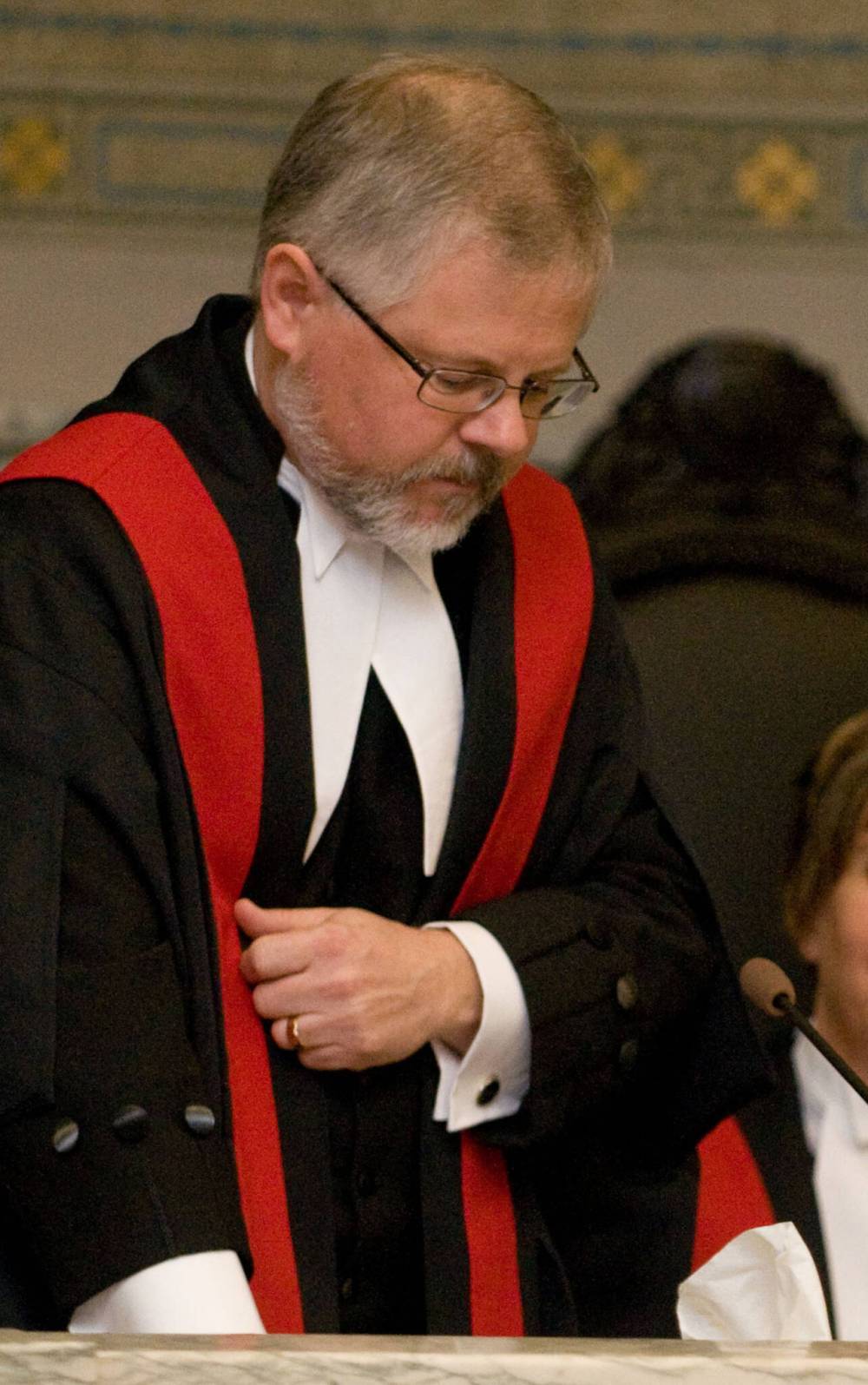
DAVID LIPNOWSKI / FREE PRESS FileS
Judge Robert Heinrichs
That all of the necessary questions are asked. That all of the necessary answers are given.
To be blunt, the system is currently stacked against families who are searching for details about the deaths of loved ones. It seems trite to put it this way, but asking families who are already struggling with personal loss to come up with the money needed to hire their own legal counsel is adding insult to injury. Families have to ask provincial officials to be allowed paid legal support, but half the time, that request is turned down.
The message is: “We want to find out what happened, but if you want to take part in making sure the complete story is told, you’ll have to pay for that privilege.”
Often, it’s families who are the least able to pay who are told that representation by the provincial Crown attorney serving as inquest counsel is good enough. That’s even though Crown lawyers also handle prosecutions and have a vested interest in maintaining a good working relationship with police.
If there is paid legal representation for everyone else in the inquest room except families, how does that serve to get the complete picture?
That’s something that even the inquest counsel pointed out in the joint inquest of Evan Grant Caron and Adrian Lacquette.
Here’s inquest counsel Richard Lonstrup, as quoted in the judge’s final report, issued July 31: “Now, we know the long game of a mandatory inquest is to prevent deaths in similar circumstances. That’s a very important goal. And inquest counsel says it can only be reached through the most thorough and detailed analysis of the facts. Independent counsel, their own lawyers for the families of the deceased, are there to ask challenging questions. Exploring areas that even the most well-meaning thorough inquest counsel or police counsel may not have asked helps make sure that the analysis is thorough. It is the best way to see if there are changes needing to be made or in the alternative to ensure that maybe genuinely there were no viable changes needed to be made.”
Lonstrup continued: “Related to this point is the question really of just basic expertise. Legal counsel for the parties have the experience and the know-how to sift through what is conservatively speaking hundreds and hundreds of pages of material to assess the key pieces of evidence to determine the most important witnesses, the necessary exhibits. Unrepresented families don’t have that.”
At the same inquest, Kimberly Carswell, representing the Winnipeg Police Service, didn’t take a position on providing paid counsel, but said, “Would they be served by having counsel? Of course they would. I don’t think there’s any question that families having access to counsel would make their journey easier and would probably make the procedure more efficient…”

Senior Provincial Court Judge Robert Heinrichs made only two recommendations following the inquest, one being that inquests should be held individually, instead of the current practice that allows separate deaths to be lumped together in a single inquest.
The other?
“It is recommended that there be mandatory legal funding of legal counsel for the family representatives in mandatory Fatality Inquiry Act Inquests.”
It was one of only two sentences in the inquest report written in bold type.
And if we may be so bold, publicly paid legal representation for families at inquests is a requirement of basic fairness.