Russian disinformation slams Paris and amplifies Khelif debate to undermine the Olympics
Advertisement
Read this article for free:
or
Already have an account? Log in here »
To continue reading, please subscribe:

Digital Subscription
One year of digital access for only $205*
- Enjoy unlimited reading on winnipegfreepress.com
- Read the E-Edition, our digital replica newspaper
- Access News Break, our award-winning app
- Play interactive puzzles
*First annual payment billed as $205.00 + GST for one year. This annual subscription will automatically renew at $233.00 + GST every 52 weeks (10% off the regular annual price of $259.35). Offer available to new and qualified returning subscribers only. Cancel any time.
To continue reading, please subscribe:
Add Free Press access to your Brandon Sun subscription for only an additional
$1 for the first 4 weeks*
- Enjoy unlimited reading on winnipegfreepress.com
- Read the E-Edition, our digital replica newspaper
- Access News Break, our award-winning app
- Play interactive puzzles
*Your next Brandon Sun subscription payment will increase by $1.00 and you will be charged $17.95 plus GST for four weeks. After four weeks, your payment will increase to $24.95 plus GST every four weeks.
Read unlimited articles for free today:
or
Already have an account? Log in here »
Hey there, time traveller!
This article was published 06/08/2024 (761 days ago), so information in it may no longer be current.
WASHINGTON (AP) — The actor in the viral music video denouncing the 2024 Olympics looks a lot like French President Emmanuel Macron. The images of rats, trash and the sewage, however, were dreamed up by artificial intelligence.
Portraying Paris as a crime-ridden cesspool, the video mocking the Games spread quickly on social media platforms like YouTube and X, helped on its way by 30,000 social media bots linked to a notorious Russian disinformation group that has set its sights on France before. Within days, the video was available in 13 languages, thanks to quick translation by AI.
“Paris, Paris, 1-2-3, go to Seine and make a pee,” taunts an AI-enhanced singer as the faux Macron actor dances in the background, seemingly a reference to water quality concerns in the Seine River where some competitions are taking place.
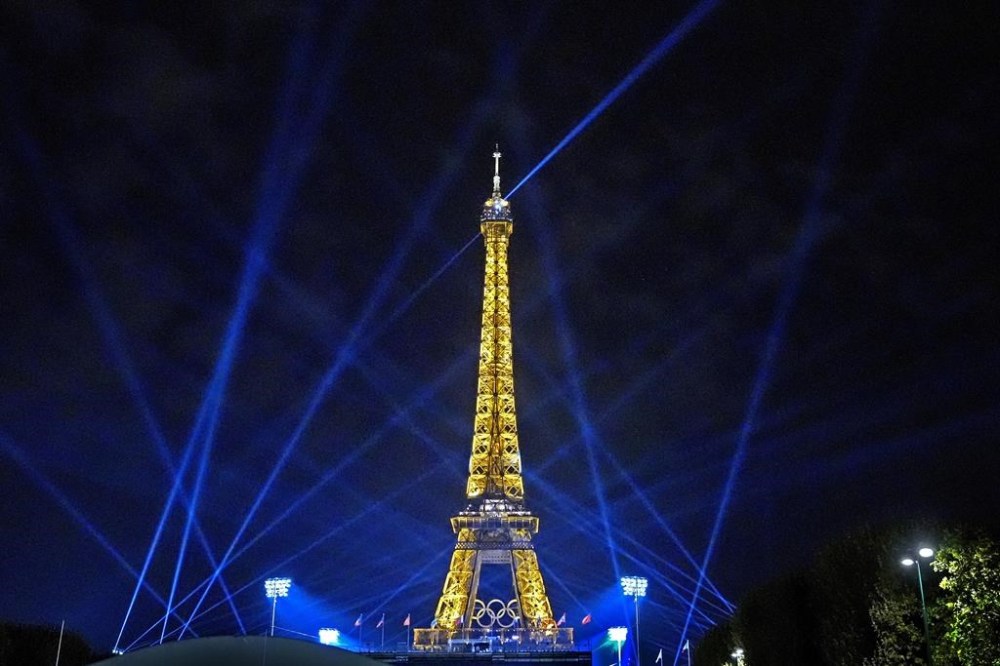
Moscow is making its presence felt during the Paris Games, with groups linked to Russia’s government using online disinformation and state propaganda to spread incendiary claims and attack the host country — showing how global events like the Olympics are now high-profile targets for online disinformation and propaganda.
Over the weekend, disinformation networks linked to the Kremlin seized on a divide over Algerian boxer Imane Khelif, who has faced unsubstantiated questions about her gender. Baseless claims that she is a man or transgender surfaced after a controversial boxing association with Russian ties said she failed an opaque eligibility test before last year’s world boxing championships.
Russian networks amplified the debate, which quickly became a trending topic online. British news outlets, author J.K. Rowling and right-wing politicians like Donald Trump added to the deluge. At its height late last week, X users were posting about the boxer tens of thousands of times per hour, according to an analysis by PeakMetrics, a cyber firm that tracks online narratives.
The boxing group at the root of the claims — the International Boxing Association — has been permanently barred from the Olympics, has a Russian president who is an ally of Russian President Vladimir Putin and its biggest sponsor is the state energy company Gazprom. Questions also have surfaced about its decision to disqualify Khelif last year after she had beaten a Russian boxer.
Approving only a small number of Russian athletes to compete as neutrals and banning them from team sports following the invasion of Ukraine all but guaranteed the Kremlin’s response, said Gordon Crovitz, co-founder of NewsGuard, a firm that analyzes online misinformation. NewsGuard has tracked dozens of examples of disinformation targeting the Paris Games, including the fake music video.
Russia’s disinformation campaign targeting the Olympics stands out for its technical skill, Crovitz said.
“What’s different now is that they are perhaps the most advanced users of generative AI models for malign purposes: fake videos, fake music, fake websites,” he said.
AI can be used to create lifelike images, audio and video, rapidly translate text and generate culturally specific content that sounds and reads like it was created by a human. The once labor-intensive work of creating fake social media accounts or websites and writing conversational posts can now be done quickly and cheaply.
Another video amplified by accounts based in Russia in recent weeks claimed the CIA and U.S. State Department warned Americans not to use the Paris metro. No such warning was issued.
Russian state media has trumpeted some of the same false and misleading content. Instead of covering the athletic competitions, much of the coverage of the Olympics has focused on crime, immigration, litter and pollution.
One article in the state-run Sputnik news service summed it up: “These Paris ‘games’ sure are going swimmingly. Here’s an idea. Stop awarding the Olympics to the decadent, rotting west.”
Russia has used propaganda to disparage past Olympics, as it did when the then-Soviet Union boycotted the 1984 Games in Los Angeles. At the time, it distributed printed material to Olympic officials in Africa and Asia suggesting that non-white athletes would be hunted by racists in the U.S., according to an analysis from Microsoft Threat Intelligence, a unit within the technology company that studies malicious online actors.

Russia also has targeted past Olympic Games with cyberattacks.
“If they cannot participate in or win the Games, then they seek to undercut, defame, and degrade the international competition in the minds of participants, spectators, and global audiences,” analysts at Microsoft concluded.
A message left with the Russian government was not immediately returned on Monday.

Authorities in France have been on high alert for sabotage, cyberattacks or disinformation targeting the Games. A 40-year-old Russian man was arrested in France last month and charged with working for a foreign power to destabilize the European country ahead of the Games.
Other nations, criminal groups, extremist organizations and scam artists also are exploiting the Olympics to spread their own disinformation. Any global event like the Olympics — or a climate disaster or big election — that draws a lot of people online is likely to generate similar amounts of false and misleading claims, said Mark Calandra, executive vice president at CSC Digital Brand Services, a firm that tracks fraudulent activity online.
CSC’s researchers noticed a sharp increase in fake website domain names being registered ahead of the Olympics. In many cases, groups set up sites that appear to provide Olympic content, or sell Olympic merchandise.
Instead, they’re designed to collect information on the user. Sometimes it’s a scam artist looking to steal personal financial data. In others, the sites are used by foreign governments to collect information on Americans — or as a way to spread more disinformation.
“Bad actors look for these global events,” Calandra said. “Whether they’re positive events like the Olympics or more concerning ones, these people use everyone’s heightened awareness and interest to try to exploit them.”
Related Articles
Marit Bouwmeester wins women's dinghy gold, Matt Wearn is Olympic champion again





Advertisement Advertise With Us
Advertisement Advertise With Us