Fossils suggest even smaller ‘hobbits’ roamed an Indonesian island 700,000 years ago
Advertisement
Read this article for free:
or
Already have an account? Log in here »
To continue reading, please subscribe:

Digital Subscription
One year of digital access for only $205*
- Enjoy unlimited reading on winnipegfreepress.com
- Read the E-Edition, our digital replica newspaper
- Access News Break, our award-winning app
- Play interactive puzzles
*First annual payment billed as $205.00 + GST for one year. This annual subscription will automatically renew at $233.00 + GST every 52 weeks (10% off the regular annual price of $259.35). Offer available to new and qualified returning subscribers only. Cancel any time.
To continue reading, please subscribe:
Add Free Press access to your Brandon Sun subscription for only an additional
$1 for the first 4 weeks*
- Enjoy unlimited reading on winnipegfreepress.com
- Read the E-Edition, our digital replica newspaper
- Access News Break, our award-winning app
- Play interactive puzzles
*Your next Brandon Sun subscription payment will increase by $1.00 and you will be charged $17.95 plus GST for four weeks. After four weeks, your payment will increase to $24.95 plus GST every four weeks.
Read unlimited articles for free today:
or
Already have an account? Log in here »
Hey there, time traveller!
This article was published 06/08/2024 (773 days ago), so information in it may no longer be current.
WASHINGTON (AP) — Twenty years ago on an Indonesian island, scientists discovered fossils of an early human species that stood at about 3 1/2 feet (1.07 meters) tall — earning them the nickname “hobbits.”
Now a new study suggests ancestors of the hobbits were even slightly shorter.
“We did not expect that we would find smaller individuals from such an old site,” study co-author Yousuke Kaifu of the University of Tokyo said in an email.

The original hobbit fossils — named by the discoverers after characters in “The Lord of the Rings” — date back to between 60,000 and 100,000 years ago. The new fossils were excavated at a site called Mata Menge, about 45 miles from the cave where the first hobbit remains were uncovered.
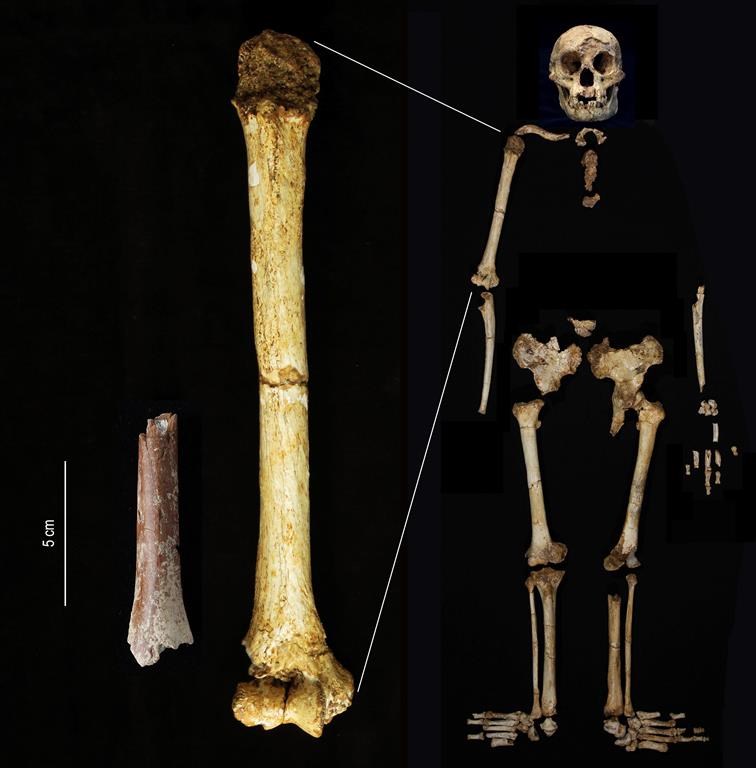
In 2016, researchers suspected the earlier relatives could be shorter than the hobbits after studying a jawbone and teeth collected from the new site. Further analysis of a tiny arm bone fragment and teeth suggests the ancestors were a mere 2.4 inches (6 centimeters) shorter and existed 700,000 years ago.
“They’ve convincingly shown that these were very small individuals,” said Dean Falk, an evolutionary anthropologist at Florida State University who was not involved with the research.
The findings were published Tuesday in the journal Nature Communications.

Researchers have debated how the hobbits – named Homo floresiensis after the remote Indonesian island of Flores – evolved to be so small and where they fall in the human evolutionary story. They’re thought to be among the last early human species to go extinct.
Scientists don’t yet know whether the hobbits shrank from an earlier, taller human species called Homo erectus that lived in the area, or from an even more primitive human predecessor. More research – and fossils – are needed to pin down the hobbits’ place in human evolution, said Matt Tocheri, an anthropologist at Canada’s Lakehead University.
“This question remains unanswered and will continue to be a focus of research for some time to come,” Tocheri, who was not involved with the research, said in an email.
___
The Associated Press Health and Science Department receives support from the Howard Hughes Medical Institute’s Science and Educational Media Group. The AP is solely responsible for all content.