Sex eligibility rules for female athletes are complex and legally difficult. Here’s how they work
Advertisement
Read this article for free:
or
Already have an account? Log in here »
To continue reading, please subscribe:

Digital Subscription
One year of digital access for only $205*
- Enjoy unlimited reading on winnipegfreepress.com
- Read the E-Edition, our digital replica newspaper
- Access News Break, our award-winning app
- Play interactive puzzles
*First annual payment billed as $205.00 + GST for one year. This annual subscription will automatically renew at $233.00 + GST every 52 weeks (10% off the regular annual price of $259.35). Offer available to new and qualified returning subscribers only. Cancel any time.
To continue reading, please subscribe:
Add Free Press access to your Brandon Sun subscription for only an additional
$1 for the first 4 weeks*
- Enjoy unlimited reading on winnipegfreepress.com
- Read the E-Edition, our digital replica newspaper
- Access News Break, our award-winning app
- Play interactive puzzles
*Your next Brandon Sun subscription payment will increase by $1.00 and you will be charged $17.95 plus GST for four weeks. After four weeks, your payment will increase to $24.95 plus GST every four weeks.
Read unlimited articles for free today:
or
Already have an account? Log in here »
Hey there, time traveller!
This article was published 07/08/2024 (795 days ago), so information in it may no longer be current.
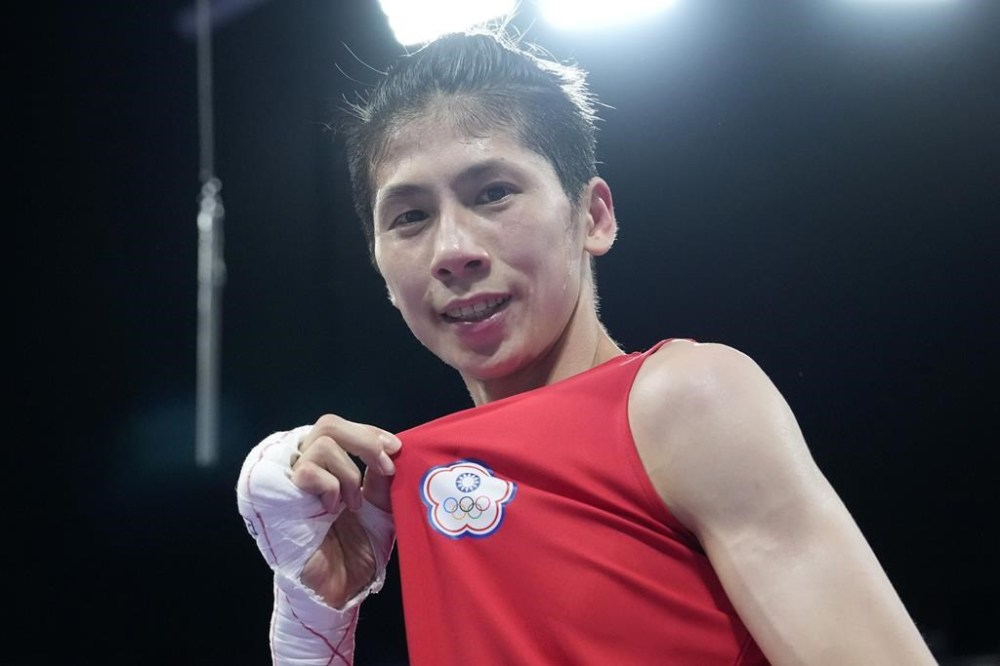
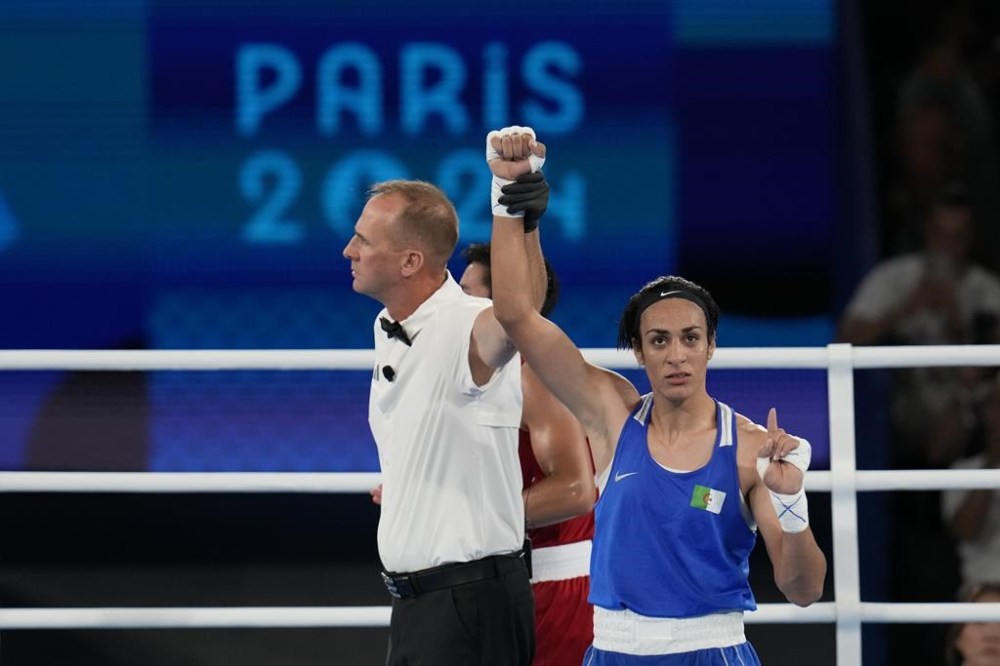
PARIS (AP) — Women’s boxing at the Paris Olympics has highlighted the complexity of drafting and enforcing sex eligibility rules for women’s sports and how athletes like Imane Khelif of Algeria and Lin Yu-ting of Taiwan are left vulnerable in the fallout.
When eligibility for women’s events has come into question, it often has been a legally difficult process for sports bodies that has risked exposing athletes to humiliation and abuse. In the 1960s, the Olympics used degrading visual tests intended to verify the sex of athletes.
The modern era of eligibility rules are widely known to have started in 2009, after South African 800-meter runner Caster Semenya surged to stardom on the track as an 18-year-old gold medalist at the world championships.
Semenya, the Olympic champion in the 800 meters in 2012 and 2016, is not competing in Paris because she effectively is banned from doing so unless she medically reduces her testosterone. She is, however, still involved in a legal challenge to track’s rules, now into its seventh year.
Here’s a look at sex tests in sports and the complexity they create amid changing attitudes toward gender identity:
What is the criteria for female participation?
Testosterone levels — not XY chromosomes, which is the pattern typically seen in men — are the key criterion of eligibility in Olympic events where the sport’s governing body has framed and approved rules.
That’s because some women, assigned female at birth and identifying as women, have conditions called differences of sex development, or DSD, that involves an XY chromosome pattern or natural testosterone higher than the typical female range. Some sports officials say that gives them an unfair advantage over other women in sports, but the science is inconclusive.
Semenya, whose medical data proved impossible to keep private during her legal cases — has a DSD condition. She was legally identified as female at birth and has identified as female her whole life.
Testosterone is a natural hormone that increases the mass and strength of bone and muscle after puberty. The normal adult male range rises to multiple times higher than for females, up to about 30 nanomoles per liter of blood compared with less than 2 nmol/L for women.
In 2019, at a Court of Arbitration for Sport hearing, track’s governing body argued athletes with DSD conditions were “biologically male.” Semenya said that was “deeply hurtful.”
Semenya’s case played out very publicly before 2021, when gender identity was a big story at the Tokyo Olympics and in society and sports in general. She took oral contraceptives from 2010-15 to reduce her testosterone levels and said they caused a myriad of unwanted side effects: weight gain, fevers, a constant feeling of nausea and abdominal pain, all of which she experienced while running at the 2011 world championships and 2012 Olympics.
Female athletes of color have historically faced disproportionate scrutiny and discrimination when it comes to sex testing and false accusations that they are male or transgender.
Why does sex verification testing differ between sports?
Each governing body of an Olympic sport is responsible for drafting its own rules, from the field of play to who is eligible to play.
Women’s boxing came to the Paris Games with effectively the same eligibility criterion — an athlete is female in her passport — as at the Rio de Janeiro Olympics in 2016 after the International Boxing Association was permanently banned from the Games following decades of troubled governance and longstanding accusations of a thorough lack of normal transparency. Much has happened in the science and debate in those eight years.
Since the Tokyo Games in 2021, track’s World Athletics tightened the eligibility rules for female athletes with DSD conditions. Starting in March 2023, it required them to suppress their testosterone levels below 2.5 nmol/L for six months, commonly through hormone-suppressing treatment, to be eligible to compete.
That was half the level of 5 nmol/L proposed in 2015 for athletes competing at distances from 400 meters to 1 mile.
World Athletics followed another major sport — World Aquatics — in prohibiting transgender women from competing in women’s races if they had undergone male puberty. The International Cycling Union also took this step last year.
The swim body’s world-leading rules additionally require transgender women athletes who did not benefit from male puberty to maintain testosterone levels below 2.5 nmol/L.
World Aquatics is not actively testing junior athletes. The first step for athletes is that national swim federations “certify their chromosomal sex.”
Similarly, soccer’s world body FIFA defers to its national member federations to verify and register the sex of players.
“No mandatory or routine gender testing verification examinations will take place at FIFA competitions,” it said in a 2011 advisory that is still in force and has been under a lengthy review.
Why do governing bodies care about who identifies as female?
Many sports bodies try to balance inclusion for all athletes and fairness to all on the field of play. They also argue that in contact and combat sports, like boxing, physical safety is a key consideration.
In the Semenya case, the judges at the Court of Arbitration for Sport acknowledged in a 2-1 ruling against her that discrimination against some women was “a necessary, reasonable and proportionate means” to preserve fairness.
Male athletes are not required to regulate their natural levels of testosterone, and female athletes who do not have DSD conditions also can benefit.
“The idea that a testosterone test is some kind of magic bullet is actually not true,” International Olympic Committee spokesman Mark Adams said in Paris as the women’s boxing debate has raged.
What does the IOC require?
The IOC is at times very powerful and at others not at all.
The Switzerland-based organization manages the “Olympic Charter” book of rules, owns the Olympics brand, picks the hosts and helps fund them through the billions of dollars it earns selling the broadcasting and sponsor rights.
The Olympic sports events, however, are run by the individual governing bodies, like FIFA and World Athletics. They codify and enforce their own athlete eligibility and field-of-play rules as well as disciplinary codes.
So when Olympics sports reviewed and updated how they handled sex eligibility issues, including with transgender athletes, the IOC published advice in 2021, not binding rules.
That was the organization’s framework on gender and sex inclusion that recognized the need for a “safe, harassment-free environment” honoring athletes’ identities while ensuring competitions are fair.
Boxing, however, was different, and the consequences have hit hard in Paris.
The IOC has been in a yearslong and increasingly bitter feud with the International Boxing Association, which is now Russian-led, culminating in a permanent ban from the Olympics last year.
For the second straight Summer Games, the Olympic boxing tournaments have been run by an IOC-appointed administrative committee and not a functioning governing body.
In this dysfunction, boxing eligibility rules have not kept pace with other sports, and the issues weren’t addressed ahead of the Paris Games.
At the 2023 world championships, Khelif and Lin were disqualified and denied medals by the IBA, which said they failed eligibility tests for the women’s competition but has given little information about them. The governing body has contradicted itself repeatedly about whether the tests measured testosterone.
In a chaotic press conference Monday in Paris, IBA officials said they did blood tests on only four of the hundreds of fighters at the 2022 world championships and that it tested Khelif and Lin in response to complaints from other teams, apparently acknowledging an uneven standard of profiling that is considered widely unacceptable in sports.
Who is challenging established rules in some sports?
Before Semenya, there was sprinter Dutee Chand of India who went to the Court of Arbitration for Sport. She challenged track and field’s initial testosterone rules passed in 2011 as a reaction to Semenya.
A first CAS ruling for Chand in 2015 froze the rules and led to an update in 2018, which was then challenged by Semenya. Her career in the 800 stalled because she refused to take medication to artificially suppress her testosterone levels and was barred from competing at elite events.
Semenya lost at CAS in 2019 but went through Switzerland’s supreme court to the European Court of Human Rights, where she scored a landmark, but not total, win last year.
In May, another ECHR hearing in Semenya’s case was held, and a ruling likely will come next year.
The case could be sent back to Switzerland, maybe even back to CAS in the Olympic home city of Lausanne, Switzerland. Other sports are watching and waiting.
___
AP Olympics: https://apnews.com/hub/2024-paris-olympic-games
Related Articles
Naomi Girma’s stellar defense bolsters USWNT at the Paris Olympics. 'No one can get past her'





Advertisement Advertise With Us
Advertisement Advertise With Us