Italian beach establishments close umbrellas briefly to protest long-delayed liberalization plans
Advertisement
Read this article for free:
or
Already have an account? Log in here »
To continue reading, please subscribe:

Digital Subscription
One year of digital access for only $205*
- Enjoy unlimited reading on winnipegfreepress.com
- Read the E-Edition, our digital replica newspaper
- Access News Break, our award-winning app
- Play interactive puzzles
*First annual payment billed as $205.00 + GST for one year. This annual subscription will automatically renew at $233.00 + GST every 52 weeks (10% off the regular annual price of $259.35). Offer available to new and qualified returning subscribers only. Cancel any time.
To continue reading, please subscribe:
Add Free Press access to your Brandon Sun subscription for only an additional
$1 for the first 4 weeks*
- Enjoy unlimited reading on winnipegfreepress.com
- Read the E-Edition, our digital replica newspaper
- Access News Break, our award-winning app
- Play interactive puzzles
*Your next Brandon Sun subscription payment will increase by $1.00 and you will be charged $17.95 plus GST for four weeks. After four weeks, your payment will increase to $24.95 plus GST every four weeks.
Read unlimited articles for free today:
or
Already have an account? Log in here »
Hey there, time traveller!
This article was published 09/08/2024 (762 days ago), so information in it may no longer be current.
ROME (AP) — Italian beach establishments mounted a symbolic two-hour strike early Friday aimed at pressuring the government not to enact a decades-old EU directive to allow more competition in the sector, long a symbol of Italy’s failure to reform the economy.
Italy’s 6,500 beach concessions generate some 1.4 billion euros ($1.5 billion) in annual revenues, paying just 120 million in licensing fees to operate their business along Italy’s public beaches, according to government auditors.
The beach concessions, which usually include a bar or restaurant and changing rooms along with umbrellas and lounge chairs, are often handed down from generation to generation. Owners complain they stand to lose their investments through a bidding process, while rivals complain they are blocked from entering the lucrative sector.
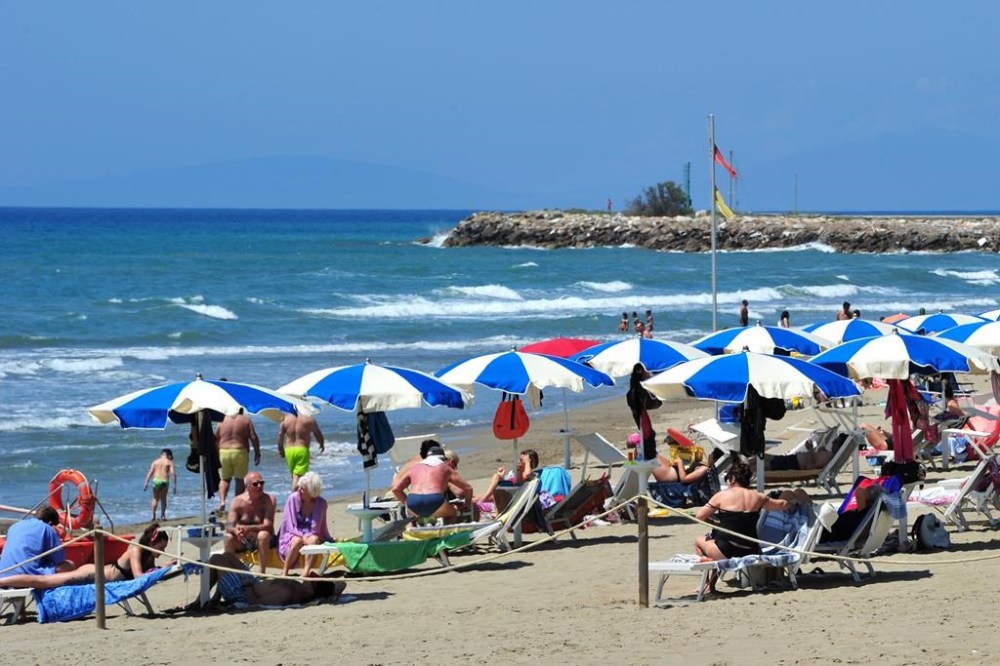
Maurizio Pasqualoni is the third generation in his family to run the “La Conghiglia” establishment in Ostia, near Rome.
“We have no certainty of the future,’’ Pasqualoni said. “Past governments have bounced back this situation and now, unfortunately, we can’t put it off any longer. When the season is over, we don’t know what to do.”
The sector was liberalized under an EU directive in 2006, but Italian governments have so far avoided enacting it. A court ruling has extended the licenses through the end of this year, and Premier Giorgia Meloni’s government is under pressure to resolve the issue.