Highway bus safety at a dead end In the wake of mass-fatality collisions, jurisdictional disparities have hampered implementation of vital changes and stalled comprehensive crash investigations that could help prevent similar tragedies
Read this article for free:
or
Already have an account? Log in here »
To continue reading, please subscribe:
Digital Subscription
One year of digital access for only $1.44 a week*
- Enjoy unlimited reading on winnipegfreepress.com
- Read the E-Edition, our digital replica newspaper
- Access News Break, our award-winning app
- Play interactive puzzles
*Billed as $5.77 plus GST every four weeks. After 52 weeks, price increases to the regular rate of $19.95 plus GST every four weeks. Offer available to new and qualified returning subscribers only. Cancel any time.
To continue reading, please subscribe:
Add Free Press access to your Brandon Sun subscription for only an additional
$1 for the first 4 weeks*
- Enjoy unlimited reading on winnipegfreepress.com
- Read the E-Edition, our digital replica newspaper
- Access News Break, our award-winning app
- Play interactive puzzles
*Your next Brandon Sun subscription payment will increase by $1.00 and you will be charged $17.95 plus GST for four weeks. After four weeks, your payment will increase to $24.95 plus GST every four weeks.
Read unlimited articles for free today:
or
Already have an account? Log in here »
Hey there, time traveller!
This article was published 09/08/2024 (799 days ago), so information in it may no longer be current.
When the RCMP announced in late June that no charges were to be laid following one of Canada’s worst mass-fatality bus crashes, it likely signalled the end of the investigative process and the possibility of learning more about how to prevent similar tragedies.
In reaching its decision, the RCMP, along with Manitoba’s department of justice, said a conviction was unlikely for several reasons, notably that the driver was unable to provide details and insight into what happened, due to the fact he suffered a major brain injury in the crash, and because the bus he was operating had a blind spot that may have obscured his vision.
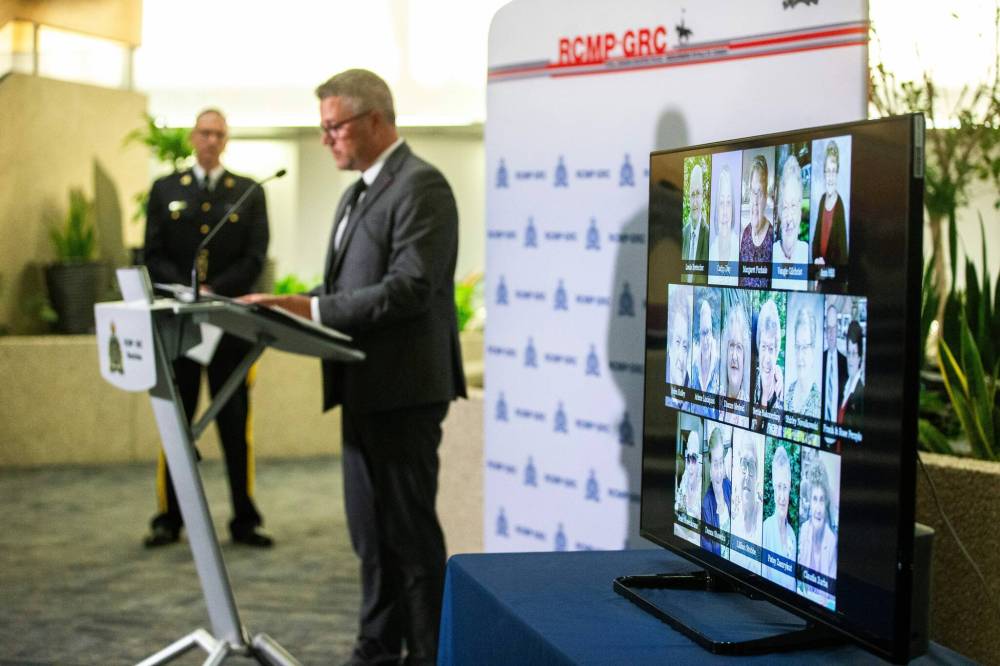
“We hope to provide the ‘why’ of what happened, and that is why we do what we do,” RCMP Supt. Rob Lasson said at a news conference in June. “In this case, we cannot say why the bus proceeded into the intersection that day when it was unsafe to do so.”
While the RCMP remains unable to explain ‘why’ the crash occurred, transportation experts say the lack of supplementary investigations and long-standing gaps in regulatory oversight mean other questions also go unanswered. Until these issues are resolved, they say more tragedies like the one that played out near Carberry last year are inevitable.
“We could have done more to prevent these crashes, and we have not done that yet,” said Ahmed Shalaby, professor of civil engineering at the University of Manitoba, who specializes in road construction and is a strong proponent for national oversight of highway crashes.
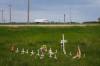
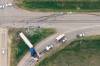
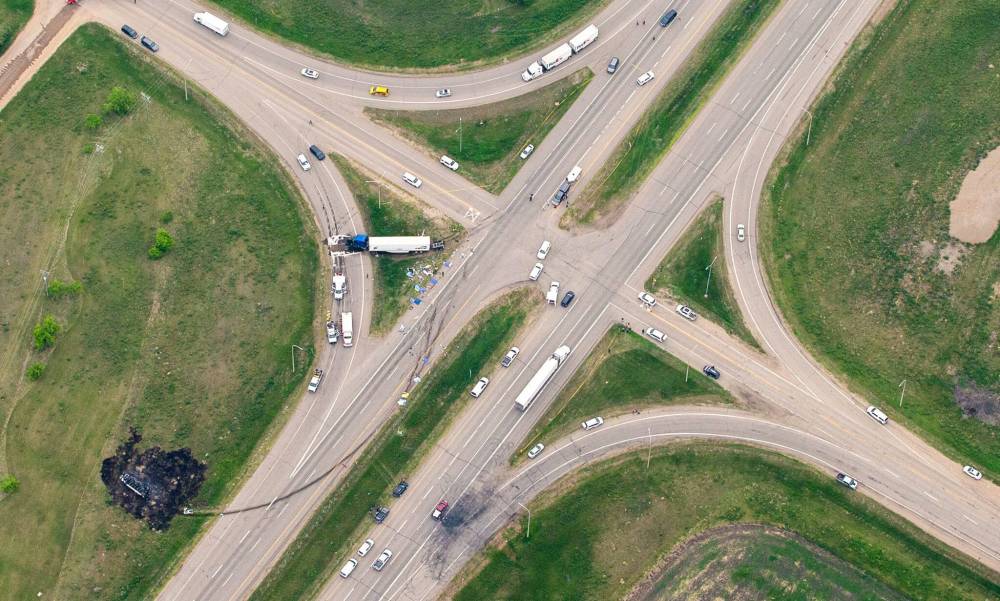
On June 15, 2023, a Handi-Transit bus carrying seniors, many from the Dauphin area, was en route on Highway 5 to a casino south of the town of Carberry. When the bus crossed the Trans-Canada Highway into the path of an oncoming semi-trailer, it set on course a national highway tragedy: 17 people dead and eight injured, some severely.
A similar scenario played out several years earlier when a transport truck blew through a stop sign and collided with the path of a bus transporting the Humboldt Broncos junior hockey team to a playoff game. Sixteen people were killed and 13 injured in the 2018 crash on the Saskatchewan highway.

In both cases, the investigation was handled by the RCMP. Unlike in the United States where the National Safety Transportation Board is immediately on the scene, mass casualty investigations on Canadian highways are left primarily to local law authorities. It’s one of the most critical safety oversight issues experts say need to be addressed.
“Every crash is a learning opportunity. It’s sad or tragic, and there’s always death, but you learn,” said Chris Joseph, president of Safer Roads Canada.
When Joseph heard the news of the Carberry crash, it brought back a rush of memories from when he lost his son, Jaxon, who was a member of the Humboldt Broncos.
“It’s a tragic event that most times, is avoidable. And it’s avoidable, either with driver training, rules, regulations or just roadway construction, but there’s usually always a way to avoid it,” Joseph said in an interview from his Edmonton home.
Shalaby outlined the two main types of investigations that typically take place after major highway collisions: one is tasked with determining whether to lay criminal charges; the other is focused on infrastructure, regulatory and vehicle issues to better understand what unfolded and to consider possible solutions to prevent such incidents happening again.
Both probes are critical, he said, but the latter — where an oversight body considers all factors — rarely happens in Canada.
“We are too slow to make progress. Progress will happen, but we’re too slow to make recommendations, make progress and learn from these experiences,” Shalaby said.

Canada’s primary transportation watchdog is the Transportation Safety Board. The independent body monitors policies and practices of the federal Transport Canada department and investigates incidents involving air, rail and sea transport to make industry and regulatory recommendations.
Its mandate does not include highways or motor vehicles, such as buses, unless a train or railway infrastructure is involved. Although Canada has a national highway, maintenance and oversight is left to the provinces so when tragedies occur, like the one near Carberry, there is no mechanism ensuring each provincial jurisdiction is meeting the same standards, Shalaby said.
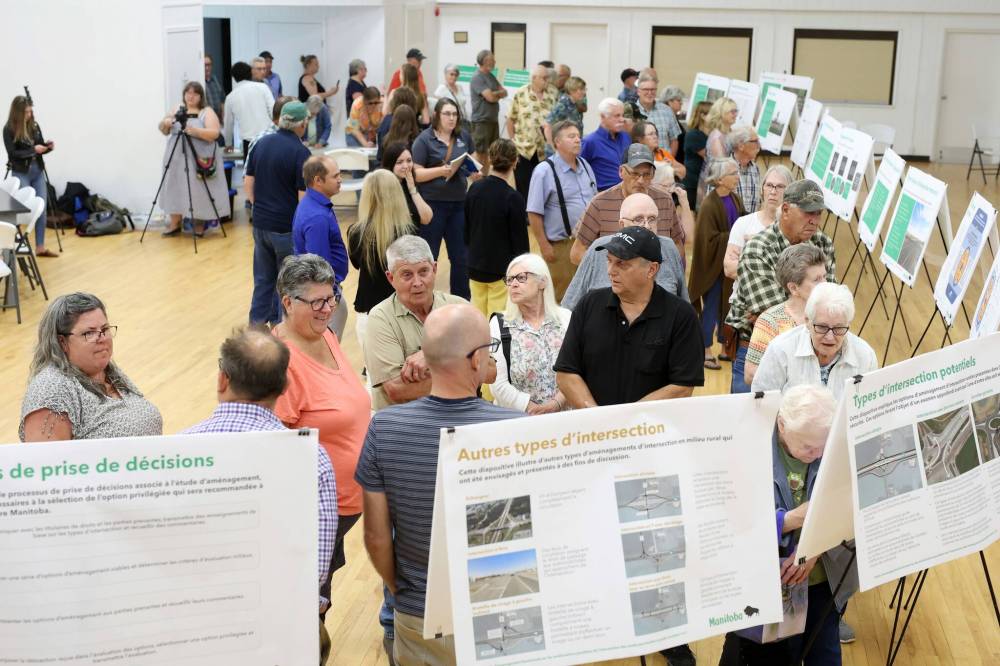
In the Carberry case, the RCMP led the criminal investigation, with assistance from Transport Canada in reconstructing the scene, while an independent audit ordered by the province examined problematic issues at the heavily travelled intersection and provided three major redesign options to make it safer.
A town hall was held in July for Carberry residents to view the proposals. In the short term, the province has promised to spend $12 million on safety improvements to the intersection.
Because local law enforcement is focused on determining wrongdoing rather than making preventative recommendations, some of the data needed for the latter technical investigation is not always accessed quickly enough at the scene and could be lost, Shalaby said.
This forces any technical investigation to rely on media reports and photos to understand the various elements of a crash, he said.
By comparison, in the U.S., the National Transportation Safety Board is on the scene within 24 hours of a mass-fatality highway crash to oversee the investigation, according to Peter Knudson, a spokesperson for the NTSB.
The resulting recommendations are directed to all levels of government and are readily available to the public, Knudson said in an interview from Washington, D.C.
The NTSB investigates several dozen major highway collisions each year. It has full access to the crash scene and evidence collected by law enforcement. Both the NTSB and local police share information to assist with both the criminal and technical investigations. The NTSB looks at everything from intersection design to vehicle standards.
Related Articles
Three killed, six hurt in separate Highway 6 crashes








The NTSB also allows access to industry experts and other relevant parties, such as unions or manufacturers, to provide expertise. Knudson said this practice often leads to companies and affected parties making immediate changes, rather than waiting for recommendations to become public.
A similar scenario plays out when Canada’s TSB is in charge. For example, it spearheaded the investigation after a train explosion killed 47 people and displaced 2,000 others in Lac-Magentic, Que., in 2013.
In the resulting report, which cited 18 causes and contributing factors, and included five recommendations, the TSB criticized Transport Canada’s lack of effective oversight on rail activities in the region and insufficent safety-management systems.
Although bus crashes are typically outside its mandate, the TSB has investigated two incidents in Ottawa.
In 2019, an OC Transpo bus collided with a transit-station awning, killing three people and injuring 23 others.
Because the incident had similarities with an OC Transpo crash with a VIA Rail train in 2013, for which the TSB made several transit bus safety recommendations to Transport Canada, the agency offered its expertise to the Ottawa Police Service and the Coroner’s Office.
Initially rejected, the TSB was brought on board in the wake of public pressure, including a petition signed by some of the families from the Humboldt crash.
However, the TSB was limited in what it could do because Ottawa police had control over the scene. According to publicly available freedom-of-information documents regarding the agency’s involvement in the 2019 crash, TSB officials were governed by strict guidelines and couldn’t initiate, lead investigative activities or work independently at the scene.
Following its 2013 investigation, the TSB recommended Transport Canada require passenger buses be equipped with data recorders, like the “black boxes” installed in airplanes, trains and boats.
It also recommended the department create crash-protection standards for commercial passenger buses because none existed at the time. It repeated the recommendations following the 2019 probe.
Today, crash-protection standards remain in limbo and passenger buses still aren’t required to use data recorders.
When reached for comment last month, Transport Canada said it has conducted a feasibility study for data recorders and its findings are currently being finalized.
Transport Canada also said it extensively studied and tested buses for crash-protection standards, including enhanced structural stiffness, but said considerably more research needs to be done. The focus of the research was on transit buses.
”Before guidelines or regulations can be proposed, tools like digital dummies and human body models need to be developed to ensure the potential for injury can be predicted through repeatable crashworthiness testing,” the federal department said in a progress report sent to the TSB earlier this year. “In the absence of these tools, and a robust evidence base, attempts to implement such requirements could be challenging. The development of this evidence base represents significant effort.”
Making passenger buses safer has long been a focus for the NTSB. The American agency published a report in 1999 on bus crashworthiness issues after investigating several mass-fatality crashes. In the report, it outlined that being ejected from a bus during a crash will increase the chance of death.
Manitoba RCMP confirmed that many of the victims from the Carberry bus crash were ejected from the bus.
The NTSB recommendations at the time called for creating standards for passenger restraints, roof strength and window thickness. Only four of its 14 recommendations were implemented; calls for greater crashworthiness standards and onboard recorders were not.
Meanwhile, the TSB considers its 2013 recommendations file dormant following Transport Canada’s updated response from earlier this year. In addition to researching crashworthiness and data recorders, Transport Canada also said it has explored the use of virtual and automated driving systems to develop crash avoidance scenarios and undertook research focused on developing methods to quantify driver ‘blind spots.’
Blind spots are more prevalent in cutaway-style buses — the type of bus involved in the Carberry crash — than motorcoach buses, said John Willatt, a bus driver with 20 years of experience and director of Transport Action Ontario, a transportation safety advocacy group.
He said motorcoach buses have the advantage of the driver sitting up higher and closer to the windshield, which limits the number of blind spots.

A cutaway-style bus, such as the Handi-Transit vehicle in the Carberry crash, is a truck body stripped down to just the cab and then rebuilt as a bus.
During the rebuilding process, Willatt said extra reinforcement is needed, which creates bigger blindspots.
“There’s much more rigidity in a car or van that hasn’t been cut up,” Willatt said.
“You’re sacrificing the original rigidity, but then you’re trying to replace that rigidity, but there’s a lot of strengthening, which just happens to cause blind spots. So, you’re sort of damned if you do and damned if you don’t.”
He said the main method bus drivers are trained to use to deal with blind spots is to rock their bodies in their seats to look from all possible angles.
In the wake of the Humbolt and Ottawa crashes, the federal standing committee of transportation, infrastructure and communities published a report titled Bus Passenger Safety in 2019.
It outlined nine different recommendations, including expanding the TSB’s mandate to oversee serious highway accidents and developing national standards for commercial vehicle operators and bus drivers.
“These tragic events (in Humboldt and Ottawa) have raised significant concerns regarding the safety features and crashworthiness of buses in Canada,” the committee wrote in its report.
Requests to interview the standing committee chair and vice-chair and current federal Transportation Minister Pablo Rodriguez went unanswered.
Joseph, who lost his son in the Humboldt crash, said the federal government hasn’t acted quickly enough to make changes and has deflected the responsibility to individual provinces to put policies in place.
“Transport Canada completely washes their hands on the problem,” Joseph said.
He said it doesn’t make sense to ignore the disparity between provinces when it comes to crafting policy for vehicle safety, driver training and highway infrastructure.
“If you take a road that goes from Manitoba to Saskatchewan, what’s the point of having rules in Manitoba and rules in Saskatchewan, if they’re different, if that person is going back and forth on that same road? There should be national standard.”
Last month, Ontario’s Office of the Chief Coroner called an inquest into the 2019 OC Transpo bus crash that killed three people. It will examine the circumstances of the deaths and “may make recommendations aimed at preventing further deaths,” according to a news release from the Ministry of the Solicitor General.
In Manitoba, however, the province’s Chief Medical Officer has no plans to call for an inquest into the Carberry crash.
“The inquests are only done to determine cause, manner and exact circumstances of death, all of which are known,” a spokesperson said.

Alex Senyk is one of the Carberry crash survivors. Severe damage to his knee has left him immobilized.
“I can’t walk on it. I go 10 steps, and I have to sit down,” Senyk told the Free Press from his Dauphin home. “My life has been 99 per cent changed.”
When he heard the RCMP had concluded their investigation, he felt survivors and victims’ families were being ignored.
“We’re washed under the bridge,” he said. “We can do nothing. It’s sad.”
However, he said the federal government should have acted much sooner in addressing safety concerns involving buses.
“You would think one accident is plenty. Somebody should’ve been looking at this 10 years ago,” he said.
matthew.frank@freepress.mb.ca
History
Updated on Friday, August 9, 2024 12:49 PM CDT: Corrects typo
Updated on Sunday, August 11, 2024 1:40 PM CDT: Changes bus slamming to bus colliding in Humboldt Broncos crash