

Price instability rocks Ethiopia as it reels from foreign exchange rate reforms
Advertisement
Read this article for free:
or
Already have an account? Log in here »
To continue reading, please subscribe:
Digital Subscription
One year of digital access for only $1.44 a week*
- Enjoy unlimited reading on winnipegfreepress.com
- Read the E-Edition, our digital replica newspaper
- Access News Break, our award-winning app
- Play interactive puzzles
*Billed as $5.77 plus GST every four weeks. After 52 weeks, price increases to the regular rate of $19.95 plus GST every four weeks. Offer available to new and qualified returning subscribers only. Cancel any time.
To continue reading, please subscribe:
Add Free Press access to your Brandon Sun subscription for only an additional
$1 for the first 4 weeks*
- Enjoy unlimited reading on winnipegfreepress.com
- Read the E-Edition, our digital replica newspaper
- Access News Break, our award-winning app
- Play interactive puzzles
*Your next Brandon Sun subscription payment will increase by $1.00 and you will be charged $17.95 plus GST for four weeks. After four weeks, your payment will increase to $24.95 plus GST every four weeks.
Read unlimited articles for free today:
or
Already have an account? Log in here »
Hey there, time traveller!
This article was published 12/08/2024 (799 days ago), so information in it may no longer be current.
ADDIS ABABA, Ethiopia (AP) — The prices on the menu have been erased at a small hotel in a suburb of Ethiopia’s capital.
That was no mistake, the waiters said, as businesses in Addis Ababa struggle to keep up with spiraling inflation since the government implemented a flexible exchange rate policy late last month.
Since then, the Ethiopian birr has lost 60% of its value against the dollar as of Monday, sparking anxiety as customers are forced to pay more for basic commodities and some businesspeople are hoarding.
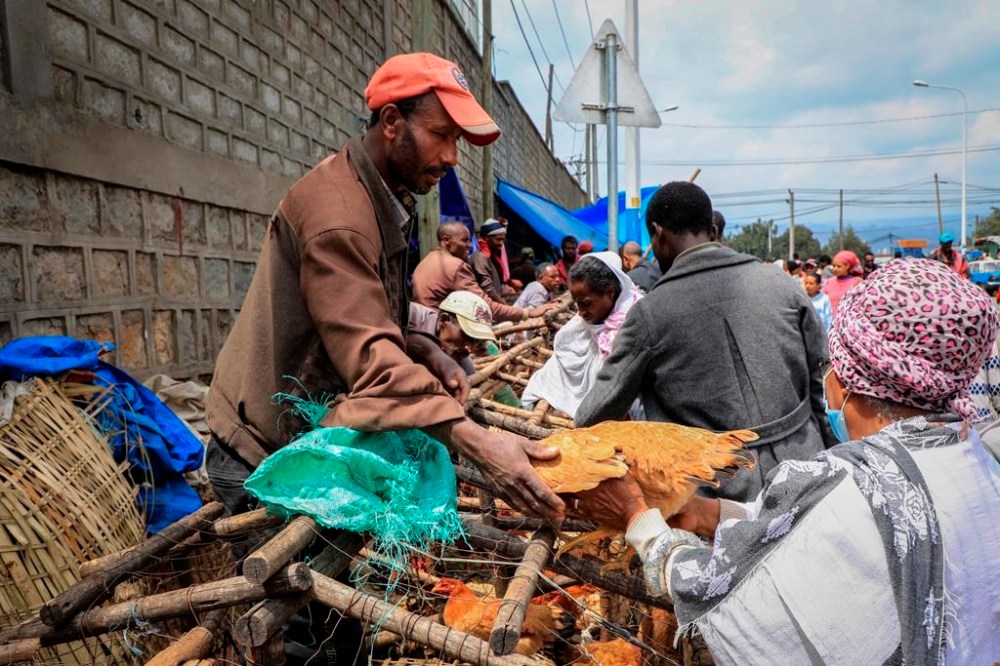
The menus at the Samra Hotel in Bole, a leafy suburb of Addis Ababa, captured the instability: There’s a new price for every meal at any moment.
“Previously, prices would be updated bimonthly but nowadays it’s on a daily basis, if not by the hour, to reflect the changing landscape of the market,” said Rahel Teshome, who works at the hotel.
Many supermarkets in Addis Ababa are hoarding products in warehouses and only selling small quantities in their stores to escape punishment by city authorities, who have vowed to crack down on hoarders. Consumers who want to buy in bulk must pay inflated prices for products they are told to pick from warehouses.
In Merkato, the capital’s biggest open-air market, guards are stationed in an attempt to keep businesses from raising prices. Last week, police officers raided some warehouses and confiscated 800,000 liters (210,000 gallons) of edible oil they later distributed to local cooperatives, which offered it at previous prices. More than 3,000 stores accused of hoarding have been shuttered across the country.
The Addis Ababa City Trade Bureau has warned that more actions will be taken against people who take advantage of the floating of the birr to hike prices.
The new exchange rate policy was a historic decision in a country where the government for decades fixed the price of foreign currencies, allowing a black market to flourish. Commercial banks now can set foreign exchange prices, and non-bank entities are permitted to operate foreign exchange bureaus for the first time.
The International Monetary Fund approved a four-year credit facility worth $3.4 billion coinciding with Ethiopia’s reforms. the IMF pledged to disburse $1 billion immediately to address pressing needs, with Managing Director Kristalina Georgieva describing the reforms as a “landmark moment for Ethiopia.”
Ethiopia, which suffered foreign currency shortages in the months leading to the reforms, imports many essential commodities. To help consumers cope with the impact of the new policy, authorities imported 14 million liters (3.7 million gallons) of edible oil, but such interventions have been minor given the rising prices of other essential goods.
Experts say Ethiopians face unpredictable days ahead in a country where official salaries have generally stagnated for years.

Those with fixed incomes will be most affected by the floating of the birr, said Getachew T. Alemu, an Addis Ababa-based public policy specialist, adding that the immediate injection of IMF funds will not be enough to absorb the pressure.
“Things could really get worse, especially for fixed incomers, unless cautious policy actions are taken,” he said.
The government, as it cracks down on price speculators, has appeared unable to follow its own advice. Last week, authorities raised the price of ordinary passports from 2,000 to 5,000 birr, shocking people such as Almaz Teferi, who was starting the process of getting one.
She and some of her friends hope to find work as domestic laborers in one of the Gulf states.
“I have been working as a cleaner in order to raise the fee for the passport. I came and double-checked the fee on Monday and by Thursday the price had been raised quite significantly,” Teferi said.