

Keeping political hands off the Bank of Canada
Advertisement
Read this article for free:
or
Already have an account? Log in here »
To continue reading, please subscribe:

Digital Subscription
One year of digital access for only $205*
- Enjoy unlimited reading on winnipegfreepress.com
- Read the E-Edition, our digital replica newspaper
- Access News Break, our award-winning app
- Play interactive puzzles
*First annual payment billed as $205.00 + GST for one year. This annual subscription will automatically renew at $233.00 + GST every 52 weeks (10% off the regular annual price of $259.35). Offer available to new and qualified returning subscribers only. Cancel any time.
To continue reading, please subscribe:
Add Free Press access to your Brandon Sun subscription for only an additional
$1 for the first 4 weeks*
- Enjoy unlimited reading on winnipegfreepress.com
- Read the E-Edition, our digital replica newspaper
- Access News Break, our award-winning app
- Play interactive puzzles
*Your next Brandon Sun subscription payment will increase by $1.00 and you will be charged $17.95 plus GST for four weeks. After four weeks, your payment will increase to $24.95 plus GST every four weeks.
Read unlimited articles for free today:
or
Already have an account? Log in here »
Hey there, time traveller!
This article was published 17/08/2024 (742 days ago), so information in it may no longer be current.
There are short term goals, and there are long term goals — and they can be very different.
Take, for example, the idea of setting up a separate Alberta pension fund. Alberta Premier Danielle Smith has argued that the province should exit the Canada Pension Plan, and set up an Alberta plan that would, she maintains, offer better benefits to Alberta while also providing money to invest specifically in Albertan businesses.
It sounds golden, until you realize that Smith wants short-term votes, rather than long-term stability.
The Canadian Press files
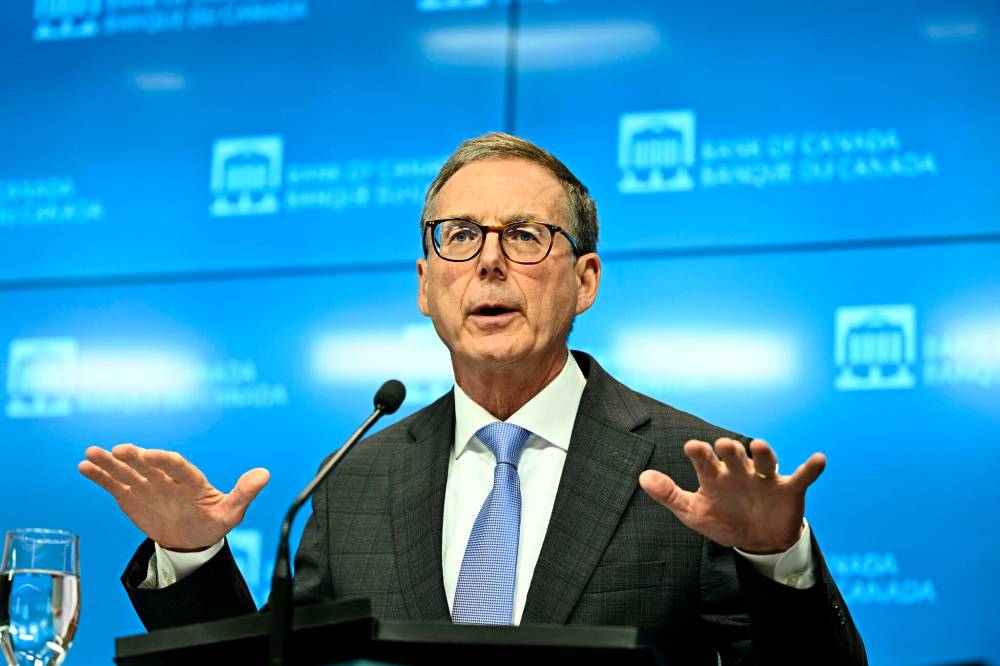
Governor of the Bank of Canada Tiff Macklem
You can understand why politicians would want to be able to have a hand in pensions — it gives them a pool of cash (which, by the way, is not theirs, but is instead the property of individual Canadians) to use to invest in ventures that strike the government’s fancy.
The fact is, when, years down the road, pension payments have to be made to those who have contributed for years, the politicians will be long gone from public office — and, not incidentally, will be benefiting from government-paid gold-parachute pensions that don’t depend on the fiscal health of pension plans.
That’s why the Canada Pension Plan is run by a board of directors separate from government interference, so that they can focus on one single goal — protecting the pensions of Canadians. They don’t have to seek out short-term electoral success.
Likewise, the Bank of Canada.
There’s a current rage amongst politicians on the conservative side of the spectrum to “help” ordinary citizens by getting involved in interest rate setting decisions by central banks.
For central banks, interest rates are one of the few tools that can be used to regulate the economy. When inflation takes off and economies are booming, the banks use rate increases to slow things down: problem is, those increases are unpopular. They come at a time when inflation is already chewing up disposable income, and in themselves increase the cost of borrowing, meaning consumers face a double whammy of increased costs.
In the United States, both presidential candidate Donald Trump and his vice-presidential pick, JD Vance, have said that they feel that the president should have more say in what the U.S. Federal Reserve does with interest rates.
In Canada, Conservative leader Pierre Poilievre has said he would fire the head of the Bank of Canada, Tiff Macklem, and increase parliamentary oversight of the bank’s policies.

As a story in the Business section of the Free Press pointed out on Tuesday, efforts by politicians to dabble in fiscal policy have had dramatic effects: short-term decisions may be popular with voters, but they can upend both fiscal stability and trust in central banks.
A 1972 effort by then-president Richard Nixon to keep interest rates low in the United States led to rampant U.S. inflation that extended until well into the 1980s.
The same story points out that a recent attempt by Turkish President Recep Erdogan to rein in interest rates led to both rampant inflation and an eventual increase in the Turkish central bank’s key interest rates to a whopping 50 per cent.
Politicians would clearly love to get their hands on more fiscal levers — especially so that they can appear to be reactive to voters’ concerns. But their goals are very much different from those of central bankers or pension fund managers. They want to get elected again. And imposing transitory political will, rather than regulatory control, on the open market has clear and obvious risks.
Our elected politicians already have extensive fiscal control over budgets, expenditures and taxation. But that control is limited to the short-term — to the time they’re in office. Even so, the economic ramifications of political decisions on finances can last for decades.