Ketamine therapy can help people with depression, but also poses risks: experts
Advertisement
Read this article for free:
or
Already have an account? Log in here »
To continue reading, please subscribe:

Digital Subscription
One year of digital access for only $205*
- Enjoy unlimited reading on winnipegfreepress.com
- Read the E-Edition, our digital replica newspaper
- Access News Break, our award-winning app
- Play interactive puzzles
*First annual payment billed as $205.00 + GST for one year. This annual subscription will automatically renew at $233.00 + GST every 52 weeks (10% off the regular annual price of $259.35). Offer available to new and qualified returning subscribers only. Cancel any time.
To continue reading, please subscribe:
Add Free Press access to your Brandon Sun subscription for only an additional
$1 for the first 4 weeks*
- Enjoy unlimited reading on winnipegfreepress.com
- Read the E-Edition, our digital replica newspaper
- Access News Break, our award-winning app
- Play interactive puzzles
*Your next Brandon Sun subscription payment will increase by $1.00 and you will be charged $17.95 plus GST for four weeks. After four weeks, your payment will increase to $24.95 plus GST every four weeks.
Read unlimited articles for free today:
or
Already have an account? Log in here »
Hey there, time traveller!
This article was published 19/08/2024 (761 days ago), so information in it may no longer be current.
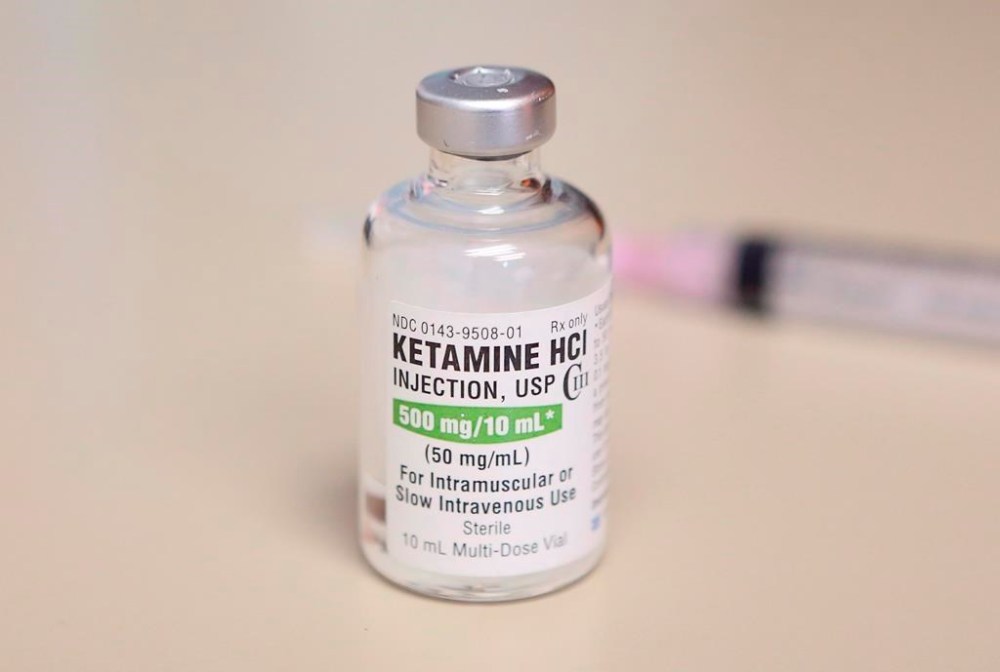
Ketamine can be a “life-saving” treatment for depression but also a major risk to patients with a history of addiction, Canadian psychiatrists say after U.S. authorities charged several people in connection with actor Matthew Perry’s overdose death.
Police and prosecutors in California allege that five people, including two doctors, supplied the former “Friends” star with dangerous amounts of ketamine before his death last October. The Ottawa-raised actor had been receiving legitimate ketamine infusion treatments for depression but turned to an illicit supply to obtain more doses, they said last week.
Dr. Rebecca Carriere, a psychiatrist who assesses patients for treatment at the Toronto Ketamine Clinic, said Perry should have never been offered the drug in the first place, given his struggles with alcohol and opioid abuse over the years.
“It highlights what we already know about ketamine – that there is a potential for addiction – that’s why it’s only administered in a clinical setting,” Carriere said in an interview.
At the Toronto Ketamine Clinic, “individuals like Matthew Perry typically would not be offered ketamine treatment because of his medical history with addiction,” she said.
“The other side of the conversation certainly has to be around benefits for individuals who have struggled very intensely for a long period of time with depression, trying multiple treatments and not getting any kind of benefit.”
Ketamine is an approved anesthetic for surgeries, but it’s also known as a party drug with hallucinogenic effects.
Its use in treatments for depression and anxiety has increased in recent years as more doctors and researchers explore the drug’s psychotherapeutic effects. While still an active area of research, ketamine appears to increase glutamate levels, which help regulate mood and cognition.
A ketamine-derived nasal spray called Spravato has been approved in both Canada and the U.S. for use in combination with an oral antidepressant to treat major depressive disorder in patients who did not respond well to other treatments.
However, Health Canada says on its website that it has not assessed the risks and benefits of off-label use of ketamine for the treatment of different mental health conditions.
Several clinical trials are currently underway to test ketamine therapy for depression and other disorders, according to Health Canada’s database.
That includes a trial launched two years ago at the Centre for Addiction and Mental Health in Toronto, which admitted about 30 patients. Data on its success is still being analyzed, a spokesperson for the centre said.
There are also a handful of clinics in Canada where patients can pay out-of-pocket for ketamine treatments. At Toronto Ketamine Clinic, six treatments that last about two hours each, plus three sessions with a psychiatrist, cost $4,500 and one-hour blocks of ketamine-assisted psychotherapy cost $235.
The clinic has seen approximately 300 patients since it opened in 2021. Carriere said its anesthesiologists administer ketamine through an intravenous drip and the drug is kept behind two locked doors.
“I think it highlights the safety issue,” said Carriere.
However, the benefits can be life-changing, she said, noting an estimated 70 per cent response rate.
“For those responding (to the treatment), it can be dramatic. I have seen individuals returning to work after having been on disability for depression for some time,” she said.
“People describe feeling a lifting up of their mood … they can experience joy again.”
A pilot that launched at Toronto’s St. Michael’s Hospital in 2021 has evolved into a regular program where patients with treatment-resistant depression receive two intravenous doses of ketamine per week for two to three weeks, said Dr. Venkat Bhat, director of the hospital’s interventional psychiatry program.

The ketamine treatment program receives eight to 10 referrals per week, with 40 to 50 per cent of patients showing improvement by the end of the standard treatment course, according to the hospital. The program covers the cost of treatment.
While antidepressants can take weeks to have any impact, the effects of ketamine can be evident within a couple of hours to a couple of days, Bhat said.
“That’s what’s made ketamine an important therapeutic modality. It can be life saving, but in strictly monitored and specific circumstances.”
Canadian Press health coverage receives support through a partnership with the Canadian Medical Association. CP is solely responsible for this content.
This report by The Canadian Press was first published Aug. 19, 2024.