World’s ‘largest solar precinct’ approved by Australian government
Advertisement
Read this article for free:
or
Already have an account? Log in here »
To continue reading, please subscribe:

Digital Subscription
One year of digital access for only $205*
- Enjoy unlimited reading on winnipegfreepress.com
- Read the E-Edition, our digital replica newspaper
- Access News Break, our award-winning app
- Play interactive puzzles
*First annual payment billed as $205.00 + GST for one year. This annual subscription will automatically renew at $233.00 + GST every 52 weeks (10% off the regular annual price of $259.35). Offer available to new and qualified returning subscribers only. Cancel any time.
To continue reading, please subscribe:
Add Free Press access to your Brandon Sun subscription for only an additional
$1 for the first 4 weeks*
- Enjoy unlimited reading on winnipegfreepress.com
- Read the E-Edition, our digital replica newspaper
- Access News Break, our award-winning app
- Play interactive puzzles
*Your next Brandon Sun subscription payment will increase by $1.00 and you will be charged $17.95 plus GST for four weeks. After four weeks, your payment will increase to $24.95 plus GST every four weeks.
Read unlimited articles for free today:
or
Already have an account? Log in here »
Hey there, time traveller!
This article was published 20/08/2024 (760 days ago), so information in it may no longer be current.
NEWCASTLE, Australia (AP) — An ambitious plan to build a massive solar farm in remote northern Australia that would transmit energy by submarine cable to Singapore is a step closer after the Australian government granted environmental approvals for the 30 billion Australian dollar ($19 billion) project Wednesday.
Australian company Sun Cable plans to build a 12,400-hectare solar farm and transport electricity to the northern Australian city of Darwin via an 800-kilometer (497-mile) overhead transmission line, then on to large-scale industrial customers in Singapore through a 4,300-kilometer (2,672-mile) submarine cable.
The Australia-Asia PowerLink project aims to deliver up to six gigawatts of green electricity each year, which according to Australian Environment Minister Tanya Plibersek will “help turn Australia into a renewable energy superpower” and boost its economy.
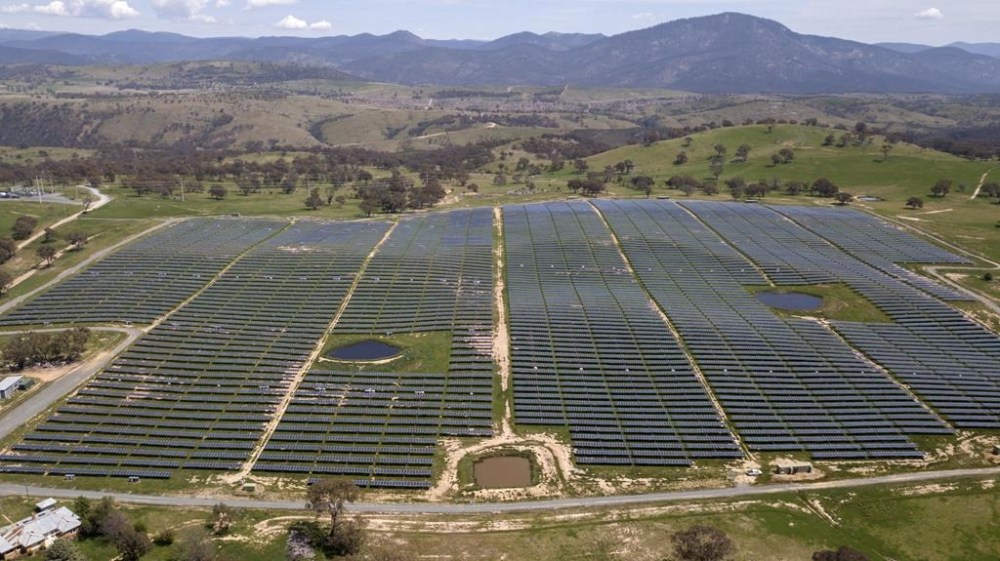
“This massive project is a generation-defining piece of infrastructure,” Plibersek said in a written statement on Wednesday. “It will be the largest solar precinct in the world – and heralds Australia as the world leader in green energy.”
The project was initially backed by Australian mining magnate Andrew Forrest and Atlassian co-founder Mike Cannon-Brookes. The plans were highlighted during a state visit by then Singapore Prime Minister Lee Hsien Loong and Australian Prime Minister Anthony Albanese as part of a ’ Green Economy ’ agreement in 2022.
In January 2023, the project collapsed when Sun Cable entered voluntary administration due to a funding dispute between Forrest and Cannon-Brookes. By May of that year, a consortium led by Cannon-Brookes’ Grok Ventures acquired the company, finalizing the takeover in September 2023.
SunCable Australia’s managing director Cameron Garnsworthy said it was pleased to have cleared a major regulatory hurdle “and will now focus its efforts on the next stage of planning to advance the project towards a Final Investment Decision targeted by 2027.”
The company said electricity supply would commence in the early 2030s.
Energy has been a politically charged issue for nearly two decades in Australia, which is reliant on coal and gas as well as royalties from exporting those fuels to help underpin its economy.
This reliance on fossil fuels has historically made it one of the world’s worst greenhouse gas emitters on a per capita basis.
Australia’s main opposition party in June announced plans to build the country’s first nuclear power plants as early as 2035, ensuring the major parties will be divided on how Australia curbs its greenhouse gas emissions at elections due within a year.
The parties haven’t gone to an election with the same carbon reduction policies since 2007.
“Australians have a choice between a renewable energy transition that’s already underway creating jobs and driving down prices; or paying for an expensive nuclear fantasy that may never happen,” Plibersek said.