

Argentine Senate passes pension spending increase in a blow to President Milei’s radical austerity
Advertisement
Read this article for free:
or
Already have an account? Log in here »
To continue reading, please subscribe:

Digital Subscription
One year of digital access for only $205*
- Enjoy unlimited reading on winnipegfreepress.com
- Read the E-Edition, our digital replica newspaper
- Access News Break, our award-winning app
- Play interactive puzzles
*First annual payment billed as $205.00 + GST for one year. This annual subscription will automatically renew at $233.00 + GST every 52 weeks (10% off the regular annual price of $259.35). Offer available to new and qualified returning subscribers only. Cancel any time.
To continue reading, please subscribe:
Add Free Press access to your Brandon Sun subscription for only an additional
$1 for the first 4 weeks*
- Enjoy unlimited reading on winnipegfreepress.com
- Read the E-Edition, our digital replica newspaper
- Access News Break, our award-winning app
- Play interactive puzzles
*Your next Brandon Sun subscription payment will increase by $1.00 and you will be charged $17.95 plus GST for four weeks. After four weeks, your payment will increase to $24.95 plus GST every four weeks.
Read unlimited articles for free today:
or
Already have an account? Log in here »
Hey there, time traveller!
This article was published 22/08/2024 (758 days ago), so information in it may no longer be current.
BUENOS AIRES, Argentina (AP) — Argentina’s Senate defied President Javier Milei on Thursday to push through an increase to pension spending that would cost at least 0.4% of the country’s gross domestic product, dealing a blow to his tough austerity program.
The bruising defeat for the right-wing president again cast a spotlight on his weakness in Congress, where leftist and centrist lawmakers hold sway.
The bill, which already swept through the lower house in June, passed the Senate in a 61-8 vote. All but one of the lawmakers who voted against the bill were from Milei’s party, a sign that the president’s allies had failed to negotiate with more moderate right-wing parties.
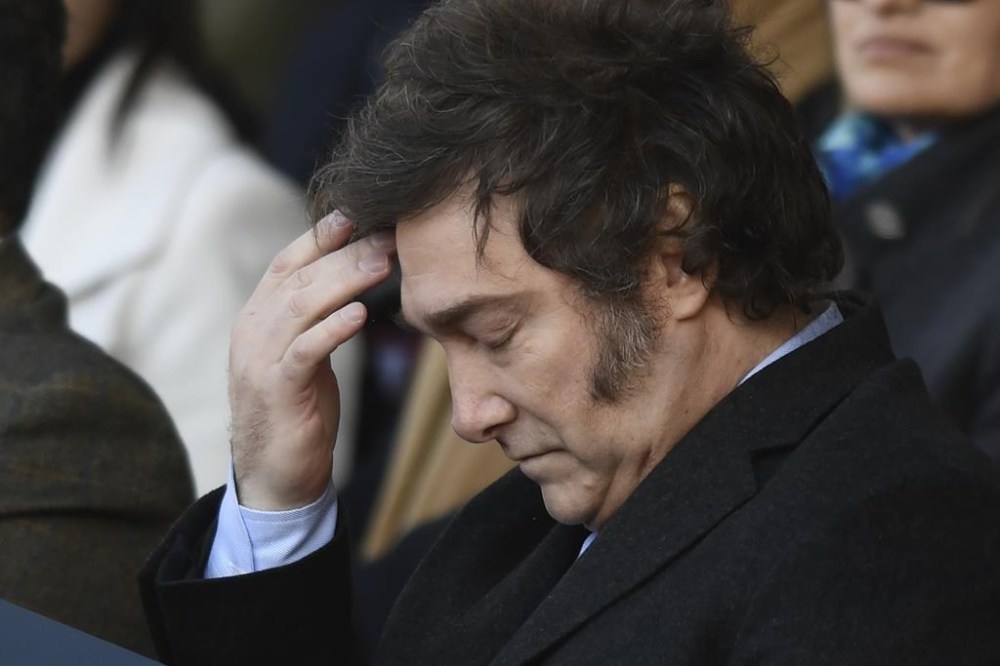
Milei has vowed to strike down legislation that undermines his “zero deficit” plan.
“The Congress, in an act of demagogic populism, sanctioned an irresponsible, illegal and unconstitutional bill that creates exorbitant expenses,” Milei’s office said on social media. “The government will veto this project, because it is not afraid to pay the costs necessary to get this country out of the decadence in which it has been plunged.”
Lawmakers could override his veto by passing the law with a two-thirds majority again.
Because Milei’s libertarian party controls less than 15% of Congress — and just seven of the Senate’s 72 seats — the populist outsider has largely relied on sweeping executive decrees to cut down the state, slash public spending and deregulate Argentina’s economy.
After six months in office, he finally clinched his first legislative victory in June, when his wide-ranging economic reform bill squeaked through the Senate as protesters hurled Molotov cocktails outside. That narrow win followed weeks of tortuous negotiations and tough compromises.
But the pension law, which sets more than an 8% increase in retirement benefits this year, threatened to revive investors’ fears about Milei’s ability to implement his radical agenda aimed at rescuing Argentina’s long-troubled economy — notorious for debt defaults, chronic overspending and runaway inflation.
In the first six months of the year, Milei has managed to achieve an extremely rare fiscal surplus by slashing state spending, halting public works projects and cutting revenue transfers to provinces.
“The pension reform passed today is particularly sensitive because it partially impacts the core of Milei’s fiscal program,” said Marcelo J. Garcia, director for the Americas at Horizon Engage, a New York-based political risk consulting firm.
“What most concerns investors is that this negative streak is the result of the hard-line, more confrontational side of Milei’s inner circle taking the lead.”
Opposition lawmakers hailed the law, which includes cost-of-living adjustments for pension benefits to keep pace with the country’s dizzying 260% annual inflation rate. Since 2017, the law’s supporters say, pensions in Argentina have lost 45% of their value as prices soared and the country’s currency slid against the dollar.

The minimum monthly pension hovers around $233 while the basket of goods and services typically used to calculate inflation costs over $300 a month.
Milei’s supporters said the law would further deplete Argentina’s finances at a time when the government is trying to reel in spending as much as possible.
Sen. Bruno Olivera Lucero from Milei’s Liberty Advances party warned that steadily increasing benefits “complicates the fiscal balance,” with spending on pension benefits now expected to eat up 0.4% of GDP this year and 0.8% of it next year.
Tensions between Argentina’s rowdy legislature and Milei — who rode to power last December on a wave of public outrage against the political establishment — have simmered ever since his inauguration. Rather than deliver his inaugural address to Congress, as is custom, he turned his back on the legislative assembly and spoke to the crowd.
Milei has suffered a series of defeats in Congress this week alone. On Wednesday, the government lost a vote in the lower house on its proposed spending increase for Argentina’s intelligence services.