

How the Paris 2024 Village has been transformed for Paralympians with accessibility in mind
Advertisement
Read this article for free:
or
Already have an account? Log in here »
To continue reading, please subscribe:
Monthly Digital Subscription
$0 for the first 4 weeks*
- Enjoy unlimited reading on winnipegfreepress.com
- Read the E-Edition, our digital replica newspaper
- Access News Break, our award-winning app
- Play interactive puzzles
*No charge for 4 weeks then price increases to the regular rate of $19.00 plus GST every four weeks. Offer available to new and qualified returning subscribers only. Cancel any time.
Monthly Digital Subscription
$4.75/week*
- Enjoy unlimited reading on winnipegfreepress.com
- Read the E-Edition, our digital replica newspaper
- Access News Break, our award-winning app
- Play interactive puzzles
*Billed as $19 plus GST every four weeks. Cancel any time.
To continue reading, please subscribe:
Add Free Press access to your Brandon Sun subscription for only an additional
$1 for the first 4 weeks*
*Your next subscription payment will increase by $1.00 and you will be charged $16.99 plus GST for four weeks. After four weeks, your payment will increase to $23.99 plus GST every four weeks.
Read unlimited articles for free today:
or
Already have an account? Log in here »
Hey there, time traveller!
This article was published 25/08/2024 (470 days ago), so information in it may no longer be current.
SAINT-DENIS, France (AP) — Just four days before the start of the Paralympic Games, the athletes village was buzzing with activity on Saturday as athletes from 168 delegations were settling into their temporary home, preparing for their upcoming competitions.
The village, nestled in the northern suburbs of Paris, in the Seine-Saint-Denis department, closed its doors on Aug. 13 after the conclusion of the Olympic Games, giving organizers a week to make necessary adjustments for the upcoming Paralympics.
Laurent Michaud, head of the Paralympic Village, discussed the rapid yet meticulous transformation. The village had been built with inclusivity in mind from the start, but this final week was crucial for fine-tuning details to ensure that every aspect was perfectly suited to the para-athletes’ needs.
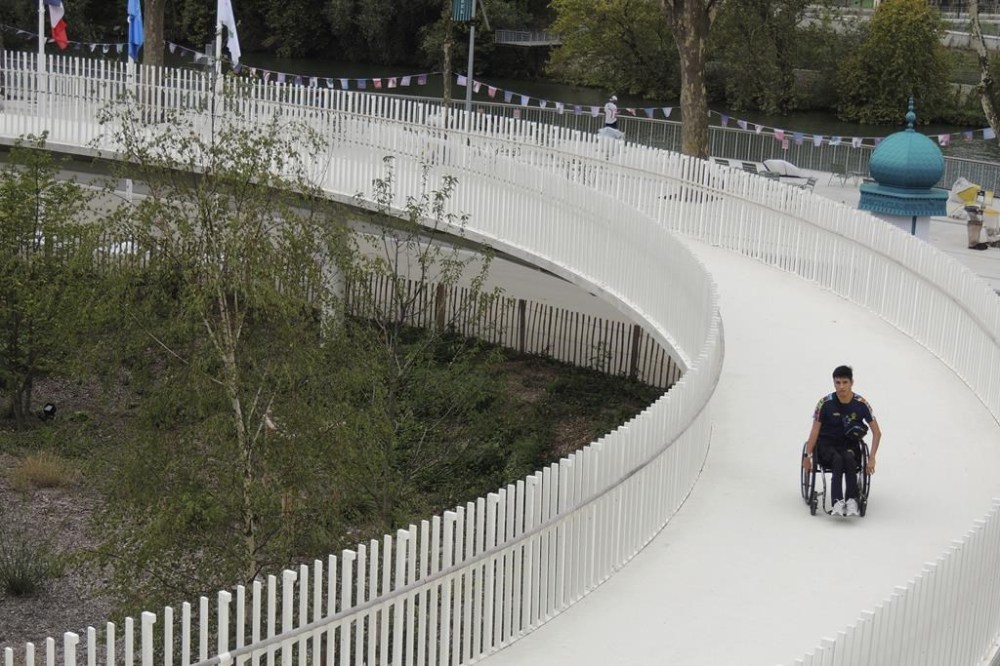
“All roadways, sidewalks and access points are fully accessible for people with reduced mobility. It is a 100% accessible village,” he explained.
The village reopened on Aug. 21, transformed to meet the specific needs of the 4,400 para-athletes.
Among the most significant adjustments were additional ramps and enhanced lighting throughout the village, making it easier for athletes to navigate, regardless of mobility or visual impairments. Sandy floors and grates that could have posed challenges to wheelchair users were covered with mats.
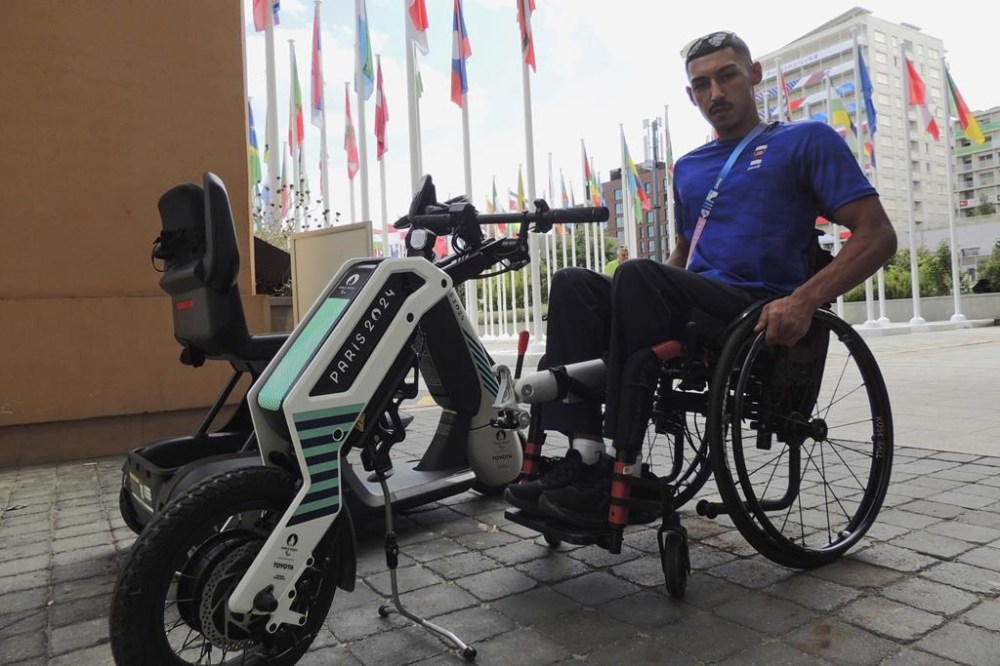
Motorized devices were also made available for wheelchair users, offering a powered boost that made getting around the village faster and more enjoyable. These quickly became a favorite among the athletes, adding an element of fun to their mobility.
One scene that captured this joy involved three athletes from Iran. They were spotted zipping through the main alley leading to the dining hall, with one athlete using the motorized device while the others clung to their companion’s shoulders, laughing as they enjoyed the ride.
Ludivine Munos, a former French para-athlete and head of integration for Paris 2024, praised the village’s setup, calling it a “paradise” for the para-athletes.
“The goal was to provide the best possible experience for the athletes during their stay, ensuring that they could focus entirely on their performance without worrying about accessibility issues,” Munos said.
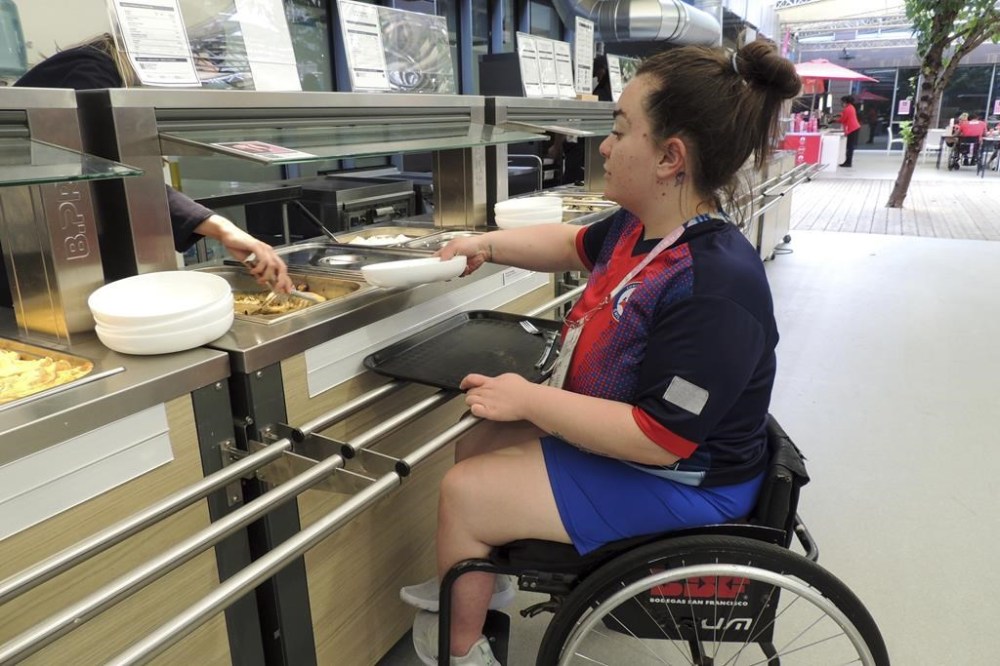
Smaller adjustments were also made to enhance daily life. In the dining hall, tables were spaced out for wheelchair accessibility and some chairs were removed to create a more open layout.
Philipp Wurz, head of food and beverage, emphasized these subtle yet important changes. Products in fridges were displayed on all shelves to ensure that wheelchair users or athletes of short stature could easily access them. Volunteers were also on hand to provide assistance to athletes who required help carrying their trays. For those who wished to carry them on their laps, a thin layer of rubber was added to prevent food from slipping.
Within the living quarters, electrical outlets were installed at a height of 45 cm (17 inches) from the ground, eliminating the need for wheelchair users to strain themselves by reaching down. In the bathrooms, grab bars were strategically placed—one attached securely to the wall and another with suction cups, providing flexibility for different needs.

“The smallest details can make major improvements for para-athletes,” Wurz noted.
Beyond these practical adjustments, para-athletes could also enjoy a range of services, including a bakery, massage salon, grocery store, 24-hour gym, hair and nail salon and a free clinic all available within the village.
The Paralympic Games will begin on Aug. 28, and conclude on Sept. 8.
___
AP Paralympics https://apnews.com/hub/paralympic-games
Related Articles
Canadian swimmer Aurelie Rivard preps for her toughest competitor, herself, in Paris





Advertisement Advertise With Us
Advertisement Advertise With Us