

Germany and the UK seek a new bilateral treaty as Starmer pursues a ‘reset’ with the European Union
Advertisement
Read this article for free:
or
Already have an account? Log in here »
To continue reading, please subscribe:
Monthly Digital Subscription
$0 for the first 4 weeks*
- Enjoy unlimited reading on winnipegfreepress.com
- Read the E-Edition, our digital replica newspaper
- Access News Break, our award-winning app
- Play interactive puzzles
*No charge for 4 weeks then price increases to the regular rate of $19.00 plus GST every four weeks. Offer available to new and qualified returning subscribers only. Cancel any time.
Monthly Digital Subscription
$4.75/week*
- Enjoy unlimited reading on winnipegfreepress.com
- Read the E-Edition, our digital replica newspaper
- Access News Break, our award-winning app
- Play interactive puzzles
*Billed as $19 plus GST every four weeks. Cancel any time.
To continue reading, please subscribe:
Add Free Press access to your Brandon Sun subscription for only an additional
$1 for the first 4 weeks*
*Your next subscription payment will increase by $1.00 and you will be charged $16.99 plus GST for four weeks. After four weeks, your payment will increase to $23.99 plus GST every four weeks.
Read unlimited articles for free today:
or
Already have an account? Log in here »
Hey there, time traveller!
This article was published 28/08/2024 (464 days ago), so information in it may no longer be current.
BERLIN (AP) — The leaders of Germany and the United Kingdom announced plans on Wednesday to draw up a treaty meant to deepen the two nations’ trade, defense and other ties.
The move comes as new U.K. Prime Minister Keir Starmer moves ahead with plans for a “reset” of relations with the European Union.
German Chancellor Olaf Scholz said that he welcomes fellow center-left leader Starmer’s desire for a new beginning in relations with the EU, and “we want to take this outstretched hand.”
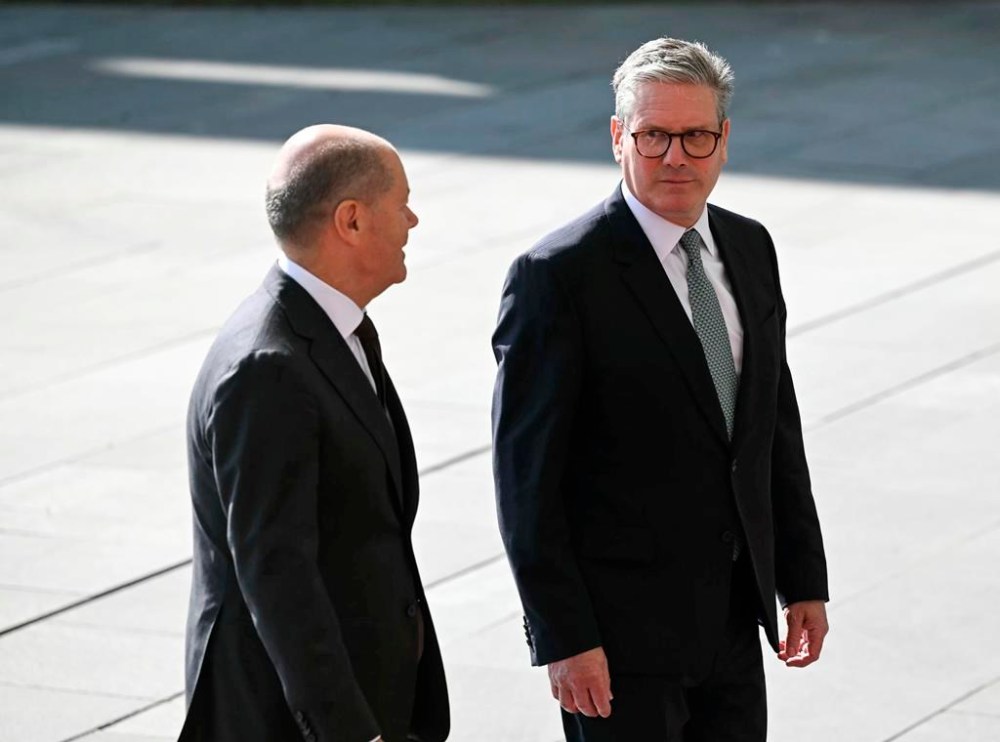
Starmer took office in early July after the previous Conservative government was trounced in an election. Four years after the U.K. left the EU, he says he wants to rebuild ties strained by years of ill-tempered wrangling over Brexit terms.
He said that he hopes to conclude the bilateral agreement with Germany, which has Europe’s biggest economy, by the end of this year.
“That will be ambitious, it will be wide-ranging, covering trade, the economy, defense and many other issues,” he told reporters. The two leaders are among Ukraine’s biggest military backers and stressed their commitment to keeping up that support.
Starmer said that the two countries also plan to draw up a “joint action plan to tackle illegal migration.” His government still faces pressure to stop migrants crossing the English Channel in small boats, though it scrapped the Conservatives’ contentious plan to send them on a one-way trip to Rwanda.
Migration is also an issue on which Scholz’s government has long been under heavy pressure, even more so since Friday’s attack in Solingen in which a suspected extremist from Syria who had avoided being deported is accused of killing three people.
The proposed U.K.-Germany treaty is modeled in part on agreements that Britain struck in recent years with France on defense, security and closer law enforcement cooperation against people-smuggling gangs.
Starmer sent a signal by visiting Berlin early in his term — unlike predecessor Rishi Sunak, who took 18 months. But his talk of starting anew with the EU has its limits.

He has ruled out many of the major possible steps to closer ties and has been cool to the idea of a youth mobility agreement with the 27-nation bloc.
“I’m absolutely clear that we do want a reset … with Europe, a reset with the EU,” Starmer said in Berlin.
However, “that does not mean reversing Brexit or reentering the single market or the customs union, but it does mean a closer relation on a number of fronts — including the economy, including defense, including exchanges, but we do not have plans for the youth mobility scheme.”
___
Jill Lawless contributed to this report from London.