

‘It is about saving lives’
Advertisement
Read this article for free:
or
Already have an account? Log in here »
To continue reading, please subscribe:
Digital Subscription
One year of digital access for only $1.44 a week*
- Enjoy unlimited reading on winnipegfreepress.com
- Read the E-Edition, our digital replica newspaper
- Access News Break, our award-winning app
- Play interactive puzzles
*Billed as $5.77 plus GST every four weeks. After 52 weeks, price increases to the regular rate of $19.95 plus GST every four weeks. Offer available to new and qualified returning subscribers only. Cancel any time.
To continue reading, please subscribe:
Add Free Press access to your Brandon Sun subscription for only an additional
$1 for the first 4 weeks*
- Enjoy unlimited reading on winnipegfreepress.com
- Read the E-Edition, our digital replica newspaper
- Access News Break, our award-winning app
- Play interactive puzzles
*Your next Brandon Sun subscription payment will increase by $1.00 and you will be charged $17.95 plus GST for four weeks. After four weeks, your payment will increase to $24.95 plus GST every four weeks.
Read unlimited articles for free today:
or
Already have an account? Log in here »
Hey there, time traveller!
This article was published 05/09/2024 (641 days ago), so information in it may no longer be current.
The story of MoveMobility Inc.’s growth in Manitoba may not be a classic business school case study, but it may be one worth understanding for the community at large.
The company has been making wheelchair-accessible vans and mini-vans since 2007. For the past several years, it has added medical vans and customized ambulances to its product line.
Its founder, Richard Jones, emigrated from England with his family in 2005. His two sons have senior positions with the Winnipeg company that now has 55 employees. It’s in the process of building a new plant on 10 acres of land in CentrePort Canada that is expected to double the company’s workforce.
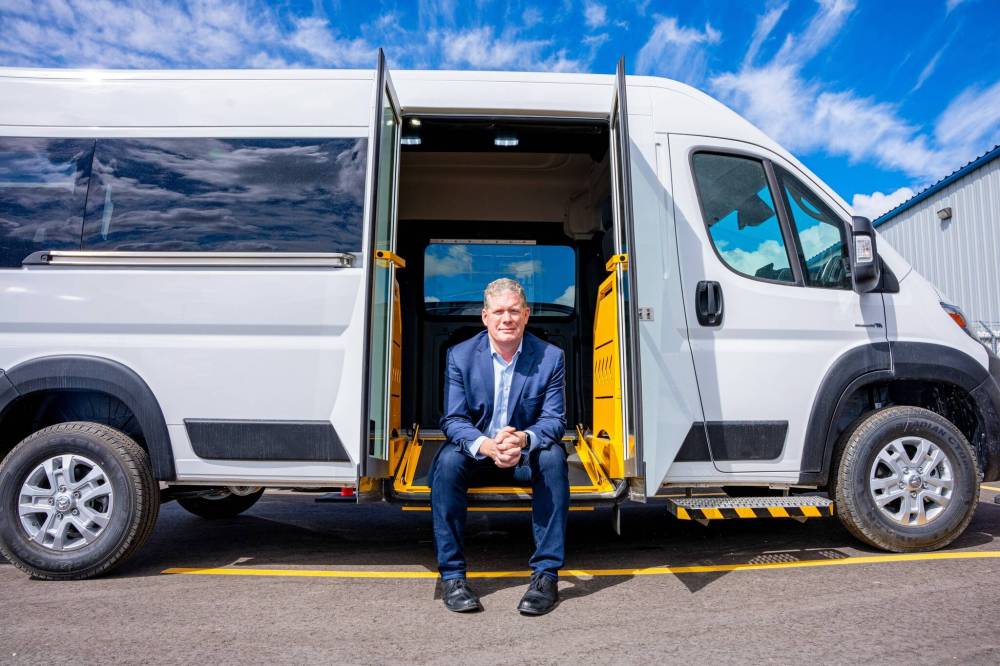
The province has contributed a grant of $1.3 million from its investment and trades division to the company’s efforts that will allow it to increase its export capacity (that has already grown to 15 per cent of revenue in just 12 months).
In a moving video, Jones talks about a terrible fire that wiped out his family’s farm in England when he was a young teen and the impact the community support they later received had on him.
When he moved to Canada with his family, they became part of a business doing commercial vehicle upfitting.
It was not the right fit for Jones, but customers began inquiring about making vehicles wheelchair accessible.
His sister-in-law was in a wheelchair all her life and he saw how challenging transportation can be.
It has driven him to a level of empathy that propels his company. When Jones says “we are very passionate about helping make sure individuals get the care they need,” his use of the word “passionate” is different from common business parlance.
MoveMobility has been methodical in its product development, acquiring certification from original equipment manufacturers, including Ford and Stellantis.
His small company has close to 10 engineers on staff and has spent millions on innovating products along the way.
The care and attention is such, even after they set up a small manufacturing and sales centre in Mississauga, Ont., he shut down the manufacturing side after a year.
“It was not working to the standard I wanted, so we moved all the production back here,” Jones said.
The company’s journey into the medical van business took some time. It’s already shipped a few hundred to First Nations and cities dealing with homelessness problems. It’s just completed a new prototype with a European Stellantis van platform for a customer group in Ontario that needs a vehicle to service remote areas.
“Ontario has the highest standards in North American for these mobile medical units, so we decided to take that on,” Jones said.
The medical vans/ambulances are like doctors’ offices on wheels. They are designed for remote and urban use, delivering health care to individuals who can’t necessarily come into a bricks-and-mortar facility.
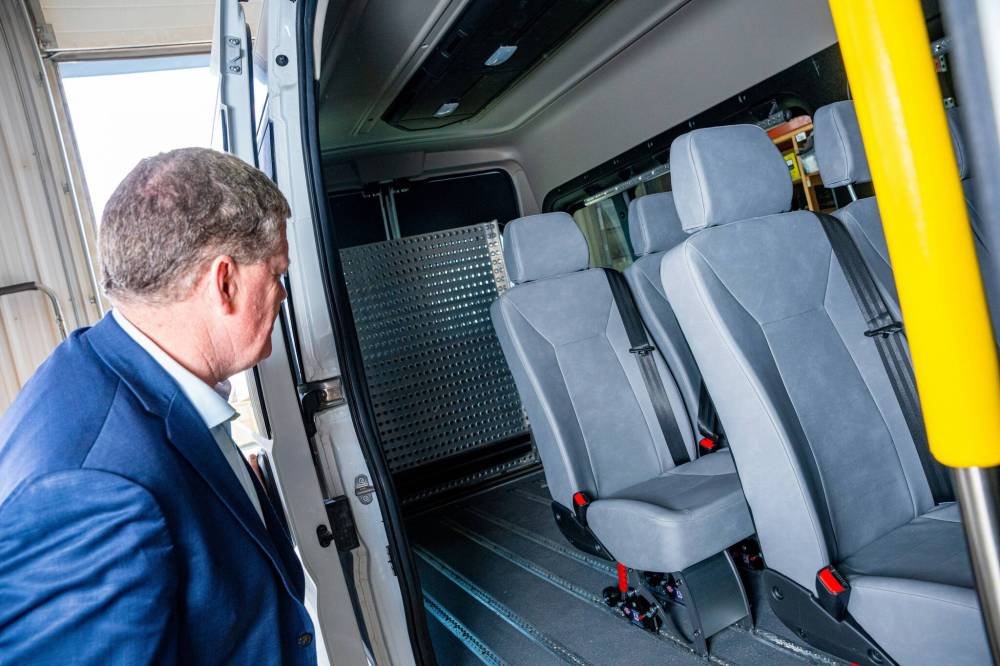
“It is about saving lives,” said Jones. “The amount of lives getting lost … people dying on the street because lack of health care …”
There are now a number of MoveMobility units on the streets of Vancouver and Toronto and in California.
Jamie Moses, minister of economic development, said supporting companies like MoveMobility is important for the future vitality of the Manitoba economy.
“When we see companies set down roots with technical expertise, good-paying jobs, we want to make sure there are avenues for them to be supported and grow here,” he said. “This is a growing company and we want to be supportive of that enterprise.”
MoveMobility operates in the same neighbourhood as Fort Garry Fire Trucks, one of the largest suppliers of those specialized vehicles in the country. Although the two operate on different levels of manufacturing, their presence in Winnipeg, both in Centreport, is an indication of some kind of industrial energy.

“We applaud the province for supporting MoveMobility’s growth and their plans to construct an innovative new health-care manufacturing facility. It’s incredible to see this Manitoba company expanding their operations at the trimodal inland port,” said Carly Edmundson, president and CEO, CentrePort Canada Inc.
Jones said the province’s financial support provides “cheer” for his entire company.
It also provides some salve to Jones, who was disappointed a couple of years ago, after being shut out of a chance to bid on a Winnipeg Transit contract for wheelchair-accessible vehicles because of what he believes was partly bureaucratic red tape.
And partly because, by his own admission, “We don’t go about the sale process in the same way (everyone else does). We take a little more care.”
martin.cash@freepress.mb.ca