For European astronauts, this place in Germany is the next best thing to the moon
Advertisement
Read this article for free:
or
Already have an account? Log in here »
To continue reading, please subscribe:

Digital Subscription
One year of digital access for only $205*
- Enjoy unlimited reading on winnipegfreepress.com
- Read the E-Edition, our digital replica newspaper
- Access News Break, our award-winning app
- Play interactive puzzles
*First annual payment billed as $205.00 + GST for one year. This annual subscription will automatically renew at $233.00 + GST every 52 weeks (10% off the regular annual price of $259.35). Offer available to new and qualified returning subscribers only. Cancel any time.
To continue reading, please subscribe:
Add Free Press access to your Brandon Sun subscription for only an additional
$1 for the first 4 weeks*
- Enjoy unlimited reading on winnipegfreepress.com
- Read the E-Edition, our digital replica newspaper
- Access News Break, our award-winning app
- Play interactive puzzles
*Your next Brandon Sun subscription payment will increase by $1.00 and you will be charged $17.95 plus GST for four weeks. After four weeks, your payment will increase to $24.95 plus GST every four weeks.
Read unlimited articles for free today:
or
Already have an account? Log in here »
Hey there, time traveller!
This article was published 25/09/2024 (714 days ago), so information in it may no longer be current.
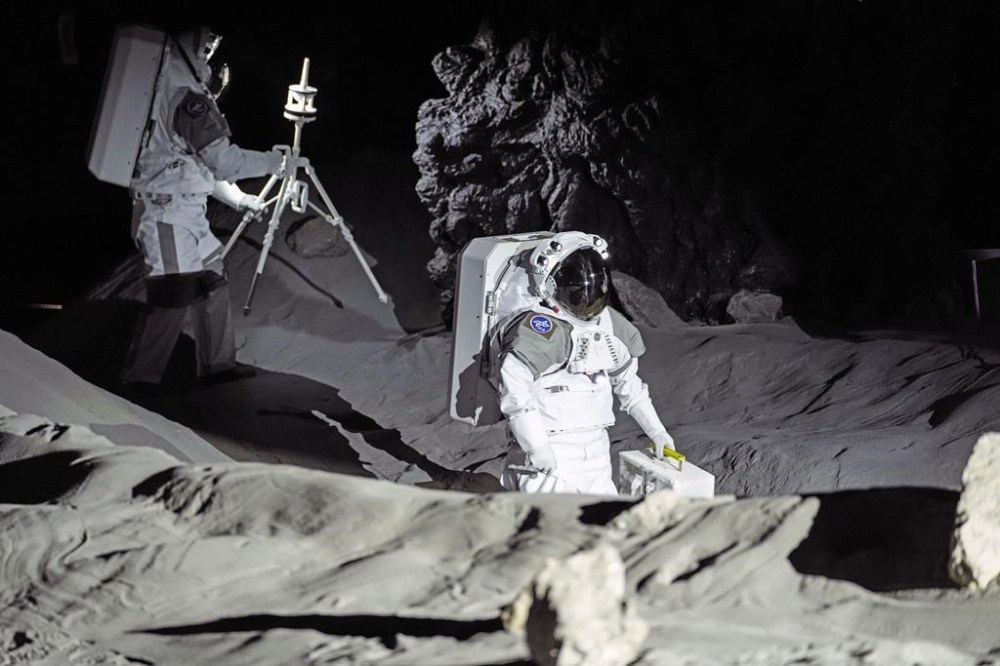
COLOGNE, Germany (AP) — Donning heavy spacesuits and visors to protect them from sunlight, astronauts Thomas Pesquet of France and Matthias Maurer of Germany, accompanied by their trusty canine robot, move slowly on what looks like the lunar surface.
But it’s not the moon.
It will be years before the European Space Agency can send one of its astronauts there. For now, they are practicing in a facility the agency opened in Germany on Wednesday where lunar conditions have been replicated.
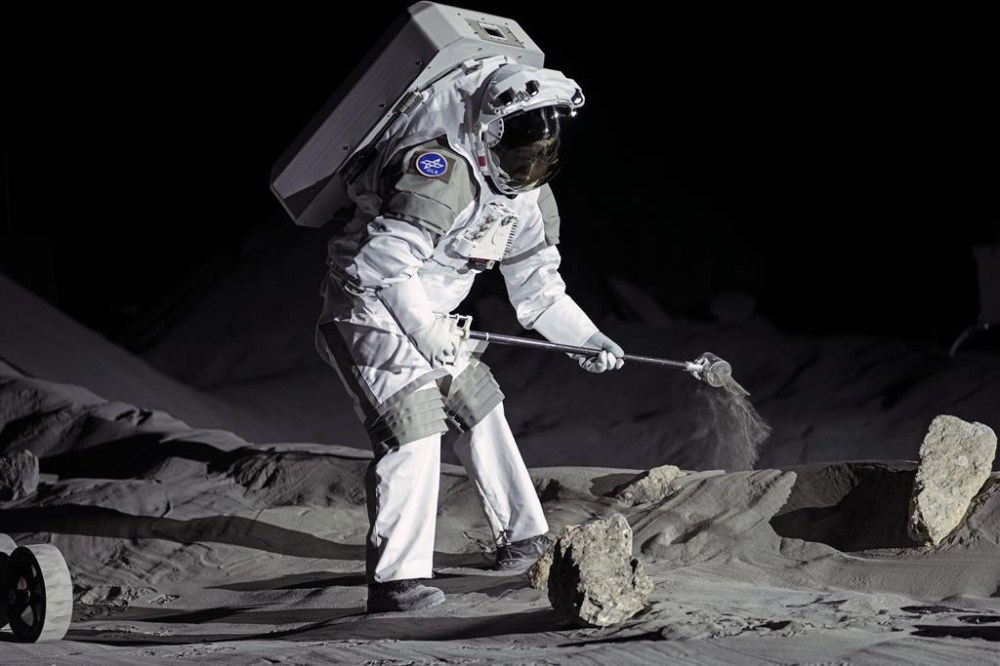
The LUNA facility at the European Astronaut Center near Cologne has 900 tons of ground-up volcanic rock like that on the moon spread over a surface a bit bigger than a basketball court. The moon’s low-gravity environment will be simulated using movable ceiling-mounted trolleys that follow a suspended astronaut or rover’s movements.
In a preopening briefing, ESA astronaut Alexander Gerst said the facility will offer “most aspects that we will encounter on the moon.”
“It’s the surface, it’s the lunar dust, the rocks, the lighting,” he said. “We will work in spacesuits that limit our movement, limit our view.”
ESA Director General Josef Aschbacher said at the opening ceremony that the facility “marks a significant milestone in Europe’s space exploration efforts.”
ESA has negotiated for three spots on future moon missions under the NASA-led Artemis program by 2030, depending on the progress of the program. It currently relies on NASA and others to get its astronauts to space. The agency is building the service module for the Orion crew capsule that will fly to the moon as part of Artemis.
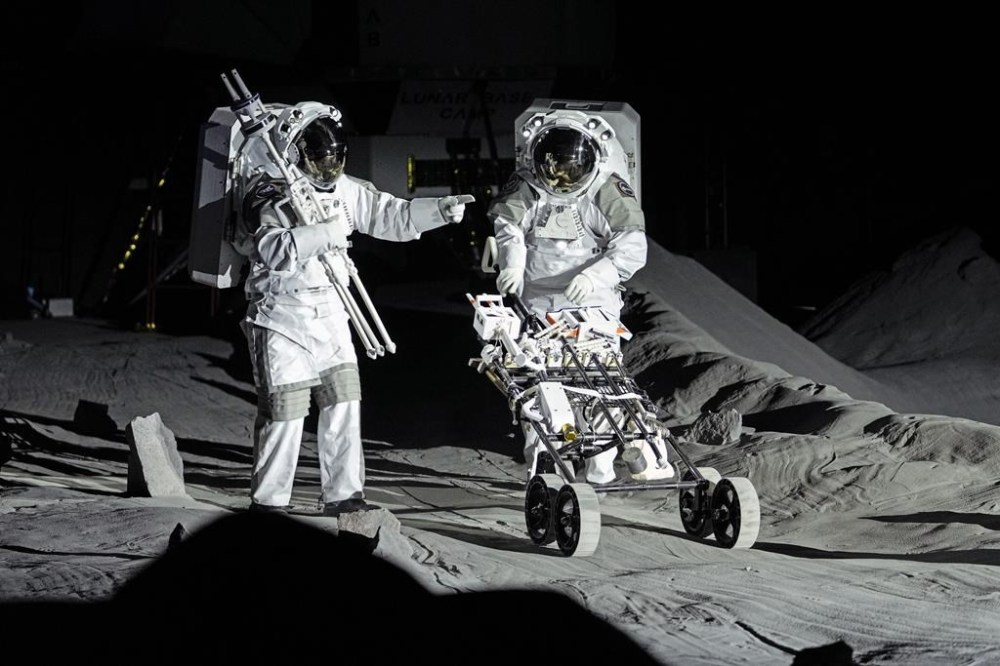
“We need to prepare for the moon because currently we are only flying to low-Earth orbit to the International Space Station,” said ESA astronaut Matthias Maurer. “But the next missions will bring us to the moon.”
The facility’s lunar soil is made of volcanic rock mined in the Siebengebirge mountain range, not far from where the facility is located, and then ground and sifted until it’s as close to the moon’s surface as possible. The facility is opening several years later than planned, delayed by the pandemic and the discovery of protected lizards at the site just as construction was about to begin, forcing relocation.
Plans are to use the facility, jointly operated by ESA and the German Aerospace Agency, to test lunar rovers and practice walking on the moon’s surface in cumbersome space suits, among other things.