AI can help family doctors buried in paperwork. Why is uptake low?
Advertisement
Read this article for free:
or
Already have an account? Log in here »
To continue reading, please subscribe:

Digital Subscription
One year of digital access for only $205*
- Enjoy unlimited reading on winnipegfreepress.com
- Read the E-Edition, our digital replica newspaper
- Access News Break, our award-winning app
- Play interactive puzzles
*First annual payment billed as $205.00 + GST for one year. This annual subscription will automatically renew at $233.00 + GST every 52 weeks (10% off the regular annual price of $259.35). Offer available to new and qualified returning subscribers only. Cancel any time.
To continue reading, please subscribe:
Add Free Press access to your Brandon Sun subscription for only an additional
$1 for the first 4 weeks*
- Enjoy unlimited reading on winnipegfreepress.com
- Read the E-Edition, our digital replica newspaper
- Access News Break, our award-winning app
- Play interactive puzzles
*Your next Brandon Sun subscription payment will increase by $1.00 and you will be charged $17.95 plus GST for four weeks. After four weeks, your payment will increase to $24.95 plus GST every four weeks.
Read unlimited articles for free today:
or
Already have an account? Log in here »
Hey there, time traveller!
This article was published 07/10/2024 (713 days ago), so information in it may no longer be current.
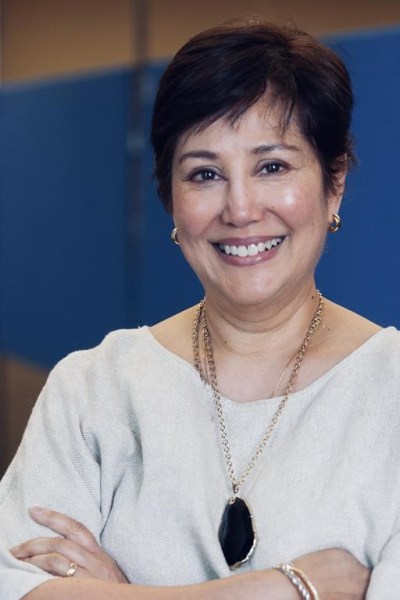
Dr. Rosemarie Lall says she was overworked and on the brink of either scaling back her practice or retiring early when she turned to artificial intelligence in a last-ditch effort to manage mounting paperwork.
The Toronto family physician says she would regularly go home and work on her patients’ files well into the night.
But last year she started testing an AI scribe that transcribes her patient encounters and summarizes them into notes that she can edit and add to electronic medical records. As a result, she spends less time on paperwork and more time on patients. She took Christmas off for the first time in years.
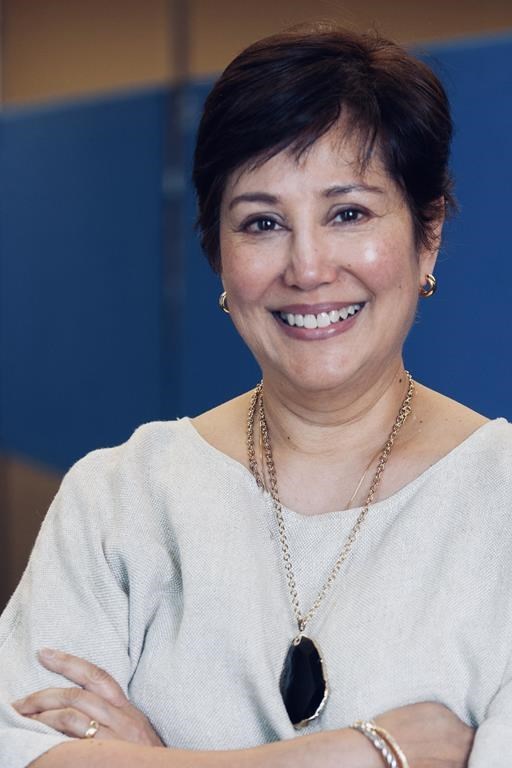
“I needed to save my sanity,” said Lall, who has been practising family medicine for almost 30 years.
A 2023 report from the Canadian Federation of Independent Business estimated that Canadian doctors cumulatively spend 48.8 million hours per year on administrative tasks. AI scribe technology holds the promise of removing some of that burden, however uptake in Canada has been low due to privacy and cost concerns.
More than 150 doctors and nurse practitioners in Ontario – where family physicians report spending an average of 19 hours per week on paperwork – recently took part in a provincially funded pilot project to see whether AI can help minimize administrative burnout.
The report commissioned by OntarioMD, a subsidiary of the Ontario Medical Association, found doctors using AI scribes spent 70 to 90 per cent less time on paperwork, saving on average three to four hours per week.
Lall, who didn’t participate in the study, said she saves even more time: about an hour per night. She tested five AI scribes from third-party vendors before settling on one and paying out of pocket.
AI scribes are unregulated and the onus is on physicians to ensure the protection of personal health information. Doctors are required to obtain patient consent and explain where their data is being stored.
Lall logs into her scribe, external to her electronic medical record (EMR), where patient information is stored. After an appointment, she reviews the scribe’s note, edits it, and then copy and pastes her revisions into the EMR.
“Years ago, before any of this came on, I said to myself, ‘if I could just go in, talk to my patients, help them with their issues and walk out and go to the next one, I could do this forever,’” Lall said, adding that the AI scribe is now helping make that happen.
But at the moment, Lall is an outlier. At an OntarioMD conference held in Toronto in September, she stood in front of an audience of 500 health-care providers and asked: How many people use an AI scribe?
At most, 10 attendees raised their hands.
One of them was Dr. Daniel Garcia, a family doctor in North Bay, Ont., who integrated the technology into his practice five months earlier to focus on his conversations with patients.
“Sometimes it gets complicated, you’re talking about someone who passed away or mental health, and you want to be personal and in order to maintain that level of intimacy, you start looking at them,” Garcia said. In those situations, he stopped typing notes.
While the AI scribe has helped, Garcia said the three hours it saves him each week are only one piece of the workload puzzle.
“That’s three hours out of 20 I have to do other things: prescriptions, send faxes, referral letters, review labs, respond to patient messages. So yes it helps, but I don’t think it’s the only solution.”
Lall agreed. Her note-taking has been reduced, but she still has to tackleconsult letters, digital imaging reports and pharmacy requests outside clinic hours.
Around three to five per cent of Ontario family doctors are using AI scribes, estimates Chris Sulway, OntarioMD’s chief of strategy growth and stakeholder relations. There are no national statistics on the subject, but AI Scribe pilots are underway in other provinces, such as British Columbia, where 50 doctors are signed up for one.
He said there are two main barriers to a more substantial uptake: privacy and data collection considerations, and cost.
While there was nothing “nefarious” in the terms of use for the six AI scribes tested in the recent pilot project, such as selling patient data, Sulway said, “It’s not clear that couldn’t happen.”
“We just want to close the loop so we don’t find that in future.”
In Sulway’s view, the ministry of health and privacy commissioner should provide guidelines on the legal ramifications of these technologies, outline safeguards and make recommendations on which AI scribes are safe to use.
Dr. Onil Bhattacharyya, one of the authors of the Ontario study, estimates there are approximately 30 AI scribes on the market. They are owned and operated by a variety of vendors, including Toronto-based startups and tech giants such as Microsoft.
While some companies say they will “never sell or share data” and that patient information is “securely stored in Canada,” others may keep data on servers outside the country, according to the Canadian Medical Protective Association. For example, the Microsoft-associated vendor says on its website that it may transfer personal data across international borders, which may not provide the same level of protection as the jurisdiction where it was collected.
AI scribes have also been known to “hallucinate” at times, documenting things that didn’t occur or eliminating key information from a patient encounter. That’s why clinicians are responsible for reviewing and editing the scribe’s notes.
For these reasons, some medical regulators have expressed concern.
The College of Physicians and Surgeons of Alberta asked doctors to proceed with “great caution” in its guidance released a year ago.
“Until more information is available about the accuracy and reliability of AI-supported charting and clinical decision-making, this practice remains speculative,” it said.

Interim guidance from physicians’ regulatory body in British Columbia also notes “significant concern” about AI misuse. It says doctors must “always use critical thinking and clinical expertise when applying AI to patient care.”
As for the cost barrier, the majority of physicians who participated in the Ontario study said they were not willing to pay market price for AI scribes, which typically ranges from $135 to $400 per month for unlimited use. One quarter of respondents said they would only use the technology if it was free.
If the cost and privacy concerns are eliminated, Sulway said, “I think you’d have the majority of doctors using this tool.”
This report by The Canadian Press was first published Oct. 7, 2024.
Canadian Press health coverage receives support through a partnership with the Canadian Medical Association. CP is solely responsible for this content.